







A Roadmap for Plant Genome Editing
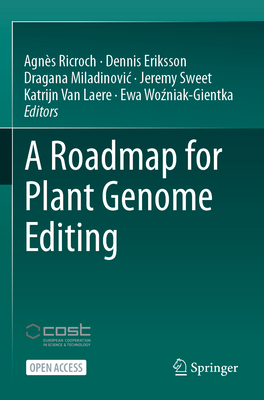
A Roadmap for Plant Genome Editing
Dr Agnès RICROCH has a PhD in genetics and plant breeding and obtained an HDR (abilityto conduct researches) from Paris-Saclay University (Orsay, France) in genetic resources and plant breeding.She was a visiting researcher at Texas Tech University and Duke University (USA) and at the John InnesInstitute (UK). She is a senior lecturer at AgroParisTech (Paris, France) and Adjunct Professor atPennsylvania State University, College of Agricultural Sciences (USA), she teaches biotechnology andbioethics since 2016. She was a visiting professor at the University of Melbourne (Australia) in 2015. She is aresearcher in IDEST laboratory at Paris-Saclay University, Faculty Jean-Monnet, Sceaux (France), where herresearch focuses on benefits-risk assessment and regulation of green biotechnology (GMO, New GenomicTechniques). Member elected in 2015 of the Academy of Agriculture of France, she is thehead of the LifeSciences section since 2016. She was the chair of the working group "New biotechnologies for agriculture andfood" (2016-2019). She was pointed as member of the French Scientific Group of Interest of greenbiotechnologies (2015-2019). She is a member of the management committee of the European "Cost PlantEd"scientific program (2019-2023). She was named to the International Directory of 23 women in biotechnology(Woman in Biotechnology Law and Regulation) in 2015. She published both in French and English six books, twenty-six chapters and more than ninety scientific articles in peer-reviewed journals and scientific journalsand participated in one hundred and sixty scientific conferences on biotechnology. She published scientificarticles in Nature Biotechnology. She was notably invited as keynote speaker at OECD on applications ofgenome editing in agriculture (2018). She givesnumerous interviews to national and international newspapers, radio and television. Member of the Society of Writers of France (Société Des Gens de Lettres) as a writer.Member of the Ethics Committee of Order of Veterinarians of France. She was awarded the LimagrainFoundation Prize of the Academy of Agriculture of France in 2012. She is a Knight of the National Order of theLegion of Honour of France in 2019.
Dennis Eriksson has a PhD in Genetics and Plant Breeding and is Associate Professor at the SwedishUniversity of Agricultural Sciences (SLU) as well as Professor of plant functional genetics at the Inland NorwayUniversity of Applied Sciences (INN). He is currently developing gene editing in potato for virus resistance, andin sweetpotato to adapt the crop for cultivation in Scandinavia. He has worked interdisciplinary for about fiveyears (2017-2021) with the regulatory frameworks for plant biotechnology and genetic resources, includingbiosafety, access and benefit-sharing (ABS) and plant variety rights (PVR). He is the Chair of the COST ActionPlantEd (CA18111, 2019-2023) and Coordinator of the Horizon Europe-funded project GeneBEcon (2022-2025).
Dr Dragana Miladinovic graduated in 1993 from the Faculty of Agriculture, University of Novi Sad, Department of Field and Vegetable Crops, where she received her master's degree in 1997 in the field ofGenetics and Plant Breeding. She defended her doctoral dissertation in 1999 at the Faculty of Biology, University of Belgrade, in the field of Plant Physiology. During the preparation of her doctoral dissertation atINP ENSAT, Toulouse, France, in 1998, she acquired the title of Graduated University Researcher (DRU) inthe field of Molecular and Cell Biology. She has been employed at the Institute of Fieldand Vegetable Cropssince 1996. She became a research associate in 2000, a senior research associate in 2004, and a principalresearch fellow in 2007. She completed postdoctoral training in plant biotechnology at Cornell University, USAin 2004. Dragana Miladinovic is a member of Expert Biosafety Committee, Ministry of Agriculture, Forestry andWater Management, R. Serbia since 2001 and vice chair since 2007. She is the representative of Serbia in theEuropean Association for Research in Breeding EUCARPIA, as well as a member of the Society of Geneticistsof Serbia, where he is a member of the presidency. She is a member of the editorial board of the journalGenetika and an associate editor of the journal Frontiers in Plant Science. The field of research that Dr.Dragana Miladinovic is the biotechnology of oil crops, with an emphasis on the development and application ofmolecular biology methods in the creation of genotypes resistant to biotic and abiotic stress. She is also ahead of Centre of Excellence for Innovations in Breeding of Climate-Resilient Crops - Climate Crops ofInstitute of Field and Vegetable Crops. She has participated in many national and international projects. She isa leader of Horizon Europe Twinning project CROPINNO (101059784) and the project funded by the IAEAEnhancing Productivity and Resilience to Climate Change of Major Food Crops in Europe and Central Asia(RER5024). She is the author and co-author of 3 books, 9 chapters in monographic publications, 46 paperspublished in journals from the SCI list, as well as one patent, 21 technical solutions and 99 sunflower hybridsand one variety of oilseed rape.
Jeremy Sweet has spent the last 40 years conducting research on Crop improvement and plant diseases.Much of this work was conducted at NIAB Cambridge studying sustainable crop production, integrated diseasemanagement, environmental and agronomic impacts of GM crops, and gene flow to crops and wild relatives.He was coordinator of the UK BRIGHT project which studied herbicide tolerance, and he was also coordinatorof the European Science Foundation programme "Assessing the Impact of GMOs" that brought together all themajor research groups in this area in Europe. He was a coordinator of the EU SIGMEA project analysing dataon gene flow and gene impacts and was a participant in the EU CO-EXTRA programme and the BBSRC Geneflow project. He was a member of the EFSA GMO Panel for 12 years until 2018, providing scientific opinionson the risks associated with GMO applications in the EU. He has served as chairman of the Environmental, Post Market Environmental Monitoring and GM Fish Working Groups of the EFSA GMO Panel. He was amember of the GM Insects working group and has developed a number of the EFSA Guidance Documents onERA and risk management. He was a member of the BBSRC/Phyconet Management Board and participatedin the ALGEBRA project on GM algae and in an EFSA study of RNAi GM plants. He is an author in over 50scientific papers on GMOs, numerous plant pathology papers and editor of 2 books.He developed his own consultancy in 2004 and is director of Sweet Environmental Consultants which providesresearch and advice on GMOs and Plant Health to the European Commission, European governments, FAO/UNIDO/UNEP and scientific organisations and academies of several countries. He has provided trainingand other advisory services in European, Asian and S American countries.He is a member of the PlantEd COST action on gene editing of plants.
Katrijn Van Laere obtained a Master degree in Bioscience Engineering at GhentUniversity, Belgium (2002)and conducted a PhD at the Flanders Research Institute for Agriculture, Fisheries and Food (ILVO; 2008) onbreeding opportunities for woody plants. After her PhD, she became a postdoctoral researcher at ILVO, whereshe currently work as senior scientist. She has more than 15 years of experience in breeding research, supporting plant breeding programs (woody plants, ornamentals, red clover, grasses, chicory) with molecularand cytogenetic/microscopic techniques, and advanced (in vitro breeding) techniques. She is one of theleading members of the CRISPR/Cas genome editing team at ILVO, occupied with the implementation ofCRISPR/Cas technologies for several crops (e.g. chicory, potato) and traits. She is the vice-chair of workingGroup 1 (technical platforms) of the COST Action PlantEd (CA18111, 2019-2023) and partner in the HorizonEurope-funded project GeneBEcon (2022-2025). She have (co-)authored 33 peer reviewed papers, 6 bookchapters and conference proceedings
Ewa Woźniak-Gientka has a Ph.D. in earth sciences (2019). Her Ph.D. thesis was related to bioeconomy development. She works as an assistant professor at the Institute of Bioorganic Chemistry Polish Academy of Sciences (IBCH PAS). She has been the head of the Bioeconomy and Sustainable Development Team at IBCH PAS in Poznan since 2021. She conducts interdisciplinary research at the intersection between biology, biotechnology and bioeconomy. Her research covers the economic and social aspects, as well as public opinion on bioeconomy and biotechnology in Poland, the European Union and worldwide. The aim of her research is also to conduct activities aimed at increasing awareness and knowledge of Europeans about the bioeconomy. She is interested in the circular economy, biotechnology, agribiotechnology, economic and social aspects of the development of bioeconomy, public perception of bioeconomy, and popularisation of science.She was involved in two international projects. In 2017-2020, she was a contractor in the international project entitled 'Innovative processing technology of rapeseed products for poultry nutrition' (ProRapeSeed; ERANET- CORNET #22/87/2017). She implemented the tasks in WP3 'Commercial potential of new products in a competitive market'. Since 2019, she has been a member of the PlantEd COST action (CA18111, 2019-2023), a vice leader of WG4, and a Management Committee Substitute in this project. Since 2015, she has been the author and co-author of sixteen publications.
Dennis Eriksson has a PhD in Genetics and Plant Breeding and is Associate Professor at the SwedishUniversity of Agricultural Sciences (SLU) as well as Professor of plant functional genetics at the Inland NorwayUniversity of Applied Sciences (INN). He is currently developing gene editing in potato for virus resistance, andin sweetpotato to adapt the crop for cultivation in Scandinavia. He has worked interdisciplinary for about fiveyears (2017-2021) with the regulatory frameworks for plant biotechnology and genetic resources, includingbiosafety, access and benefit-sharing (ABS) and plant variety rights (PVR). He is the Chair of the COST ActionPlantEd (CA18111, 2019-2023) and Coordinator of the Horizon Europe-funded project GeneBEcon (2022-2025).
Dr Dragana Miladinovic graduated in 1993 from the Faculty of Agriculture, University of Novi Sad, Department of Field and Vegetable Crops, where she received her master's degree in 1997 in the field ofGenetics and Plant Breeding. She defended her doctoral dissertation in 1999 at the Faculty of Biology, University of Belgrade, in the field of Plant Physiology. During the preparation of her doctoral dissertation atINP ENSAT, Toulouse, France, in 1998, she acquired the title of Graduated University Researcher (DRU) inthe field of Molecular and Cell Biology. She has been employed at the Institute of Fieldand Vegetable Cropssince 1996. She became a research associate in 2000, a senior research associate in 2004, and a principalresearch fellow in 2007. She completed postdoctoral training in plant biotechnology at Cornell University, USAin 2004. Dragana Miladinovic is a member of Expert Biosafety Committee, Ministry of Agriculture, Forestry andWater Management, R. Serbia since 2001 and vice chair since 2007. She is the representative of Serbia in theEuropean Association for Research in Breeding EUCARPIA, as well as a member of the Society of Geneticistsof Serbia, where he is a member of the presidency. She is a member of the editorial board of the journalGenetika and an associate editor of the journal Frontiers in Plant Science. The field of research that Dr.Dragana Miladinovic is the biotechnology of oil crops, with an emphasis on the development and application ofmolecular biology methods in the creation of genotypes resistant to biotic and abiotic stress. She is also ahead of Centre of Excellence for Innovations in Breeding of Climate-Resilient Crops - Climate Crops ofInstitute of Field and Vegetable Crops. She has participated in many national and international projects. She isa leader of Horizon Europe Twinning project CROPINNO (101059784) and the project funded by the IAEAEnhancing Productivity and Resilience to Climate Change of Major Food Crops in Europe and Central Asia(RER5024). She is the author and co-author of 3 books, 9 chapters in monographic publications, 46 paperspublished in journals from the SCI list, as well as one patent, 21 technical solutions and 99 sunflower hybridsand one variety of oilseed rape.
Jeremy Sweet has spent the last 40 years conducting research on Crop improvement and plant diseases.Much of this work was conducted at NIAB Cambridge studying sustainable crop production, integrated diseasemanagement, environmental and agronomic impacts of GM crops, and gene flow to crops and wild relatives.He was coordinator of the UK BRIGHT project which studied herbicide tolerance, and he was also coordinatorof the European Science Foundation programme "Assessing the Impact of GMOs" that brought together all themajor research groups in this area in Europe. He was a coordinator of the EU SIGMEA project analysing dataon gene flow and gene impacts and was a participant in the EU CO-EXTRA programme and the BBSRC Geneflow project. He was a member of the EFSA GMO Panel for 12 years until 2018, providing scientific opinionson the risks associated with GMO applications in the EU. He has served as chairman of the Environmental, Post Market Environmental Monitoring and GM Fish Working Groups of the EFSA GMO Panel. He was amember of the GM Insects working group and has developed a number of the EFSA Guidance Documents onERA and risk management. He was a member of the BBSRC/Phyconet Management Board and participatedin the ALGEBRA project on GM algae and in an EFSA study of RNAi GM plants. He is an author in over 50scientific papers on GMOs, numerous plant pathology papers and editor of 2 books.He developed his own consultancy in 2004 and is director of Sweet Environmental Consultants which providesresearch and advice on GMOs and Plant Health to the European Commission, European governments, FAO/UNIDO/UNEP and scientific organisations and academies of several countries. He has provided trainingand other advisory services in European, Asian and S American countries.He is a member of the PlantEd COST action on gene editing of plants.
Katrijn Van Laere obtained a Master degree in Bioscience Engineering at GhentUniversity, Belgium (2002)and conducted a PhD at the Flanders Research Institute for Agriculture, Fisheries and Food (ILVO; 2008) onbreeding opportunities for woody plants. After her PhD, she became a postdoctoral researcher at ILVO, whereshe currently work as senior scientist. She has more than 15 years of experience in breeding research, supporting plant breeding programs (woody plants, ornamentals, red clover, grasses, chicory) with molecularand cytogenetic/microscopic techniques, and advanced (in vitro breeding) techniques. She is one of theleading members of the CRISPR/Cas genome editing team at ILVO, occupied with the implementation ofCRISPR/Cas technologies for several crops (e.g. chicory, potato) and traits. She is the vice-chair of workingGroup 1 (technical platforms) of the COST Action PlantEd (CA18111, 2019-2023) and partner in the HorizonEurope-funded project GeneBEcon (2022-2025). She have (co-)authored 33 peer reviewed papers, 6 bookchapters and conference proceedings
Ewa Woźniak-Gientka has a Ph.D. in earth sciences (2019). Her Ph.D. thesis was related to bioeconomy development. She works as an assistant professor at the Institute of Bioorganic Chemistry Polish Academy of Sciences (IBCH PAS). She has been the head of the Bioeconomy and Sustainable Development Team at IBCH PAS in Poznan since 2021. She conducts interdisciplinary research at the intersection between biology, biotechnology and bioeconomy. Her research covers the economic and social aspects, as well as public opinion on bioeconomy and biotechnology in Poland, the European Union and worldwide. The aim of her research is also to conduct activities aimed at increasing awareness and knowledge of Europeans about the bioeconomy. She is interested in the circular economy, biotechnology, agribiotechnology, economic and social aspects of the development of bioeconomy, public perception of bioeconomy, and popularisation of science.She was involved in two international projects. In 2017-2020, she was a contractor in the international project entitled 'Innovative processing technology of rapeseed products for poultry nutrition' (ProRapeSeed; ERANET- CORNET #22/87/2017). She implemented the tasks in WP3 'Commercial potential of new products in a competitive market'. Since 2019, she has been a member of the PlantEd COST action (CA18111, 2019-2023), a vice leader of WG4, and a Management Committee Substitute in this project. Since 2015, she has been the author and co-author of sixteen publications.
PRP: 464.91 Lei

Acesta este Prețul Recomandat de Producător. Prețul de vânzare al produsului este afișat mai jos.
418.42Lei
418.42Lei
464.91 LeiPrimești 418 puncte
Indisponibil
Descrierea produsului
Dr Agnès RICROCH has a PhD in genetics and plant breeding and obtained an HDR (abilityto conduct researches) from Paris-Saclay University (Orsay, France) in genetic resources and plant breeding.She was a visiting researcher at Texas Tech University and Duke University (USA) and at the John InnesInstitute (UK). She is a senior lecturer at AgroParisTech (Paris, France) and Adjunct Professor atPennsylvania State University, College of Agricultural Sciences (USA), she teaches biotechnology andbioethics since 2016. She was a visiting professor at the University of Melbourne (Australia) in 2015. She is aresearcher in IDEST laboratory at Paris-Saclay University, Faculty Jean-Monnet, Sceaux (France), where herresearch focuses on benefits-risk assessment and regulation of green biotechnology (GMO, New GenomicTechniques). Member elected in 2015 of the Academy of Agriculture of France, she is thehead of the LifeSciences section since 2016. She was the chair of the working group "New biotechnologies for agriculture andfood" (2016-2019). She was pointed as member of the French Scientific Group of Interest of greenbiotechnologies (2015-2019). She is a member of the management committee of the European "Cost PlantEd"scientific program (2019-2023). She was named to the International Directory of 23 women in biotechnology(Woman in Biotechnology Law and Regulation) in 2015. She published both in French and English six books, twenty-six chapters and more than ninety scientific articles in peer-reviewed journals and scientific journalsand participated in one hundred and sixty scientific conferences on biotechnology. She published scientificarticles in Nature Biotechnology. She was notably invited as keynote speaker at OECD on applications ofgenome editing in agriculture (2018). She givesnumerous interviews to national and international newspapers, radio and television. Member of the Society of Writers of France (Société Des Gens de Lettres) as a writer.Member of the Ethics Committee of Order of Veterinarians of France. She was awarded the LimagrainFoundation Prize of the Academy of Agriculture of France in 2012. She is a Knight of the National Order of theLegion of Honour of France in 2019.
Dennis Eriksson has a PhD in Genetics and Plant Breeding and is Associate Professor at the SwedishUniversity of Agricultural Sciences (SLU) as well as Professor of plant functional genetics at the Inland NorwayUniversity of Applied Sciences (INN). He is currently developing gene editing in potato for virus resistance, andin sweetpotato to adapt the crop for cultivation in Scandinavia. He has worked interdisciplinary for about fiveyears (2017-2021) with the regulatory frameworks for plant biotechnology and genetic resources, includingbiosafety, access and benefit-sharing (ABS) and plant variety rights (PVR). He is the Chair of the COST ActionPlantEd (CA18111, 2019-2023) and Coordinator of the Horizon Europe-funded project GeneBEcon (2022-2025).
Dr Dragana Miladinovic graduated in 1993 from the Faculty of Agriculture, University of Novi Sad, Department of Field and Vegetable Crops, where she received her master's degree in 1997 in the field ofGenetics and Plant Breeding. She defended her doctoral dissertation in 1999 at the Faculty of Biology, University of Belgrade, in the field of Plant Physiology. During the preparation of her doctoral dissertation atINP ENSAT, Toulouse, France, in 1998, she acquired the title of Graduated University Researcher (DRU) inthe field of Molecular and Cell Biology. She has been employed at the Institute of Fieldand Vegetable Cropssince 1996. She became a research associate in 2000, a senior research associate in 2004, and a principalresearch fellow in 2007. She completed postdoctoral training in plant biotechnology at Cornell University, USAin 2004. Dragana Miladinovic is a member of Expert Biosafety Committee, Ministry of Agriculture, Forestry andWater Management, R. Serbia since 2001 and vice chair since 2007. She is the representative of Serbia in theEuropean Association for Research in Breeding EUCARPIA, as well as a member of the Society of Geneticistsof Serbia, where he is a member of the presidency. She is a member of the editorial board of the journalGenetika and an associate editor of the journal Frontiers in Plant Science. The field of research that Dr.Dragana Miladinovic is the biotechnology of oil crops, with an emphasis on the development and application ofmolecular biology methods in the creation of genotypes resistant to biotic and abiotic stress. She is also ahead of Centre of Excellence for Innovations in Breeding of Climate-Resilient Crops - Climate Crops ofInstitute of Field and Vegetable Crops. She has participated in many national and international projects. She isa leader of Horizon Europe Twinning project CROPINNO (101059784) and the project funded by the IAEAEnhancing Productivity and Resilience to Climate Change of Major Food Crops in Europe and Central Asia(RER5024). She is the author and co-author of 3 books, 9 chapters in monographic publications, 46 paperspublished in journals from the SCI list, as well as one patent, 21 technical solutions and 99 sunflower hybridsand one variety of oilseed rape.
Jeremy Sweet has spent the last 40 years conducting research on Crop improvement and plant diseases.Much of this work was conducted at NIAB Cambridge studying sustainable crop production, integrated diseasemanagement, environmental and agronomic impacts of GM crops, and gene flow to crops and wild relatives.He was coordinator of the UK BRIGHT project which studied herbicide tolerance, and he was also coordinatorof the European Science Foundation programme "Assessing the Impact of GMOs" that brought together all themajor research groups in this area in Europe. He was a coordinator of the EU SIGMEA project analysing dataon gene flow and gene impacts and was a participant in the EU CO-EXTRA programme and the BBSRC Geneflow project. He was a member of the EFSA GMO Panel for 12 years until 2018, providing scientific opinionson the risks associated with GMO applications in the EU. He has served as chairman of the Environmental, Post Market Environmental Monitoring and GM Fish Working Groups of the EFSA GMO Panel. He was amember of the GM Insects working group and has developed a number of the EFSA Guidance Documents onERA and risk management. He was a member of the BBSRC/Phyconet Management Board and participatedin the ALGEBRA project on GM algae and in an EFSA study of RNAi GM plants. He is an author in over 50scientific papers on GMOs, numerous plant pathology papers and editor of 2 books.He developed his own consultancy in 2004 and is director of Sweet Environmental Consultants which providesresearch and advice on GMOs and Plant Health to the European Commission, European governments, FAO/UNIDO/UNEP and scientific organisations and academies of several countries. He has provided trainingand other advisory services in European, Asian and S American countries.He is a member of the PlantEd COST action on gene editing of plants.
Katrijn Van Laere obtained a Master degree in Bioscience Engineering at GhentUniversity, Belgium (2002)and conducted a PhD at the Flanders Research Institute for Agriculture, Fisheries and Food (ILVO; 2008) onbreeding opportunities for woody plants. After her PhD, she became a postdoctoral researcher at ILVO, whereshe currently work as senior scientist. She has more than 15 years of experience in breeding research, supporting plant breeding programs (woody plants, ornamentals, red clover, grasses, chicory) with molecularand cytogenetic/microscopic techniques, and advanced (in vitro breeding) techniques. She is one of theleading members of the CRISPR/Cas genome editing team at ILVO, occupied with the implementation ofCRISPR/Cas technologies for several crops (e.g. chicory, potato) and traits. She is the vice-chair of workingGroup 1 (technical platforms) of the COST Action PlantEd (CA18111, 2019-2023) and partner in the HorizonEurope-funded project GeneBEcon (2022-2025). She have (co-)authored 33 peer reviewed papers, 6 bookchapters and conference proceedings
Ewa Woźniak-Gientka has a Ph.D. in earth sciences (2019). Her Ph.D. thesis was related to bioeconomy development. She works as an assistant professor at the Institute of Bioorganic Chemistry Polish Academy of Sciences (IBCH PAS). She has been the head of the Bioeconomy and Sustainable Development Team at IBCH PAS in Poznan since 2021. She conducts interdisciplinary research at the intersection between biology, biotechnology and bioeconomy. Her research covers the economic and social aspects, as well as public opinion on bioeconomy and biotechnology in Poland, the European Union and worldwide. The aim of her research is also to conduct activities aimed at increasing awareness and knowledge of Europeans about the bioeconomy. She is interested in the circular economy, biotechnology, agribiotechnology, economic and social aspects of the development of bioeconomy, public perception of bioeconomy, and popularisation of science.She was involved in two international projects. In 2017-2020, she was a contractor in the international project entitled 'Innovative processing technology of rapeseed products for poultry nutrition' (ProRapeSeed; ERANET- CORNET #22/87/2017). She implemented the tasks in WP3 'Commercial potential of new products in a competitive market'. Since 2019, she has been a member of the PlantEd COST action (CA18111, 2019-2023), a vice leader of WG4, and a Management Committee Substitute in this project. Since 2015, she has been the author and co-author of sixteen publications.
Dennis Eriksson has a PhD in Genetics and Plant Breeding and is Associate Professor at the SwedishUniversity of Agricultural Sciences (SLU) as well as Professor of plant functional genetics at the Inland NorwayUniversity of Applied Sciences (INN). He is currently developing gene editing in potato for virus resistance, andin sweetpotato to adapt the crop for cultivation in Scandinavia. He has worked interdisciplinary for about fiveyears (2017-2021) with the regulatory frameworks for plant biotechnology and genetic resources, includingbiosafety, access and benefit-sharing (ABS) and plant variety rights (PVR). He is the Chair of the COST ActionPlantEd (CA18111, 2019-2023) and Coordinator of the Horizon Europe-funded project GeneBEcon (2022-2025).
Dr Dragana Miladinovic graduated in 1993 from the Faculty of Agriculture, University of Novi Sad, Department of Field and Vegetable Crops, where she received her master's degree in 1997 in the field ofGenetics and Plant Breeding. She defended her doctoral dissertation in 1999 at the Faculty of Biology, University of Belgrade, in the field of Plant Physiology. During the preparation of her doctoral dissertation atINP ENSAT, Toulouse, France, in 1998, she acquired the title of Graduated University Researcher (DRU) inthe field of Molecular and Cell Biology. She has been employed at the Institute of Fieldand Vegetable Cropssince 1996. She became a research associate in 2000, a senior research associate in 2004, and a principalresearch fellow in 2007. She completed postdoctoral training in plant biotechnology at Cornell University, USAin 2004. Dragana Miladinovic is a member of Expert Biosafety Committee, Ministry of Agriculture, Forestry andWater Management, R. Serbia since 2001 and vice chair since 2007. She is the representative of Serbia in theEuropean Association for Research in Breeding EUCARPIA, as well as a member of the Society of Geneticistsof Serbia, where he is a member of the presidency. She is a member of the editorial board of the journalGenetika and an associate editor of the journal Frontiers in Plant Science. The field of research that Dr.Dragana Miladinovic is the biotechnology of oil crops, with an emphasis on the development and application ofmolecular biology methods in the creation of genotypes resistant to biotic and abiotic stress. She is also ahead of Centre of Excellence for Innovations in Breeding of Climate-Resilient Crops - Climate Crops ofInstitute of Field and Vegetable Crops. She has participated in many national and international projects. She isa leader of Horizon Europe Twinning project CROPINNO (101059784) and the project funded by the IAEAEnhancing Productivity and Resilience to Climate Change of Major Food Crops in Europe and Central Asia(RER5024). She is the author and co-author of 3 books, 9 chapters in monographic publications, 46 paperspublished in journals from the SCI list, as well as one patent, 21 technical solutions and 99 sunflower hybridsand one variety of oilseed rape.
Jeremy Sweet has spent the last 40 years conducting research on Crop improvement and plant diseases.Much of this work was conducted at NIAB Cambridge studying sustainable crop production, integrated diseasemanagement, environmental and agronomic impacts of GM crops, and gene flow to crops and wild relatives.He was coordinator of the UK BRIGHT project which studied herbicide tolerance, and he was also coordinatorof the European Science Foundation programme "Assessing the Impact of GMOs" that brought together all themajor research groups in this area in Europe. He was a coordinator of the EU SIGMEA project analysing dataon gene flow and gene impacts and was a participant in the EU CO-EXTRA programme and the BBSRC Geneflow project. He was a member of the EFSA GMO Panel for 12 years until 2018, providing scientific opinionson the risks associated with GMO applications in the EU. He has served as chairman of the Environmental, Post Market Environmental Monitoring and GM Fish Working Groups of the EFSA GMO Panel. He was amember of the GM Insects working group and has developed a number of the EFSA Guidance Documents onERA and risk management. He was a member of the BBSRC/Phyconet Management Board and participatedin the ALGEBRA project on GM algae and in an EFSA study of RNAi GM plants. He is an author in over 50scientific papers on GMOs, numerous plant pathology papers and editor of 2 books.He developed his own consultancy in 2004 and is director of Sweet Environmental Consultants which providesresearch and advice on GMOs and Plant Health to the European Commission, European governments, FAO/UNIDO/UNEP and scientific organisations and academies of several countries. He has provided trainingand other advisory services in European, Asian and S American countries.He is a member of the PlantEd COST action on gene editing of plants.
Katrijn Van Laere obtained a Master degree in Bioscience Engineering at GhentUniversity, Belgium (2002)and conducted a PhD at the Flanders Research Institute for Agriculture, Fisheries and Food (ILVO; 2008) onbreeding opportunities for woody plants. After her PhD, she became a postdoctoral researcher at ILVO, whereshe currently work as senior scientist. She has more than 15 years of experience in breeding research, supporting plant breeding programs (woody plants, ornamentals, red clover, grasses, chicory) with molecularand cytogenetic/microscopic techniques, and advanced (in vitro breeding) techniques. She is one of theleading members of the CRISPR/Cas genome editing team at ILVO, occupied with the implementation ofCRISPR/Cas technologies for several crops (e.g. chicory, potato) and traits. She is the vice-chair of workingGroup 1 (technical platforms) of the COST Action PlantEd (CA18111, 2019-2023) and partner in the HorizonEurope-funded project GeneBEcon (2022-2025). She have (co-)authored 33 peer reviewed papers, 6 bookchapters and conference proceedings
Ewa Woźniak-Gientka has a Ph.D. in earth sciences (2019). Her Ph.D. thesis was related to bioeconomy development. She works as an assistant professor at the Institute of Bioorganic Chemistry Polish Academy of Sciences (IBCH PAS). She has been the head of the Bioeconomy and Sustainable Development Team at IBCH PAS in Poznan since 2021. She conducts interdisciplinary research at the intersection between biology, biotechnology and bioeconomy. Her research covers the economic and social aspects, as well as public opinion on bioeconomy and biotechnology in Poland, the European Union and worldwide. The aim of her research is also to conduct activities aimed at increasing awareness and knowledge of Europeans about the bioeconomy. She is interested in the circular economy, biotechnology, agribiotechnology, economic and social aspects of the development of bioeconomy, public perception of bioeconomy, and popularisation of science.She was involved in two international projects. In 2017-2020, she was a contractor in the international project entitled 'Innovative processing technology of rapeseed products for poultry nutrition' (ProRapeSeed; ERANET- CORNET #22/87/2017). She implemented the tasks in WP3 'Commercial potential of new products in a competitive market'. Since 2019, she has been a member of the PlantEd COST action (CA18111, 2019-2023), a vice leader of WG4, and a Management Committee Substitute in this project. Since 2015, she has been the author and co-author of sixteen publications.
Detaliile produsului



