





A Brief History of Belle Isle Plantation, Lancaster County, Virginia, 1650-1782
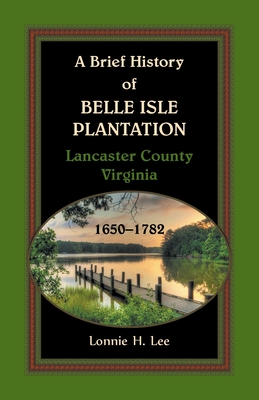
A Brief History of Belle Isle Plantation, Lancaster County, Virginia, 1650-1782
This brief history identifies and interprets the rich cache of surviving archival and primary records relating to the Virginia colonial plantation that came to be called Belle Isle. After a long history as a Native American settlement visited by Captain John Smith in 1607 and 1608, this Rappahannock River plantation was first patented by Thomas Powell (d. 1670) as English settlers were pouring into this part of Virginia in 1650. In 1692, a Huguenot-Anglican immigrant clergyman named John Bertrand (c. 1651-1701) purchased this 500-acre plantation that he later enlarged to 924 acres.
The abundant documentary evidence for the Belle Isle plantation is enhanced by archeological studies of the site and its preservation by the Commonwealth of Virginia. In transactions consummated in 1992 and 2015, Virginia purchased virtually all of the land contained in the 924-acre Belle Isle patent John Bertrand received from the Northern Neck Proprietary in 1698. From these acquisitions the Commonwealth has created Belle Isle State Park.
A Brief History of Belle Isle Plantation has a chapter on each of the patent holders of the plantation during the colonial period, including the French merchant widow of John Bertrand -- Charlotte Jolly Bertrand (1659-1721). The annotated index of 434 names has 191 entries for persons who lived on the plantation during the colonial period (of whom seventeen were indentured servants and more than 100 were enslaved African Virginians). Facsimile reprints of original documents and maps, a bibliography, and two appendices (a plantation timeline and eight family trees researched in Virginia and western France) add to the value of this work.
PRP: 186.00 Lei

Acesta este Prețul Recomandat de Producător. Prețul de vânzare al produsului este afișat mai jos.
167.40Lei
167.40Lei
186.00 LeiPrimești 167 puncte
Livrare in 2-4 saptamani
Descrierea produsului
This brief history identifies and interprets the rich cache of surviving archival and primary records relating to the Virginia colonial plantation that came to be called Belle Isle. After a long history as a Native American settlement visited by Captain John Smith in 1607 and 1608, this Rappahannock River plantation was first patented by Thomas Powell (d. 1670) as English settlers were pouring into this part of Virginia in 1650. In 1692, a Huguenot-Anglican immigrant clergyman named John Bertrand (c. 1651-1701) purchased this 500-acre plantation that he later enlarged to 924 acres.
The abundant documentary evidence for the Belle Isle plantation is enhanced by archeological studies of the site and its preservation by the Commonwealth of Virginia. In transactions consummated in 1992 and 2015, Virginia purchased virtually all of the land contained in the 924-acre Belle Isle patent John Bertrand received from the Northern Neck Proprietary in 1698. From these acquisitions the Commonwealth has created Belle Isle State Park.
A Brief History of Belle Isle Plantation has a chapter on each of the patent holders of the plantation during the colonial period, including the French merchant widow of John Bertrand -- Charlotte Jolly Bertrand (1659-1721). The annotated index of 434 names has 191 entries for persons who lived on the plantation during the colonial period (of whom seventeen were indentured servants and more than 100 were enslaved African Virginians). Facsimile reprints of original documents and maps, a bibliography, and two appendices (a plantation timeline and eight family trees researched in Virginia and western France) add to the value of this work.
Detaliile produsului



