





A Millennium of Family Change: Feudalism to Capitalism in Northwestern Europe
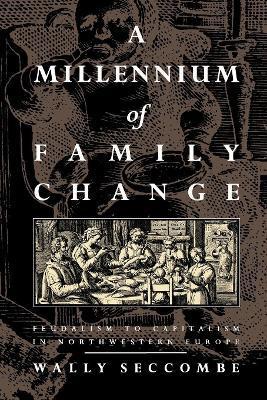
A Millennium of Family Change: Feudalism to Capitalism in Northwestern Europe
How do changes in family form relate to changes in society as a whole? In a work which combines theoretical rigour with historical scope, Wally Seccombe provides a powerful study of the changing structure of families from the Middle Ages to the beginning of the Industrial Revolution. Responding to feminist critiques of 'sex-blind' historical materialism, Seccombe argues that family forms must be seen to be at the heart of modes of production. He takes issue with the mainstream consensus in family history which argues that capitalism did not fundamentally alter the structure of the nuclear family, and makes a controversial intervention in the long-standing debate over European marriage patterns and their relation to industrialization. Drawing on an astonishing range of studies in family history, historical demography and economic history, A Millennium of Family Change provides an integrated overview of the long transition from feudalism to capitalism, illuminating the far-reaching changes in familial relations from peasant subsistence to the making of the modern working class.
PRP: 165.00 Lei

Acesta este Prețul Recomandat de Producător. Prețul de vânzare al produsului este afișat mai jos.
148.50Lei
148.50Lei
165.00 LeiPrimești 148 puncte
Livrare in 2-4 saptamani
Descrierea produsului
How do changes in family form relate to changes in society as a whole? In a work which combines theoretical rigour with historical scope, Wally Seccombe provides a powerful study of the changing structure of families from the Middle Ages to the beginning of the Industrial Revolution. Responding to feminist critiques of 'sex-blind' historical materialism, Seccombe argues that family forms must be seen to be at the heart of modes of production. He takes issue with the mainstream consensus in family history which argues that capitalism did not fundamentally alter the structure of the nuclear family, and makes a controversial intervention in the long-standing debate over European marriage patterns and their relation to industrialization. Drawing on an astonishing range of studies in family history, historical demography and economic history, A Millennium of Family Change provides an integrated overview of the long transition from feudalism to capitalism, illuminating the far-reaching changes in familial relations from peasant subsistence to the making of the modern working class.
Detaliile produsului



