







Aerial Nurse Corps of America: Lauretta Schimmoler and Leora Stroup Pilot-In Air Evac
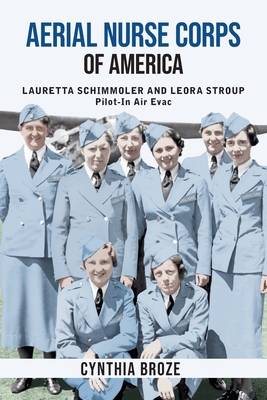
Aerial Nurse Corps of America: Lauretta Schimmoler and Leora Stroup Pilot-In Air Evac
If we are sick and require air transport, we expect a skilled flight nurse will assist us. Before 1936 this was far from reality. Air transportation of critically ill patients began sporadically during World War I, but they crammed the wounded behind the pilot's area with no one to attend to them-the sick and dying patients had to fend for themselves. Lauretta Schimmoler realized this and sought to change it. She thought nurses trained in the aspects of air ambulance transport would be valuable for society. She hoped it could also benefit the military. She found nurses who believed in her cause. Some were pilots or became pilots. Dedicated nurses like Leora Stroup championed the idea when others doubted its relevance.
Schimmoler understood airport management, flight school operations, aircraft manufacturing, first aid, chemical warfare, air mail transport, weather, and flight recorders. She even designed special medical equipment to fit inside small airplanes. But the various ranks scrutinized her actions because she wasn't a nurse. Schimmoler and Stroup were born, spent their childhoods, and were buried within 120 miles of each other in Ohio. Both became pilots and early members of the Ninety-Nines club. Stroup had also thought nurses should train for aerial duty even before she met Schimmoler. And Stroup had an edge on Schimmoler-she was a nurse-but Schimmoler barreled ahead despite lacking those credentials.
Schimmoler expected people would see the value and appreciate what she and the nurses wanted to accomplish with this specialty they were trying to create. She was wrong. She hadn't realized one essential detail when developing her idea: nursing administration groups and the military didn't accept proposals from outsiders. Thus, she would spend her air ambulance life trying to work with them, through them, or around them.
PRP: 272.72 Lei

Acesta este Prețul Recomandat de Producător. Prețul de vânzare al produsului este afișat mai jos.
245.45Lei
245.45Lei
272.72 LeiPrimești 245 puncte
Indisponibil
Descrierea produsului
If we are sick and require air transport, we expect a skilled flight nurse will assist us. Before 1936 this was far from reality. Air transportation of critically ill patients began sporadically during World War I, but they crammed the wounded behind the pilot's area with no one to attend to them-the sick and dying patients had to fend for themselves. Lauretta Schimmoler realized this and sought to change it. She thought nurses trained in the aspects of air ambulance transport would be valuable for society. She hoped it could also benefit the military. She found nurses who believed in her cause. Some were pilots or became pilots. Dedicated nurses like Leora Stroup championed the idea when others doubted its relevance.
Schimmoler understood airport management, flight school operations, aircraft manufacturing, first aid, chemical warfare, air mail transport, weather, and flight recorders. She even designed special medical equipment to fit inside small airplanes. But the various ranks scrutinized her actions because she wasn't a nurse. Schimmoler and Stroup were born, spent their childhoods, and were buried within 120 miles of each other in Ohio. Both became pilots and early members of the Ninety-Nines club. Stroup had also thought nurses should train for aerial duty even before she met Schimmoler. And Stroup had an edge on Schimmoler-she was a nurse-but Schimmoler barreled ahead despite lacking those credentials.
Schimmoler expected people would see the value and appreciate what she and the nurses wanted to accomplish with this specialty they were trying to create. She was wrong. She hadn't realized one essential detail when developing her idea: nursing administration groups and the military didn't accept proposals from outsiders. Thus, she would spend her air ambulance life trying to work with them, through them, or around them.
Detaliile produsului



