





American Indian Cowboys in Southern California, 1493-1941: Survival, Sovereignty, and Identity
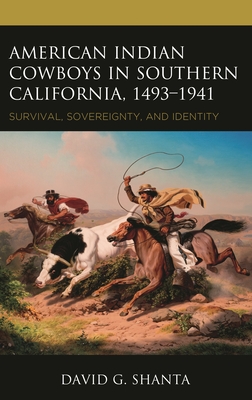
American Indian Cowboys in Southern California, 1493-1941: Survival, Sovereignty, and Identity
In 1769-1770, Spanish Catholic missionaries, soldiers, and Cochimí Indians traveled to Alta California. They relied on domesticated animals, like horses and cattle, for food security in the continual expansion of the Spanish empire. These rapidly increasing herds consumed traditional sources of Indigenous foods, medicines, tools, and weapons and soon outstripped the ability of soldiers and priests to control them. This reality forced the Spanish missionaries to train trusted American Indian converts in the art of cowboying and cattle ranching. American Indian Cowboys in Southern California, 1493-1941: Survival, Sovereignty, and Identity by David G. Shanta provides new insights into the impact of horses and cattle on the Indigenous peoples of the Spanish Borderlands after early colonization. He examines how the American Indian cowboys formed the backbone of Spanish mission economies, the international trade in cowhides and tallow that created the Mexican ranchero class known as Californios, and later on American cattle operations. Shanta shows that California Native peoples adopted cowboying and cattle ranching, first as a survival strategy, but then also acquiring and running their own herds and forming a new, California American Indian economy based on cattle. Their new economy reinforced their demands for sovereignty over their ancestral lands with exclusive rights to essential elements, including the essential elements of pasturage and water. This book affirms the innovative nature of American Indian Cowboys and brings to light how they survived, kept their cultures alive, and gained recognition of their sovereign status.
PRP: 976.50 Lei

Acesta este Prețul Recomandat de Producător. Prețul de vânzare al produsului este afișat mai jos.
878.85Lei
878.85Lei
976.50 LeiPrimești 878 puncte
Livrare in 2-4 saptamani
Descrierea produsului
In 1769-1770, Spanish Catholic missionaries, soldiers, and Cochimí Indians traveled to Alta California. They relied on domesticated animals, like horses and cattle, for food security in the continual expansion of the Spanish empire. These rapidly increasing herds consumed traditional sources of Indigenous foods, medicines, tools, and weapons and soon outstripped the ability of soldiers and priests to control them. This reality forced the Spanish missionaries to train trusted American Indian converts in the art of cowboying and cattle ranching. American Indian Cowboys in Southern California, 1493-1941: Survival, Sovereignty, and Identity by David G. Shanta provides new insights into the impact of horses and cattle on the Indigenous peoples of the Spanish Borderlands after early colonization. He examines how the American Indian cowboys formed the backbone of Spanish mission economies, the international trade in cowhides and tallow that created the Mexican ranchero class known as Californios, and later on American cattle operations. Shanta shows that California Native peoples adopted cowboying and cattle ranching, first as a survival strategy, but then also acquiring and running their own herds and forming a new, California American Indian economy based on cattle. Their new economy reinforced their demands for sovereignty over their ancestral lands with exclusive rights to essential elements, including the essential elements of pasturage and water. This book affirms the innovative nature of American Indian Cowboys and brings to light how they survived, kept their cultures alive, and gained recognition of their sovereign status.
Detaliile produsului



