





Armies of the Steppe Nomads, 376-1227: From the Coming of Attila's Huns to the Death of Genghis, Great Khan of the Mongols
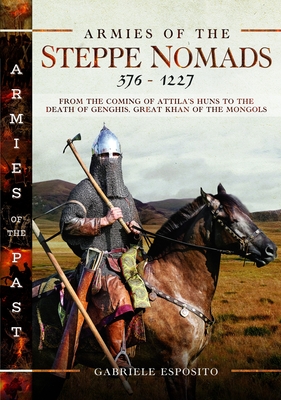
Armies of the Steppe Nomads, 376-1227: From the Coming of Attila's Huns to the Death of Genghis, Great Khan of the Mongols
Examines the history, organization, and military prowess of nomadic Eurasian steppe peoples, from the Huns to the Mongols.
Gabriele Esposito presents an overview of the history, organization and equipment of the military forces deployed by the nomadic peoples of the Eurasian steppes during the period from the appearance of the Huns in Eastern Europe to the death of Genghis Khan. Each chapter is devoted to a different group that played a prominent military role during Antiquity and the Middle Ages. Starting with the Huns of Attila, whose migration was one of the key factors behind the fall of the Roman Empire, he moves on to the Avars, who established a large state in Eastern Europe that contested with Charlemagne's Frankish Empire. Chapter three covers the Magyars, who terrorized most of Europe during the tenth century before creating the Kingdom of Hungary. Next are the Bulgars, who became the worst enemies of the Byzantine Empire in the Balkans but also created a flourishing state in the Volga region of Russia. The Khazars and the Alans share a chapter, as do the Pechenegs and Cumans-Kipchaks, while the Turks merit a dedicated chapter. Last but not least are the Mongols, who are traced from the unification of their tribes to the death of the great Genghis Khan.
By describing the military organization, weapons and tactics of these nomadic peoples the author shows how they dominated the battlefields of the world for almost 1,000 years thanks to their superior capabilities. He also discusses how they interacted with other civilizations and how the latter learned a lot from them, especially militarily. Without the existence of the warlike nomadic peoples of the Eurasian steppes, the history of the world would have been very different.
Gabriele Esposito presents an overview of the history, organization and equipment of the military forces deployed by the nomadic peoples of the Eurasian steppes during the period from the appearance of the Huns in Eastern Europe to the death of Genghis Khan. Each chapter is devoted to a different group that played a prominent military role during Antiquity and the Middle Ages. Starting with the Huns of Attila, whose migration was one of the key factors behind the fall of the Roman Empire, he moves on to the Avars, who established a large state in Eastern Europe that contested with Charlemagne's Frankish Empire. Chapter three covers the Magyars, who terrorized most of Europe during the tenth century before creating the Kingdom of Hungary. Next are the Bulgars, who became the worst enemies of the Byzantine Empire in the Balkans but also created a flourishing state in the Volga region of Russia. The Khazars and the Alans share a chapter, as do the Pechenegs and Cumans-Kipchaks, while the Turks merit a dedicated chapter. Last but not least are the Mongols, who are traced from the unification of their tribes to the death of the great Genghis Khan.
By describing the military organization, weapons and tactics of these nomadic peoples the author shows how they dominated the battlefields of the world for almost 1,000 years thanks to their superior capabilities. He also discusses how they interacted with other civilizations and how the latter learned a lot from them, especially militarily. Without the existence of the warlike nomadic peoples of the Eurasian steppes, the history of the world would have been very different.
PRP: 180.00 Lei

Acesta este Prețul Recomandat de Producător. Prețul de vânzare al produsului este afișat mai jos.
144.00Lei
144.00Lei
180.00 LeiPrimești 144 puncte
Livrare in 2-4 saptamani
Descrierea produsului
Examines the history, organization, and military prowess of nomadic Eurasian steppe peoples, from the Huns to the Mongols.
Gabriele Esposito presents an overview of the history, organization and equipment of the military forces deployed by the nomadic peoples of the Eurasian steppes during the period from the appearance of the Huns in Eastern Europe to the death of Genghis Khan. Each chapter is devoted to a different group that played a prominent military role during Antiquity and the Middle Ages. Starting with the Huns of Attila, whose migration was one of the key factors behind the fall of the Roman Empire, he moves on to the Avars, who established a large state in Eastern Europe that contested with Charlemagne's Frankish Empire. Chapter three covers the Magyars, who terrorized most of Europe during the tenth century before creating the Kingdom of Hungary. Next are the Bulgars, who became the worst enemies of the Byzantine Empire in the Balkans but also created a flourishing state in the Volga region of Russia. The Khazars and the Alans share a chapter, as do the Pechenegs and Cumans-Kipchaks, while the Turks merit a dedicated chapter. Last but not least are the Mongols, who are traced from the unification of their tribes to the death of the great Genghis Khan.
By describing the military organization, weapons and tactics of these nomadic peoples the author shows how they dominated the battlefields of the world for almost 1,000 years thanks to their superior capabilities. He also discusses how they interacted with other civilizations and how the latter learned a lot from them, especially militarily. Without the existence of the warlike nomadic peoples of the Eurasian steppes, the history of the world would have been very different.
Gabriele Esposito presents an overview of the history, organization and equipment of the military forces deployed by the nomadic peoples of the Eurasian steppes during the period from the appearance of the Huns in Eastern Europe to the death of Genghis Khan. Each chapter is devoted to a different group that played a prominent military role during Antiquity and the Middle Ages. Starting with the Huns of Attila, whose migration was one of the key factors behind the fall of the Roman Empire, he moves on to the Avars, who established a large state in Eastern Europe that contested with Charlemagne's Frankish Empire. Chapter three covers the Magyars, who terrorized most of Europe during the tenth century before creating the Kingdom of Hungary. Next are the Bulgars, who became the worst enemies of the Byzantine Empire in the Balkans but also created a flourishing state in the Volga region of Russia. The Khazars and the Alans share a chapter, as do the Pechenegs and Cumans-Kipchaks, while the Turks merit a dedicated chapter. Last but not least are the Mongols, who are traced from the unification of their tribes to the death of the great Genghis Khan.
By describing the military organization, weapons and tactics of these nomadic peoples the author shows how they dominated the battlefields of the world for almost 1,000 years thanks to their superior capabilities. He also discusses how they interacted with other civilizations and how the latter learned a lot from them, especially militarily. Without the existence of the warlike nomadic peoples of the Eurasian steppes, the history of the world would have been very different.
Detaliile produsului



