







Botanical Colour at your Fingertips
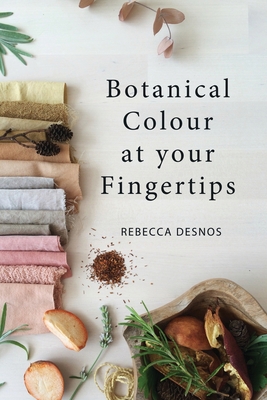
Botanical Colour at your Fingertips
This book will show you how to extract dye from wild plants, garden herbs, kitchen waste, as well as fruit and vegetables that you can buy from the supermarket. Dye your own fabric, yarn and clothing whilst using soya milk to bind the colours. There is colour potential all around us just waiting to be unlocked
I share my methods with you, step-by-step. The pages are bursting with photos of the dyeing process as well as photos of fabric and yarn samples from lots of different plants.
Perhaps you already dye with plants using conventional mordants such as alum and would like to try the more natural soya milk method for fixing colours? Maybe you are beginning your journey with plant dyeing now? Either way, there is something for you in my book.
The book covers the following plus more
- how to produce long-lasting colours on cellulose (plant) fibres such as cotton, linen & bamboo viscose.
- how and why to pretreat fabric & yarn in soya milk before dyeing.
- choosing plants that will give promising results in the dye pot.
- how to extract the most colour from plants and how to achieve dark colours on cellulose fibres.
- my methods for producing deep pinks from avocado skins and stones (pits/seeds).
- altering colours by changing the pH of dye.
- using iron or rust water to darken your dyed fabric/yarn and expand your palette of colours.
- painting patterns with iron water.
- testing fabric & yarn for colour fastness.
A note on plant fibres
This book focuses on dyeing cellulose fibres, such as linen, cotton, hemp and bamboo viscose/rayon. I am vegan and do not use any animal protein fibres like wool or silk. Of course my dyeing methods can be applied to animal fibres, if you choose.
PRP: 206.58 Lei

Acesta este Prețul Recomandat de Producător. Prețul de vânzare al produsului este afișat mai jos.
185.92Lei
185.92Lei
206.58 LeiPrimești 185 puncte
Livrare in 2-4 saptamani
Descrierea produsului
This book will show you how to extract dye from wild plants, garden herbs, kitchen waste, as well as fruit and vegetables that you can buy from the supermarket. Dye your own fabric, yarn and clothing whilst using soya milk to bind the colours. There is colour potential all around us just waiting to be unlocked
I share my methods with you, step-by-step. The pages are bursting with photos of the dyeing process as well as photos of fabric and yarn samples from lots of different plants.
Perhaps you already dye with plants using conventional mordants such as alum and would like to try the more natural soya milk method for fixing colours? Maybe you are beginning your journey with plant dyeing now? Either way, there is something for you in my book.
The book covers the following plus more
- how to produce long-lasting colours on cellulose (plant) fibres such as cotton, linen & bamboo viscose.
- how and why to pretreat fabric & yarn in soya milk before dyeing.
- choosing plants that will give promising results in the dye pot.
- how to extract the most colour from plants and how to achieve dark colours on cellulose fibres.
- my methods for producing deep pinks from avocado skins and stones (pits/seeds).
- altering colours by changing the pH of dye.
- using iron or rust water to darken your dyed fabric/yarn and expand your palette of colours.
- painting patterns with iron water.
- testing fabric & yarn for colour fastness.
A note on plant fibres
This book focuses on dyeing cellulose fibres, such as linen, cotton, hemp and bamboo viscose/rayon. I am vegan and do not use any animal protein fibres like wool or silk. Of course my dyeing methods can be applied to animal fibres, if you choose.
Detaliile produsului



