







Dancing Mestizo Modernisms: Choreographing Postcolonial and Postrevolutionary Mexico
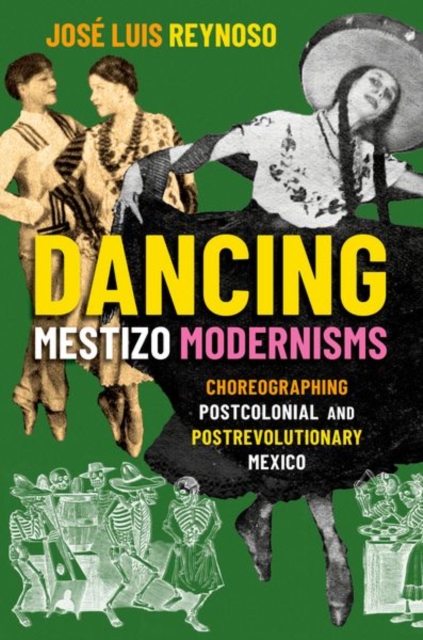
Dancing Mestizo Modernisms: Choreographing Postcolonial and Postrevolutionary Mexico
This book analyzes how national and international dancers contributed to developing Mexico's cultural politics and notions of the nation at different historical moments. It emphasizes how dancers and other moving bodies resisted and reproduced racial and social hierarchies stemming from colonial Mexico (1521-1821). Relying on extensive archival research, choreography as an analytical methodology, and theories of race, dance, and performance studies, author Jose Reynoso examines how dance and other forms of embodiment participated in Mexico's formation after the Mexican War of Independence (1821-1876), the Porfirian dictatorship (1876-1911), and postrevolutionary Mexico (1919-1940). In so doing, the book analyzes how underlying colonial logics continued to influence relationships amongst dancers, other artists, government officials, critics, and audiences of different backgrounds as they refashioned their racial, social, cultural, and national identities. The book proposes and develops two main concepts that explore these mutually formative interactions among such diverse people: embodied mestizo modernisms and transnational nationalisms. 'Embodied mestizo modernisms' refers to combinations of indigenous, folkloric, ballet, and modern dance practices in works choreographed by national and international dancers with different racial and social backgrounds. The book contends that these mestizo modernist dance practices challenged assumptions about racial neutrality with which whiteness historically established its ostensible supremacy in constructing Mexico's 'transnational nationalisms'. This argument holds that notions of the nation-state and national identities are not produced exclusively by a nation's natives but also by historical transnational forces and (dancing) bodies whose influences shape local politics, economic interests, and artistic practices.
PRP: 412.20 Lei

Acesta este Prețul Recomandat de Producător. Prețul de vânzare al produsului este afișat mai jos.
370.98Lei
370.98Lei
412.20 LeiPrimești 370 puncte
Livrare in 2-4 saptamani
Descrierea produsului
This book analyzes how national and international dancers contributed to developing Mexico's cultural politics and notions of the nation at different historical moments. It emphasizes how dancers and other moving bodies resisted and reproduced racial and social hierarchies stemming from colonial Mexico (1521-1821). Relying on extensive archival research, choreography as an analytical methodology, and theories of race, dance, and performance studies, author Jose Reynoso examines how dance and other forms of embodiment participated in Mexico's formation after the Mexican War of Independence (1821-1876), the Porfirian dictatorship (1876-1911), and postrevolutionary Mexico (1919-1940). In so doing, the book analyzes how underlying colonial logics continued to influence relationships amongst dancers, other artists, government officials, critics, and audiences of different backgrounds as they refashioned their racial, social, cultural, and national identities. The book proposes and develops two main concepts that explore these mutually formative interactions among such diverse people: embodied mestizo modernisms and transnational nationalisms. 'Embodied mestizo modernisms' refers to combinations of indigenous, folkloric, ballet, and modern dance practices in works choreographed by national and international dancers with different racial and social backgrounds. The book contends that these mestizo modernist dance practices challenged assumptions about racial neutrality with which whiteness historically established its ostensible supremacy in constructing Mexico's 'transnational nationalisms'. This argument holds that notions of the nation-state and national identities are not produced exclusively by a nation's natives but also by historical transnational forces and (dancing) bodies whose influences shape local politics, economic interests, and artistic practices.
Detaliile produsului



