





Displaced: Manzanar 1942-1945: The Incarceration of Japanese Americans
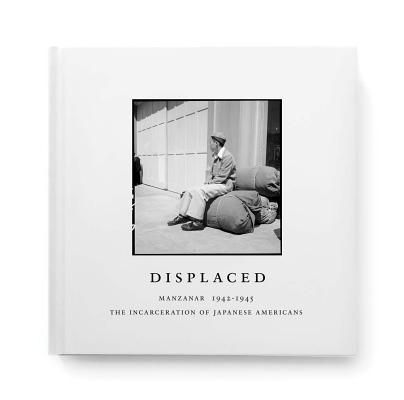
Displaced: Manzanar 1942-1945: The Incarceration of Japanese Americans
This sorry episode has been illuminated in books and documentaries. But I've never felt its emotional texture--the unexpected mix of dereliction and upstanding hopefulness--so vividly as in this set of photographs taken by Ansel Adams and Dorothea Lange and five others, among them an artist incarcerated at Manzanar. -Pico Iyer
In the weeks following the bombing of Pearl Harbor on December 7, 1941, American suspicion and distrust of its Japanese American population became widespread. The US government soon ordered all Japanese Americans (two thirds of them American citizens) living on the West Coast to report to assembly centers for eventual transfer to internment camps, openly referred to by the New York Times as concentration camps. Within a few months of Pearl Harbor, President Franklin D. Roosevelt signed Executive Order 9066; soon after, the War Relocation Authority (WRA) was established and by the end of March, the first of 10,000 Japanese evacuees arrived in Manzanar, an internment camp in the Owens Valley desert at the foot of the Sierras. Families were given one to two weeks' notice and were allowed to pack only what they could carry. Businesses were shuttered and farms and equipment were sold at bargain prices. Upon arrival at Manzanar, each person was assigned to a barrack, given a cot, blankets and a canvas bag to be filled with straw in order to create their own mattresses.
Dorothea Lange was hired by the WRA to photograph the mass evacuation; she worked into the first months of the internment until she was fired by WRA staff for her sympathetic approach. Many of her photographs were seized by the government and largely unseen by the public for a half century. More than a year later, Manzanar Project Director Ralph Merritt hired Ansel Adams to document life at the camp. Lange and Adams were also joined by WRA photographers Russell Lee, Clem Albers and Francis Stewart. Two Japanese internees, Toyo Miyatake and Jack Iwata, secretly photographed life within the camp with a smuggled camera.
Gathered together in this volume, these images express the dignity and determination of the Japanese Americans in the face of injustice and humiliation. Today the tragic circumstances surrounding displaced and detained people around the world only strengthen the impact of these photos taken 75 years ago.
PRP: 279.00 Lei

Acesta este Prețul Recomandat de Producător. Prețul de vânzare al produsului este afișat mai jos.
223.20Lei
223.20Lei
279.00 LeiPrimești 223 puncte
Livrare in 2-4 saptamani
Descrierea produsului
This sorry episode has been illuminated in books and documentaries. But I've never felt its emotional texture--the unexpected mix of dereliction and upstanding hopefulness--so vividly as in this set of photographs taken by Ansel Adams and Dorothea Lange and five others, among them an artist incarcerated at Manzanar. -Pico Iyer
In the weeks following the bombing of Pearl Harbor on December 7, 1941, American suspicion and distrust of its Japanese American population became widespread. The US government soon ordered all Japanese Americans (two thirds of them American citizens) living on the West Coast to report to assembly centers for eventual transfer to internment camps, openly referred to by the New York Times as concentration camps. Within a few months of Pearl Harbor, President Franklin D. Roosevelt signed Executive Order 9066; soon after, the War Relocation Authority (WRA) was established and by the end of March, the first of 10,000 Japanese evacuees arrived in Manzanar, an internment camp in the Owens Valley desert at the foot of the Sierras. Families were given one to two weeks' notice and were allowed to pack only what they could carry. Businesses were shuttered and farms and equipment were sold at bargain prices. Upon arrival at Manzanar, each person was assigned to a barrack, given a cot, blankets and a canvas bag to be filled with straw in order to create their own mattresses.
Dorothea Lange was hired by the WRA to photograph the mass evacuation; she worked into the first months of the internment until she was fired by WRA staff for her sympathetic approach. Many of her photographs were seized by the government and largely unseen by the public for a half century. More than a year later, Manzanar Project Director Ralph Merritt hired Ansel Adams to document life at the camp. Lange and Adams were also joined by WRA photographers Russell Lee, Clem Albers and Francis Stewart. Two Japanese internees, Toyo Miyatake and Jack Iwata, secretly photographed life within the camp with a smuggled camera.
Gathered together in this volume, these images express the dignity and determination of the Japanese Americans in the face of injustice and humiliation. Today the tragic circumstances surrounding displaced and detained people around the world only strengthen the impact of these photos taken 75 years ago.
Detaliile produsului



