





Encounter on the Great Plains: Scandinavian Settlers and the Dispossession of Dakota Indians, 1890-1930
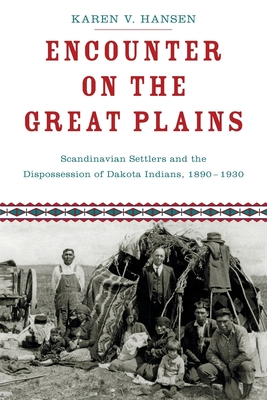
Encounter on the Great Plains: Scandinavian Settlers and the Dispossession of Dakota Indians, 1890-1930
In 1904, the first Scandinavian settlers moved onto the Spirit Lake Dakota Indian Reservation. These land-hungry immigrants struggled against severe poverty, often becoming the sharecropping tenants of Dakota landowners. Yet the homesteaders' impoverishment did not impede their quest to acquire Indian land, and by 1929 Scandinavians owned more reservation acreage than their Dakota neighbors. Norwegian homesteader Helena Haugen Kanten put it plainly: "We stole the land from the Indians." With this largely unknown story at its center, Encounter on the Great Plains brings together two dominant processes in American history: the unceasing migration of newcomers to North America, and the protracted dispossession of indigenous peoples who inhabited the continent. Drawing on fifteen years of archival research and 130 oral histories, Karen V. Hansen explores the epic issues of co-existence between settlers and Indians and the effect of racial hierarchies, both legal and cultural, on marginalized peoples. Hansen offers a wealth of intimate detail about daily lives and community events, showing how both Dakotas and Scandinavians resisted assimilation and used their rights as new citizens to combat attacks on their cultures. In this flowing narrative, women emerge as resourceful agents of their own economic interests. Dakota women gained autonomy in the use of their allotments, while Scandinavian women staked and "proved up" their own claims. Hansen chronicles the intertwined stories of Dakotas and immigrants-women and men, farmers, domestic servants, and day laborers. Their shared struggles reveal efforts to maintain a language, sustain a culture, and navigate their complex ties to more than one nation. The history of the American West cannot be told without these voices: their long connections, intermittent conflicts, and profound influence over one another defy easy categorization and provide a new perspective on the processes of immigration and land taking.
PRP: 510.47 Lei

Acesta este Prețul Recomandat de Producător. Prețul de vânzare al produsului este afișat mai jos.
408.38Lei
408.38Lei
510.47 LeiPrimești 408 puncte
Indisponibil
Descrierea produsului
In 1904, the first Scandinavian settlers moved onto the Spirit Lake Dakota Indian Reservation. These land-hungry immigrants struggled against severe poverty, often becoming the sharecropping tenants of Dakota landowners. Yet the homesteaders' impoverishment did not impede their quest to acquire Indian land, and by 1929 Scandinavians owned more reservation acreage than their Dakota neighbors. Norwegian homesteader Helena Haugen Kanten put it plainly: "We stole the land from the Indians." With this largely unknown story at its center, Encounter on the Great Plains brings together two dominant processes in American history: the unceasing migration of newcomers to North America, and the protracted dispossession of indigenous peoples who inhabited the continent. Drawing on fifteen years of archival research and 130 oral histories, Karen V. Hansen explores the epic issues of co-existence between settlers and Indians and the effect of racial hierarchies, both legal and cultural, on marginalized peoples. Hansen offers a wealth of intimate detail about daily lives and community events, showing how both Dakotas and Scandinavians resisted assimilation and used their rights as new citizens to combat attacks on their cultures. In this flowing narrative, women emerge as resourceful agents of their own economic interests. Dakota women gained autonomy in the use of their allotments, while Scandinavian women staked and "proved up" their own claims. Hansen chronicles the intertwined stories of Dakotas and immigrants-women and men, farmers, domestic servants, and day laborers. Their shared struggles reveal efforts to maintain a language, sustain a culture, and navigate their complex ties to more than one nation. The history of the American West cannot be told without these voices: their long connections, intermittent conflicts, and profound influence over one another defy easy categorization and provide a new perspective on the processes of immigration and land taking.
Detaliile produsului



