





Instrument of the State: A Century of Music in Louisiana's Angola Prison
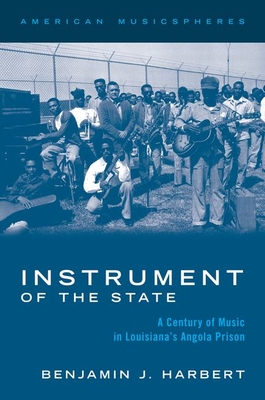
Instrument of the State: A Century of Music in Louisiana's Angola Prison
Louisiana State Penitentiary is one of the largest and most brutal maximum-security prisons in the United States. Built on the grounds of a former plantation, the prison is commonly referred to as "Angola" apropos of the country of origin for many of the enslaved people who inhabited the land. Despite notoriously inhumane conditions within the prison, people incarcerated at Angola have sustained a rich and dynamic musical legacy since the late nineteenth century, attracting folklorists such as John and Alan Lomax and Harry Oster. Well-known musicians including Huddie William "Lead Belly" Ledbetter, Charles Neville, and James Booker played a part in this history, in addition to a litany of others who proved vital to the prison's musical culture but for various reasons were unable to establish their careers upon release. In Instrument of the State, author Benjamin J. Harbert interweaves oral history and archival research to show how incarcerated musicians find small but essential freedoms by performing jazz, R&B, country, gospel, rock, and fusion throughout the Twentieth Century. In doing so, he expands folkloric definitions of "prison music." considering the ways in which music manifests among the incarcerated and the prison's administration as a lens to better understand state power and the fragments of hope and joy that remain in its wake. Instrument of the State acts as an indictment of the carceral state, highlighting the many ways in which the US penal system disproportionately affects African American people through desperate profiteering of a deliberately underfunded state agency.
PRP: 275.29 Lei

Acesta este Prețul Recomandat de Producător. Prețul de vânzare al produsului este afișat mai jos.
220.23Lei
220.23Lei
275.29 LeiPrimești 220 puncte
Livrare in 2-4 saptamani
Descrierea produsului
Louisiana State Penitentiary is one of the largest and most brutal maximum-security prisons in the United States. Built on the grounds of a former plantation, the prison is commonly referred to as "Angola" apropos of the country of origin for many of the enslaved people who inhabited the land. Despite notoriously inhumane conditions within the prison, people incarcerated at Angola have sustained a rich and dynamic musical legacy since the late nineteenth century, attracting folklorists such as John and Alan Lomax and Harry Oster. Well-known musicians including Huddie William "Lead Belly" Ledbetter, Charles Neville, and James Booker played a part in this history, in addition to a litany of others who proved vital to the prison's musical culture but for various reasons were unable to establish their careers upon release. In Instrument of the State, author Benjamin J. Harbert interweaves oral history and archival research to show how incarcerated musicians find small but essential freedoms by performing jazz, R&B, country, gospel, rock, and fusion throughout the Twentieth Century. In doing so, he expands folkloric definitions of "prison music." considering the ways in which music manifests among the incarcerated and the prison's administration as a lens to better understand state power and the fragments of hope and joy that remain in its wake. Instrument of the State acts as an indictment of the carceral state, highlighting the many ways in which the US penal system disproportionately affects African American people through desperate profiteering of a deliberately underfunded state agency.
Detaliile produsului



