







Judgment at Tokyo: World War II on Trial and the Making of Modern Asia
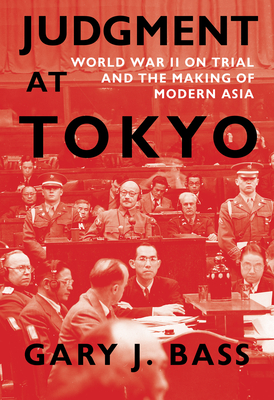
Judgment at Tokyo: World War II on Trial and the Making of Modern Asia
A landmark, magisterial history of the trial of Japan's leaders as war criminals--the largely overlooked Asian counterpart to Nuremberg In the weeks after Japan finally surrendered to the Allies to end World War II, the world turned to the question of how to move on from years of carnage and destruction. For Harry Truman, Douglas MacArthur, Chiang Kai-shek, and their fellow victors, the question of justice seemed clear: Japan's militaristic leaders needed to be tried and punished for the surprise attack at Pearl Harbor; shocking atrocities against civilians in China, the Philippines, and elsewhere; and rampant abuses of prisoners of war in notorious incidents such as the Bataan death march. For the Allied powers, the trial was an opportunity to render judgment on their vanquished foes, but also to create a legal framework to prosecute war crimes and prohibit the use of aggressive war, building a more peaceful world under international law and American hegemony. For the Japanese leaders on trial, it was their chance to argue that their war had been waged to liberate Asia from Western imperialism and that the court was victors' justice. For more than two years, lawyers for both sides presented their cases before a panel of clashing judges from China, India, the Philippines, and Australia, as well as the United States and European powers. The testimony ran from horrific accounts of brutality and the secret plans to attack Pearl Harbor to the Japanese military's threats to subvert the government if it sued for peace. Yet rather than clarity and unanimity, the trial brought complexity, dissents, and divisions that provoke international discord between China, Japan, and Korea to this day. Those courtroom tensions and contradictions could also be seen playing out across Asia as the trial unfolded in the crucial early years of the Cold War, from China's descent into civil war to Japan's successful postwar democratic elections to India's independence and partition. From the author of the acclaimed The Blood Telegram, which was a Pulitzer Prize finalist, this magnificent history is the product of a decade of research and writing. Judgment at Tokyo is a riveting story of wartime action, dramatic courtroom battles, and the epic formative years that set the stage for the Asian postwar era.
PRP: 285.20 Lei

Acesta este Prețul Recomandat de Producător. Prețul de vânzare al produsului este afișat mai jos.
256.68Lei
256.68Lei
285.20 LeiPrimești 256 puncte
Indisponibil
Descrierea produsului
A landmark, magisterial history of the trial of Japan's leaders as war criminals--the largely overlooked Asian counterpart to Nuremberg In the weeks after Japan finally surrendered to the Allies to end World War II, the world turned to the question of how to move on from years of carnage and destruction. For Harry Truman, Douglas MacArthur, Chiang Kai-shek, and their fellow victors, the question of justice seemed clear: Japan's militaristic leaders needed to be tried and punished for the surprise attack at Pearl Harbor; shocking atrocities against civilians in China, the Philippines, and elsewhere; and rampant abuses of prisoners of war in notorious incidents such as the Bataan death march. For the Allied powers, the trial was an opportunity to render judgment on their vanquished foes, but also to create a legal framework to prosecute war crimes and prohibit the use of aggressive war, building a more peaceful world under international law and American hegemony. For the Japanese leaders on trial, it was their chance to argue that their war had been waged to liberate Asia from Western imperialism and that the court was victors' justice. For more than two years, lawyers for both sides presented their cases before a panel of clashing judges from China, India, the Philippines, and Australia, as well as the United States and European powers. The testimony ran from horrific accounts of brutality and the secret plans to attack Pearl Harbor to the Japanese military's threats to subvert the government if it sued for peace. Yet rather than clarity and unanimity, the trial brought complexity, dissents, and divisions that provoke international discord between China, Japan, and Korea to this day. Those courtroom tensions and contradictions could also be seen playing out across Asia as the trial unfolded in the crucial early years of the Cold War, from China's descent into civil war to Japan's successful postwar democratic elections to India's independence and partition. From the author of the acclaimed The Blood Telegram, which was a Pulitzer Prize finalist, this magnificent history is the product of a decade of research and writing. Judgment at Tokyo is a riveting story of wartime action, dramatic courtroom battles, and the epic formative years that set the stage for the Asian postwar era.
Detaliile produsului



