







Landscapes of Hope: Nature and the Great Migration in Chicago
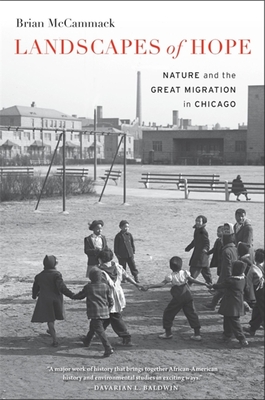
Landscapes of Hope: Nature and the Great Migration in Chicago
Winner of the Frederick Jackson Turner Award
Winner of the George Perkins Marsh Prize
Winner of the John Brinckerhoff Jackson Book Prize
--Davarian L. Baldwin, Journal of Interdisciplinary History Between 1915 and 1940, hundreds of thousands of African Americans left the rural South to begin new lives in the urban North. In Chicago, the black population quintupled to more than 275,000. Most historians map the integration of southern and northern black culture by looking at labor, politics, and popular culture. An award-winning environmental historian, Brian McCammack charts a different course, considering instead how black Chicagoans forged material and imaginative connections to nature. The first major history to frame the Great Migration as an environmental experience, Landscapes of Hope takes us to Chicago's parks and beaches as well as to the youth camps, vacation resorts, farms, and forests of the rural Midwest. Situated at the intersection of race and place in American history, it traces the contours of a black environmental consciousness that runs throughout the African American experience. "Uncovers the untold history of African Americans' migration to Chicago as they constructed both material and immaterial connections to nature."
--Teona Williams, Black Perspectives "A beautifully written, smart, painstakingly researched account that adds nuance to the growing field of African American environmental history."
--Colin Fisher, American Historical Review "If in the South nature was associated with labor, for the inhabitants of the crowded tenements in Chicago, nature increasingly became a source of leisure."
--Reinier de Graaf, New York Review of Books
PRP: 294.50 Lei

Acesta este Prețul Recomandat de Producător. Prețul de vânzare al produsului este afișat mai jos.
265.05Lei
265.05Lei
294.50 LeiPrimești 265 puncte
Indisponibil
Descrierea produsului
Winner of the Frederick Jackson Turner Award
Winner of the George Perkins Marsh Prize
Winner of the John Brinckerhoff Jackson Book Prize
--Davarian L. Baldwin, Journal of Interdisciplinary History Between 1915 and 1940, hundreds of thousands of African Americans left the rural South to begin new lives in the urban North. In Chicago, the black population quintupled to more than 275,000. Most historians map the integration of southern and northern black culture by looking at labor, politics, and popular culture. An award-winning environmental historian, Brian McCammack charts a different course, considering instead how black Chicagoans forged material and imaginative connections to nature. The first major history to frame the Great Migration as an environmental experience, Landscapes of Hope takes us to Chicago's parks and beaches as well as to the youth camps, vacation resorts, farms, and forests of the rural Midwest. Situated at the intersection of race and place in American history, it traces the contours of a black environmental consciousness that runs throughout the African American experience. "Uncovers the untold history of African Americans' migration to Chicago as they constructed both material and immaterial connections to nature."
--Teona Williams, Black Perspectives "A beautifully written, smart, painstakingly researched account that adds nuance to the growing field of African American environmental history."
--Colin Fisher, American Historical Review "If in the South nature was associated with labor, for the inhabitants of the crowded tenements in Chicago, nature increasingly became a source of leisure."
--Reinier de Graaf, New York Review of Books
Detaliile produsului



