





Must Farm Pile-Dwelling Settlement: Volume 1. Landscape, Architecture and Occupation
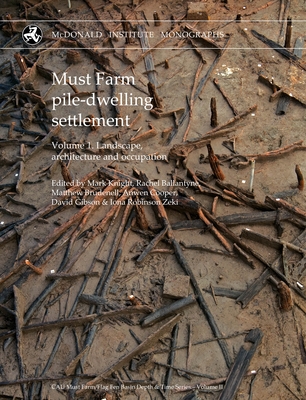
Must Farm Pile-Dwelling Settlement: Volume 1. Landscape, Architecture and Occupation
Offers unprecedented insights into daily life and domestic practices in prehistoric Europe.
The Late Bronze Age pile-dwelling settlement at Must Farm is one of the most important and best-preserved prehistoric sites to have been systematically excavated in Europe.
The settlement comprised a curving palisade enclosing five stilt-raised houses erected above a freshwater river channel at the edge of one most Britain's most intensively studied and internationally renowned Bronze Age landscapes: the Flag Fen Basin.
Built in the mid-9th Century BC, the pile-dwelling was engulfed by a catastrophic fire less than a year after construction, sending the buildings and their artifact-rich contents into the sluggish waters below. A combination of fire, water and rapid burial ensured extraordinary levels of preservation, whilst the manner of collapse and brevity of settlement gave the structural remains, and their vibrant material assemblages, a pristine quality. Each household had its own inventory comprising combinations of delicate textiles, wooden containers, hafts and wheels, complete pottery sets, bronze toolkits and the scattered remnants of necklaces of glass beads. Food remains included butchered wild and domestic animal bones, charred plants and seeds, and even the burnt residues of individual meals.
This comprehensive and methodologically innovative investigation, incorporating an array of scientific studies and collaborations amongst leading specialists, provides unprecedented insights into the nature of daily life and domestic practice in Bronze Age society. These challenge many expectations about the material worlds that people inhabited, shedding new light on aspects of architecture, material abundance, foodways, woodland management, landscape change and wetland living. The collective results are truly ground-breaking for Wetland Archaeology and wider Bronze Age studies. Volume 1 provides a thematic interpretive synthesis of the site, with a focus on landscape, architecture and occupation, whilst Volume 2 offers in-depth studies of the river setting, construction, dating, material culture and biological remains.
The Late Bronze Age pile-dwelling settlement at Must Farm is one of the most important and best-preserved prehistoric sites to have been systematically excavated in Europe.
The settlement comprised a curving palisade enclosing five stilt-raised houses erected above a freshwater river channel at the edge of one most Britain's most intensively studied and internationally renowned Bronze Age landscapes: the Flag Fen Basin.
Built in the mid-9th Century BC, the pile-dwelling was engulfed by a catastrophic fire less than a year after construction, sending the buildings and their artifact-rich contents into the sluggish waters below. A combination of fire, water and rapid burial ensured extraordinary levels of preservation, whilst the manner of collapse and brevity of settlement gave the structural remains, and their vibrant material assemblages, a pristine quality. Each household had its own inventory comprising combinations of delicate textiles, wooden containers, hafts and wheels, complete pottery sets, bronze toolkits and the scattered remnants of necklaces of glass beads. Food remains included butchered wild and domestic animal bones, charred plants and seeds, and even the burnt residues of individual meals.
This comprehensive and methodologically innovative investigation, incorporating an array of scientific studies and collaborations amongst leading specialists, provides unprecedented insights into the nature of daily life and domestic practice in Bronze Age society. These challenge many expectations about the material worlds that people inhabited, shedding new light on aspects of architecture, material abundance, foodways, woodland management, landscape change and wetland living. The collective results are truly ground-breaking for Wetland Archaeology and wider Bronze Age studies. Volume 1 provides a thematic interpretive synthesis of the site, with a focus on landscape, architecture and occupation, whilst Volume 2 offers in-depth studies of the river setting, construction, dating, material culture and biological remains.
PRP: 394.20 Lei

Acesta este Prețul Recomandat de Producător. Prețul de vânzare al produsului este afișat mai jos.
354.78Lei
354.78Lei
394.20 LeiPrimești 354 puncte
Livrare in 2-4 saptamani
Descrierea produsului
Offers unprecedented insights into daily life and domestic practices in prehistoric Europe.
The Late Bronze Age pile-dwelling settlement at Must Farm is one of the most important and best-preserved prehistoric sites to have been systematically excavated in Europe.
The settlement comprised a curving palisade enclosing five stilt-raised houses erected above a freshwater river channel at the edge of one most Britain's most intensively studied and internationally renowned Bronze Age landscapes: the Flag Fen Basin.
Built in the mid-9th Century BC, the pile-dwelling was engulfed by a catastrophic fire less than a year after construction, sending the buildings and their artifact-rich contents into the sluggish waters below. A combination of fire, water and rapid burial ensured extraordinary levels of preservation, whilst the manner of collapse and brevity of settlement gave the structural remains, and their vibrant material assemblages, a pristine quality. Each household had its own inventory comprising combinations of delicate textiles, wooden containers, hafts and wheels, complete pottery sets, bronze toolkits and the scattered remnants of necklaces of glass beads. Food remains included butchered wild and domestic animal bones, charred plants and seeds, and even the burnt residues of individual meals.
This comprehensive and methodologically innovative investigation, incorporating an array of scientific studies and collaborations amongst leading specialists, provides unprecedented insights into the nature of daily life and domestic practice in Bronze Age society. These challenge many expectations about the material worlds that people inhabited, shedding new light on aspects of architecture, material abundance, foodways, woodland management, landscape change and wetland living. The collective results are truly ground-breaking for Wetland Archaeology and wider Bronze Age studies. Volume 1 provides a thematic interpretive synthesis of the site, with a focus on landscape, architecture and occupation, whilst Volume 2 offers in-depth studies of the river setting, construction, dating, material culture and biological remains.
The Late Bronze Age pile-dwelling settlement at Must Farm is one of the most important and best-preserved prehistoric sites to have been systematically excavated in Europe.
The settlement comprised a curving palisade enclosing five stilt-raised houses erected above a freshwater river channel at the edge of one most Britain's most intensively studied and internationally renowned Bronze Age landscapes: the Flag Fen Basin.
Built in the mid-9th Century BC, the pile-dwelling was engulfed by a catastrophic fire less than a year after construction, sending the buildings and their artifact-rich contents into the sluggish waters below. A combination of fire, water and rapid burial ensured extraordinary levels of preservation, whilst the manner of collapse and brevity of settlement gave the structural remains, and their vibrant material assemblages, a pristine quality. Each household had its own inventory comprising combinations of delicate textiles, wooden containers, hafts and wheels, complete pottery sets, bronze toolkits and the scattered remnants of necklaces of glass beads. Food remains included butchered wild and domestic animal bones, charred plants and seeds, and even the burnt residues of individual meals.
This comprehensive and methodologically innovative investigation, incorporating an array of scientific studies and collaborations amongst leading specialists, provides unprecedented insights into the nature of daily life and domestic practice in Bronze Age society. These challenge many expectations about the material worlds that people inhabited, shedding new light on aspects of architecture, material abundance, foodways, woodland management, landscape change and wetland living. The collective results are truly ground-breaking for Wetland Archaeology and wider Bronze Age studies. Volume 1 provides a thematic interpretive synthesis of the site, with a focus on landscape, architecture and occupation, whilst Volume 2 offers in-depth studies of the river setting, construction, dating, material culture and biological remains.
Detaliile produsului



