







Private Censorship
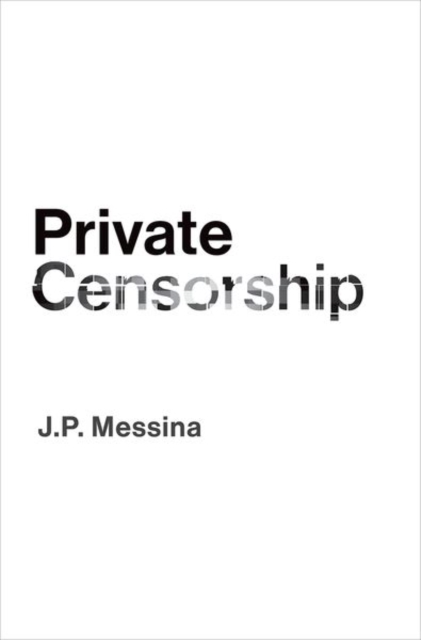
Private Censorship
Concerns about censorship have once again reached a fever pitch across the liberal West. In other historical periods, such concerns may have marked reactions to book bans and burnings. Often, they followed prosecutions and subsequent jailtime for things spoken or written. During the Red Scare, they were the hushed response to chilling state-sponsored watch-lists and employer-supported blacklists designed to ensure victory against communism. Against this history, complaints about the new censorship appear differently. With respect to the new censorship, there are no books burnings, no prosecutions, no laws or committees. Indeed, there is no coercive state involvement at all. With a few notable exceptions, complaints about censorship in the 21st-century West are complaints about the behavior of private parties: social groups, employers, media conglomerates, social media platforms, and search engines. To better understand the concerns surrounding nonstate interference with speech, Private Censorship offers an account of censorship, as well as an assessment of the ethical and political issues it raises across contexts. J.P. Messina asks and variously answers questions like: what should we think when employees get fired for things they say and how might patterns of such firings create a climate of fear inimical to free inquiry? When is it appropriate for social media firms to deplatform users, and what does it mean for our democracy that those in charge of such decisions are often wealthy Silicon Valley executives? Do search engines act as massive gatekeepers to information in troubling ways, and how might they be constrained, if they do? Along the way, Messina casts a critical eye on many popular proposals for responding to these complaints. Unlike these popular approaches, Private Censorship foregrounds the importance of rights to property, association, and free expression for thinking well about 21st-century censorship concerns.
230.30Lei
230.30Lei
Primești 230 puncte

Livrare in 2-4 saptamani
Descrierea produsului
Concerns about censorship have once again reached a fever pitch across the liberal West. In other historical periods, such concerns may have marked reactions to book bans and burnings. Often, they followed prosecutions and subsequent jailtime for things spoken or written. During the Red Scare, they were the hushed response to chilling state-sponsored watch-lists and employer-supported blacklists designed to ensure victory against communism. Against this history, complaints about the new censorship appear differently. With respect to the new censorship, there are no books burnings, no prosecutions, no laws or committees. Indeed, there is no coercive state involvement at all. With a few notable exceptions, complaints about censorship in the 21st-century West are complaints about the behavior of private parties: social groups, employers, media conglomerates, social media platforms, and search engines. To better understand the concerns surrounding nonstate interference with speech, Private Censorship offers an account of censorship, as well as an assessment of the ethical and political issues it raises across contexts. J.P. Messina asks and variously answers questions like: what should we think when employees get fired for things they say and how might patterns of such firings create a climate of fear inimical to free inquiry? When is it appropriate for social media firms to deplatform users, and what does it mean for our democracy that those in charge of such decisions are often wealthy Silicon Valley executives? Do search engines act as massive gatekeepers to information in troubling ways, and how might they be constrained, if they do? Along the way, Messina casts a critical eye on many popular proposals for responding to these complaints. Unlike these popular approaches, Private Censorship foregrounds the importance of rights to property, association, and free expression for thinking well about 21st-century censorship concerns.
Detaliile produsului



