





Ruth Asawa and the Artist-Mother at Midcentury
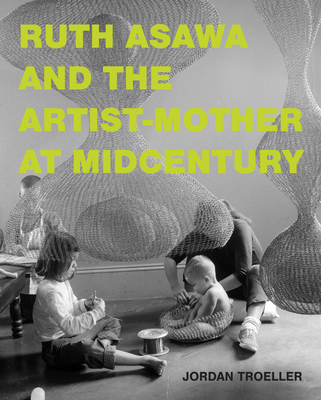
Ruth Asawa and the Artist-Mother at Midcentury
How a group of artist-mothers in postwar San Francisco refused the centuries-old belief that a woman could not make art while also raising children.
For most of modern history, to be an artist and a mother was to embody a contradiction in terms. This "awful dichotomy," as painter Alice Neel put it, pitted artmaking against caretaking and argued that the best art was made at the expense of family and futurity. But in San Francisco in the 1950s and 60s, a group of artists gathered around Ruth Asawa (1926-2013) began to reject this dominant narrative. In Ruth Asawa and the Artist-Mother at Midcentury, Jordan Troeller analyzes this remarkable moment. Insisting that their labor as mothers fueled their labor as artists, these women redefined key aesthetic concerns of their era, including autonomy, medium-specificity, and originality. Delving into the archive, where the traces of motherhood have not yet been erased from official history, Troeller reveals Ruth Asawa's personal and professional dialogue with several other artist-mothers--including Merry Renk, Imogen Cunningham, and Sally Woodbridge. For these women, motherhood was not an essentialized identity, but rather a means to reimagine the terms of artmaking, outside of the patriarchal policing of reproduction. This project unfolded in three broad areas, which also structure the book's chapters: domesticity and decoration; metaphors for creativity; and maternal labor in the public sphere, especially in the public schools. Drawing on queer theory and feminist writings, Troeller argues that in belatedly accounting for the figure of the artist-mother, art history must reckon with an emergent paradigm of artmaking, one predicated on reciprocity, caretaking, and futurity.
How a group of artist-mothers in postwar San Francisco refused the centuries-old belief that a woman could not make art while also raising children. For most of modern history, to be an artist and a mother was to embody a contradiction in terms. This "awful dichotomy," as painter Alice Neel put it, pitted artmaking against caretaking and argued that the best art was made at the expense of family and futurity. But in San Francisco in the 1950s and 1960s, a group of artists gathered around Ruth Asawa (1926-2013) began to reject this dominant narrative. In Ruth Asawa and the Artist-Mother at Midcentury, Jordan Troeller analyzes this remarkable moment. Insisting that their labor as mothers fueled their labor as artists, these women redefined<
For most of modern history, to be an artist and a mother was to embody a contradiction in terms. This "awful dichotomy," as painter Alice Neel put it, pitted artmaking against caretaking and argued that the best art was made at the expense of family and futurity. But in San Francisco in the 1950s and 60s, a group of artists gathered around Ruth Asawa (1926-2013) began to reject this dominant narrative. In Ruth Asawa and the Artist-Mother at Midcentury, Jordan Troeller analyzes this remarkable moment. Insisting that their labor as mothers fueled their labor as artists, these women redefined key aesthetic concerns of their era, including autonomy, medium-specificity, and originality. Delving into the archive, where the traces of motherhood have not yet been erased from official history, Troeller reveals Ruth Asawa's personal and professional dialogue with several other artist-mothers--including Merry Renk, Imogen Cunningham, and Sally Woodbridge. For these women, motherhood was not an essentialized identity, but rather a means to reimagine the terms of artmaking, outside of the patriarchal policing of reproduction. This project unfolded in three broad areas, which also structure the book's chapters: domesticity and decoration; metaphors for creativity; and maternal labor in the public sphere, especially in the public schools. Drawing on queer theory and feminist writings, Troeller argues that in belatedly accounting for the figure of the artist-mother, art history must reckon with an emergent paradigm of artmaking, one predicated on reciprocity, caretaking, and futurity.
How a group of artist-mothers in postwar San Francisco refused the centuries-old belief that a woman could not make art while also raising children. For most of modern history, to be an artist and a mother was to embody a contradiction in terms. This "awful dichotomy," as painter Alice Neel put it, pitted artmaking against caretaking and argued that the best art was made at the expense of family and futurity. But in San Francisco in the 1950s and 1960s, a group of artists gathered around Ruth Asawa (1926-2013) began to reject this dominant narrative. In Ruth Asawa and the Artist-Mother at Midcentury, Jordan Troeller analyzes this remarkable moment. Insisting that their labor as mothers fueled their labor as artists, these women redefined<
 GRATUIT CARGUS
PRP: 324.00 Lei

Acesta este Prețul Recomandat de Producător. Prețul de vânzare al produsului este afișat mai jos.
291.60Lei
291.60Lei
324.00 LeiPrimești 291 puncte
Livrare in 2-4 saptamani
Descrierea produsului
How a group of artist-mothers in postwar San Francisco refused the centuries-old belief that a woman could not make art while also raising children.
For most of modern history, to be an artist and a mother was to embody a contradiction in terms. This "awful dichotomy," as painter Alice Neel put it, pitted artmaking against caretaking and argued that the best art was made at the expense of family and futurity. But in San Francisco in the 1950s and 60s, a group of artists gathered around Ruth Asawa (1926-2013) began to reject this dominant narrative. In Ruth Asawa and the Artist-Mother at Midcentury, Jordan Troeller analyzes this remarkable moment. Insisting that their labor as mothers fueled their labor as artists, these women redefined key aesthetic concerns of their era, including autonomy, medium-specificity, and originality. Delving into the archive, where the traces of motherhood have not yet been erased from official history, Troeller reveals Ruth Asawa's personal and professional dialogue with several other artist-mothers--including Merry Renk, Imogen Cunningham, and Sally Woodbridge. For these women, motherhood was not an essentialized identity, but rather a means to reimagine the terms of artmaking, outside of the patriarchal policing of reproduction. This project unfolded in three broad areas, which also structure the book's chapters: domesticity and decoration; metaphors for creativity; and maternal labor in the public sphere, especially in the public schools. Drawing on queer theory and feminist writings, Troeller argues that in belatedly accounting for the figure of the artist-mother, art history must reckon with an emergent paradigm of artmaking, one predicated on reciprocity, caretaking, and futurity.
How a group of artist-mothers in postwar San Francisco refused the centuries-old belief that a woman could not make art while also raising children. For most of modern history, to be an artist and a mother was to embody a contradiction in terms. This "awful dichotomy," as painter Alice Neel put it, pitted artmaking against caretaking and argued that the best art was made at the expense of family and futurity. But in San Francisco in the 1950s and 1960s, a group of artists gathered around Ruth Asawa (1926-2013) began to reject this dominant narrative. In Ruth Asawa and the Artist-Mother at Midcentury, Jordan Troeller analyzes this remarkable moment. Insisting that their labor as mothers fueled their labor as artists, these women redefined<
For most of modern history, to be an artist and a mother was to embody a contradiction in terms. This "awful dichotomy," as painter Alice Neel put it, pitted artmaking against caretaking and argued that the best art was made at the expense of family and futurity. But in San Francisco in the 1950s and 60s, a group of artists gathered around Ruth Asawa (1926-2013) began to reject this dominant narrative. In Ruth Asawa and the Artist-Mother at Midcentury, Jordan Troeller analyzes this remarkable moment. Insisting that their labor as mothers fueled their labor as artists, these women redefined key aesthetic concerns of their era, including autonomy, medium-specificity, and originality. Delving into the archive, where the traces of motherhood have not yet been erased from official history, Troeller reveals Ruth Asawa's personal and professional dialogue with several other artist-mothers--including Merry Renk, Imogen Cunningham, and Sally Woodbridge. For these women, motherhood was not an essentialized identity, but rather a means to reimagine the terms of artmaking, outside of the patriarchal policing of reproduction. This project unfolded in three broad areas, which also structure the book's chapters: domesticity and decoration; metaphors for creativity; and maternal labor in the public sphere, especially in the public schools. Drawing on queer theory and feminist writings, Troeller argues that in belatedly accounting for the figure of the artist-mother, art history must reckon with an emergent paradigm of artmaking, one predicated on reciprocity, caretaking, and futurity.
How a group of artist-mothers in postwar San Francisco refused the centuries-old belief that a woman could not make art while also raising children. For most of modern history, to be an artist and a mother was to embody a contradiction in terms. This "awful dichotomy," as painter Alice Neel put it, pitted artmaking against caretaking and argued that the best art was made at the expense of family and futurity. But in San Francisco in the 1950s and 1960s, a group of artists gathered around Ruth Asawa (1926-2013) began to reject this dominant narrative. In Ruth Asawa and the Artist-Mother at Midcentury, Jordan Troeller analyzes this remarkable moment. Insisting that their labor as mothers fueled their labor as artists, these women redefined<
Detaliile produsului



