







Sahel
Sahel
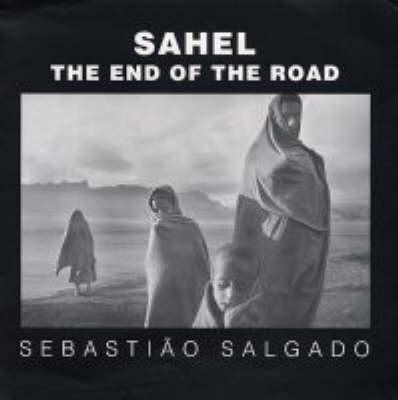
In 1984 Sebastiao Salgado began what would be a fifteen-month project of photographing the drought-stricken Sahel region of Africa in the countries of Chad, Ethiopia, Mali, and Sudan, where approximately one million people died from extreme malnutrition and related causes. Working with the humanitarian organization Doctors Without Borders, Salgado documented the enormous suffering and the great dignity of the refugees. This early work became a template for his future photographic projects about other afflicted people around the world. Since then, Salgado has again and again sought to give visual voice to those millions of human beings who, because of military conflict, poverty, famine, overpopulation, pestilence, environmental degradation, and other forms of catastrophe, teeter on the edge of survival. Beautifully produced, with thoughtful supporting narratives by Orville Schell, Fred Ritchin, and Eduardo Galeano, this first U.S. edition brings some of Salgado's earliest and most important work to an American audience for the first time. Twenty years after the photographs were taken, "Sahel: The End of the Road" is still painfully relevant.
Born in Brazil in 1944, Sebastiao Salgado studied economics in Sao Paulo and Paris and worked in Brazil and England. While traveling as an economist to Africa, he began photographing the people he encountered. Working entirely in a black-and-white format, Salgado highlights the larger meaning of what is happening to his subjects with an imagery that testifies to the fundamental dignity of all humanity while simultaneously protesting its violation by war, poverty, and other injustices. 'The planet remains divided,' Salgado explains. 'The first world in a crisis of excess, the third world in a crisis of need.' This disparity between the haves and the have-nots is the subtext of almost all of Salgado's work.
Born in Brazil in 1944, Sebastiao Salgado studied economics in Sao Paulo and Paris and worked in Brazil and England. While traveling as an economist to Africa, he began photographing the people he encountered. Working entirely in a black-and-white format, Salgado highlights the larger meaning of what is happening to his subjects with an imagery that testifies to the fundamental dignity of all humanity while simultaneously protesting its violation by war, poverty, and other injustices. 'The planet remains divided,' Salgado explains. 'The first world in a crisis of excess, the third world in a crisis of need.' This disparity between the haves and the have-nots is the subtext of almost all of Salgado's work.
PRP: 432.48 Lei

Acesta este Prețul Recomandat de Producător. Prețul de vânzare al produsului este afișat mai jos.
389.23Lei
389.23Lei
432.48 LeiPrimești 389 puncte
Livrare in 2-4 saptamani
Descrierea produsului
In 1984 Sebastiao Salgado began what would be a fifteen-month project of photographing the drought-stricken Sahel region of Africa in the countries of Chad, Ethiopia, Mali, and Sudan, where approximately one million people died from extreme malnutrition and related causes. Working with the humanitarian organization Doctors Without Borders, Salgado documented the enormous suffering and the great dignity of the refugees. This early work became a template for his future photographic projects about other afflicted people around the world. Since then, Salgado has again and again sought to give visual voice to those millions of human beings who, because of military conflict, poverty, famine, overpopulation, pestilence, environmental degradation, and other forms of catastrophe, teeter on the edge of survival. Beautifully produced, with thoughtful supporting narratives by Orville Schell, Fred Ritchin, and Eduardo Galeano, this first U.S. edition brings some of Salgado's earliest and most important work to an American audience for the first time. Twenty years after the photographs were taken, "Sahel: The End of the Road" is still painfully relevant.
Born in Brazil in 1944, Sebastiao Salgado studied economics in Sao Paulo and Paris and worked in Brazil and England. While traveling as an economist to Africa, he began photographing the people he encountered. Working entirely in a black-and-white format, Salgado highlights the larger meaning of what is happening to his subjects with an imagery that testifies to the fundamental dignity of all humanity while simultaneously protesting its violation by war, poverty, and other injustices. 'The planet remains divided,' Salgado explains. 'The first world in a crisis of excess, the third world in a crisis of need.' This disparity between the haves and the have-nots is the subtext of almost all of Salgado's work.
Born in Brazil in 1944, Sebastiao Salgado studied economics in Sao Paulo and Paris and worked in Brazil and England. While traveling as an economist to Africa, he began photographing the people he encountered. Working entirely in a black-and-white format, Salgado highlights the larger meaning of what is happening to his subjects with an imagery that testifies to the fundamental dignity of all humanity while simultaneously protesting its violation by war, poverty, and other injustices. 'The planet remains divided,' Salgado explains. 'The first world in a crisis of excess, the third world in a crisis of need.' This disparity between the haves and the have-nots is the subtext of almost all of Salgado's work.
Detaliile produsului



