





Slow Poison: IDI Amin, Yoweri Museveni, and the Making of the Ugandan State
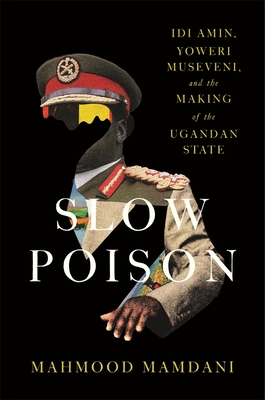
Slow Poison: IDI Amin, Yoweri Museveni, and the Making of the Ugandan State
A leading public intellectual gives his authoritative and personal account of the tragic postcolonial fate of Uganda, his homeland.
In 1972, when Mahmood Mamdani came home to Uganda, he found a country transformed by "an orgy of violence." Two years earlier, with support from the colonial powers of Great Britain and Israel, Idi Amin had forcefully cemented his rule. He soon expelled Uganda's Indian minority in hopes of fostering a nation for Black Ugandans. The plan backfired. Amin was followed by Yoweri Museveni, who has now ruled for nearly four decades. Whereas Amin tried to create a Black nation out of the majority, Museveni sought to fragment this majority into multiple ethnic minorities, re-creating a version of colonial indirect rule. Slow Poison is Mamdani's firsthand report on the tragic unraveling of his country's struggle for decolonialization. A witness to East Africa's endlessly intricate power plays, and one of the most insightful political philosophers of his generation, Mamdani casts a learned and wary eye on Amin, internationally depicted as a buffoon; the radical scholar Museveni; and the global heavyweights that exploited and manipulated Uganda before and after its independence. Each leader made violence central to his project, but Mamdani sees a signal difference between Amin, who retained popular support to the end, and Museveni, who has not. The Asian expulsion made Amin a monster in the eyes of the West. In contrast, Museveni was hailed as standard bearer of the "war on terror" in Africa and was protected from accountability for far greater crimes. In exchange for adopting the package of neoliberal reforms known as the Washington Consensus, he became Africa's poster child. Amin, who aimed to create a nation of Black millionaires, never became one himself. Meanwhile, Uganda's surrender to privatization has brought Museveni's family immense wealth, even as the country remains one of the world's poorest.
 GRATUIT CARGUS
PRP: 224.72 Lei

Acesta este Prețul Recomandat de Producător. Prețul de vânzare al produsului este afișat mai jos.
202.25Lei
202.25Lei
224.72 LeiPrimești 202 puncte
Livrare in 2-4 saptamani
Descrierea produsului
A leading public intellectual gives his authoritative and personal account of the tragic postcolonial fate of Uganda, his homeland.
In 1972, when Mahmood Mamdani came home to Uganda, he found a country transformed by "an orgy of violence." Two years earlier, with support from the colonial powers of Great Britain and Israel, Idi Amin had forcefully cemented his rule. He soon expelled Uganda's Indian minority in hopes of fostering a nation for Black Ugandans. The plan backfired. Amin was followed by Yoweri Museveni, who has now ruled for nearly four decades. Whereas Amin tried to create a Black nation out of the majority, Museveni sought to fragment this majority into multiple ethnic minorities, re-creating a version of colonial indirect rule. Slow Poison is Mamdani's firsthand report on the tragic unraveling of his country's struggle for decolonialization. A witness to East Africa's endlessly intricate power plays, and one of the most insightful political philosophers of his generation, Mamdani casts a learned and wary eye on Amin, internationally depicted as a buffoon; the radical scholar Museveni; and the global heavyweights that exploited and manipulated Uganda before and after its independence. Each leader made violence central to his project, but Mamdani sees a signal difference between Amin, who retained popular support to the end, and Museveni, who has not. The Asian expulsion made Amin a monster in the eyes of the West. In contrast, Museveni was hailed as standard bearer of the "war on terror" in Africa and was protected from accountability for far greater crimes. In exchange for adopting the package of neoliberal reforms known as the Washington Consensus, he became Africa's poster child. Amin, who aimed to create a nation of Black millionaires, never became one himself. Meanwhile, Uganda's surrender to privatization has brought Museveni's family immense wealth, even as the country remains one of the world's poorest.Detaliile produsului



