





Spacious Minds: Trauma and Resilience in Tibetan Buddhism
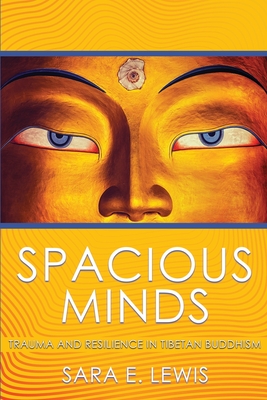
Spacious Minds: Trauma and Resilience in Tibetan Buddhism
Spacious Minds argues that resilience is not a mere absence of suffering. Sara E. Lewis's research reveals how those who cope most gracefully may indeed experience deep pain and loss. Looking at the Tibetan diaspora, she challenges perspectives that liken resilience to the hardiness of physical materials, suggesting people should bounce back from adversity. More broadly, this ethnography calls into question the tendency to use trauma as an organizing principle for all studies of conflict where suffering is understood as an individual problem rooted in psychiatric illness.Beyond simply articulating the ways that Tibetan categories of distress are different from biomedical ones, Spacious Minds shows how Tibetan Buddhism frames new possibilities for understanding resilience. Here, the social and religious landscape encourages those exposed to violence to see past events as impermanent and illusory, where debriefing, working-through, or processing past events only solidifies suffering and may even cause illness. Resilience in Dharamsala is understood as sems pa chen po, a vast and spacious mind that does not fixate on individual problems, but rather uses suffering as an opportunity to generate compassion for others in the endless cycle of samsara. A big mind view helps to see suffering in life as ordinary. And yet, an intriguing paradox occurs. As Lewis deftly demonstrates, Tibetans in exile have learned that human rights campaigns are predicated on the creation and circulation of the trauma narrative; in this way, Tibetan activists utilize foreign trauma discourse, not for psychological healing, but as a political device and act of agency.
PRP: 233.91 Lei

Acesta este Prețul Recomandat de Producător. Prețul de vânzare al produsului este afișat mai jos.
210.52Lei
210.52Lei
233.91 LeiPrimești 210 puncte
Livrare in 2-4 saptamani
Descrierea produsului
Spacious Minds argues that resilience is not a mere absence of suffering. Sara E. Lewis's research reveals how those who cope most gracefully may indeed experience deep pain and loss. Looking at the Tibetan diaspora, she challenges perspectives that liken resilience to the hardiness of physical materials, suggesting people should bounce back from adversity. More broadly, this ethnography calls into question the tendency to use trauma as an organizing principle for all studies of conflict where suffering is understood as an individual problem rooted in psychiatric illness.Beyond simply articulating the ways that Tibetan categories of distress are different from biomedical ones, Spacious Minds shows how Tibetan Buddhism frames new possibilities for understanding resilience. Here, the social and religious landscape encourages those exposed to violence to see past events as impermanent and illusory, where debriefing, working-through, or processing past events only solidifies suffering and may even cause illness. Resilience in Dharamsala is understood as sems pa chen po, a vast and spacious mind that does not fixate on individual problems, but rather uses suffering as an opportunity to generate compassion for others in the endless cycle of samsara. A big mind view helps to see suffering in life as ordinary. And yet, an intriguing paradox occurs. As Lewis deftly demonstrates, Tibetans in exile have learned that human rights campaigns are predicated on the creation and circulation of the trauma narrative; in this way, Tibetan activists utilize foreign trauma discourse, not for psychological healing, but as a political device and act of agency.
Detaliile produsului



