







Staszów Memorial Book: Translation of Sefer Staszów (The Staszów Book)
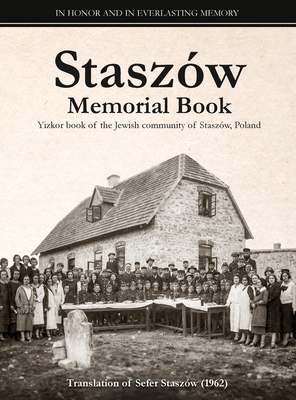
Staszów Memorial Book: Translation of Sefer Staszów (The Staszów Book)
The town of Staszów, about 64 miles northeast of Kraków and 118 miles south of Warsaw, lies along the Czarna River 10 miles northwest of the Vistula at Polaniec. Staszów existed as a village from 1245 and as a town from 1526, when it already had an organized Jewish population. Always a center of local commerce, Staszów began important industrial development in textiles from the 1780s onward and in shoe manufacture from around 1900 onward, in addition to supporting a wide variety of other crafts and small commercial ventures including banking. By the eve of World War II, the population had grown to around 5000 Jews and 4000 non-Jews. A more detailed history of the pre-Holocaust Staszów Jewish community is given in the article by the distinguished historian Nathan Gelber in this volume and in the article "Dates and Events."
Over the centuries, Staszów was home to several important personalities in rabbinic leadership and Jewish scholarship, many of whom are described in this book. It had one central synagogue and many local houses of study and prayer-gatherings. In modern times, it was home to a wide variety of currents in Jewish life, including religious (Hasidic and non-Hasidic), Zionist, Bundist, and cultural, as well as many charitable organizations.
During World War II, the Germans occupied Staszów early on and progressively tightened the restrictions on the Jewish community. On November 8, 1942, the Germans ordered the evacuation of all Jews from Staszów and set those who complied on a forced march to Stopnica and ultimately Belżec; most perished on the way. Around 800 did not comply and went underground, attempting to survive in safe houses and forests with the help of friendly Poles; of these, perhaps 60 survived until the arrival of the Russian front to the area in August 1944. A third contingent was conscripted by the Germans in a labor camp that was located first in Staszów, then in Skarżysko-Kamienna, with the remnant transported by stages to Buchenwald and ultimately Theresienstadt. The trials of these diverse groups are related in articles in the Shoah section of this book.
The final section of this book summarizes the activities of the Landsmanschaften of expatriate Staszów Jews in Israel, North and South America, and Europe.
This Yizkor Book serves as a memorial to all the victims of the Shoah from Staszów and nearby towns.
PRP: 470.89 Lei

Acesta este Prețul Recomandat de Producător. Prețul de vânzare al produsului este afișat mai jos.
376.71Lei
376.71Lei
470.89 LeiPrimești 376 puncte
Indisponibil
Descrierea produsului
The town of Staszów, about 64 miles northeast of Kraków and 118 miles south of Warsaw, lies along the Czarna River 10 miles northwest of the Vistula at Polaniec. Staszów existed as a village from 1245 and as a town from 1526, when it already had an organized Jewish population. Always a center of local commerce, Staszów began important industrial development in textiles from the 1780s onward and in shoe manufacture from around 1900 onward, in addition to supporting a wide variety of other crafts and small commercial ventures including banking. By the eve of World War II, the population had grown to around 5000 Jews and 4000 non-Jews. A more detailed history of the pre-Holocaust Staszów Jewish community is given in the article by the distinguished historian Nathan Gelber in this volume and in the article "Dates and Events."
Over the centuries, Staszów was home to several important personalities in rabbinic leadership and Jewish scholarship, many of whom are described in this book. It had one central synagogue and many local houses of study and prayer-gatherings. In modern times, it was home to a wide variety of currents in Jewish life, including religious (Hasidic and non-Hasidic), Zionist, Bundist, and cultural, as well as many charitable organizations.
During World War II, the Germans occupied Staszów early on and progressively tightened the restrictions on the Jewish community. On November 8, 1942, the Germans ordered the evacuation of all Jews from Staszów and set those who complied on a forced march to Stopnica and ultimately Belżec; most perished on the way. Around 800 did not comply and went underground, attempting to survive in safe houses and forests with the help of friendly Poles; of these, perhaps 60 survived until the arrival of the Russian front to the area in August 1944. A third contingent was conscripted by the Germans in a labor camp that was located first in Staszów, then in Skarżysko-Kamienna, with the remnant transported by stages to Buchenwald and ultimately Theresienstadt. The trials of these diverse groups are related in articles in the Shoah section of this book.
The final section of this book summarizes the activities of the Landsmanschaften of expatriate Staszów Jews in Israel, North and South America, and Europe.
This Yizkor Book serves as a memorial to all the victims of the Shoah from Staszów and nearby towns.
Detaliile produsului



