







Suffrage Reconstructed: Gender, Race, and Voting Rights in the Civil War Era
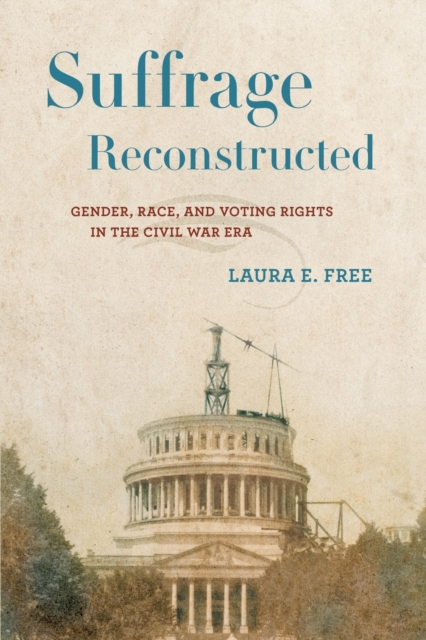
Suffrage Reconstructed: Gender, Race, and Voting Rights in the Civil War Era
The Fourteenth Amendment, ratified on July 9, 1868, identified all legitimate voters as "male." In so doing, it added gender-specific language to the U.S. Constitution for the first time. Suffrage Reconstructed considers how and why the amendment's authors made this decision. Vividly detailing congressional floor bickering and activist campaigning, Laura E. Free takes readers into the pre- and postwar fights over precisely who should have the right to vote. Free demonstrates that all men, black and white, were the ultimate victors of these fights, as gender became the single most important marker of voting rights during Reconstruction.
Free argues that the Fourteenth Amendment's language was shaped by three key groups: African American activists who used ideas about manhood to claim black men's right to the ballot, postwar congressmen who sought to justify enfranchising southern black men, and women's rights advocates who began to petition Congress for the ballot for the first time as the Amendment was being drafted. To prevent women's inadvertent enfranchisement, and to incorporate formerly disfranchised black men into the voting polity, the Fourteenth Amendment's congressional authors turned to gender to define the new American voter. Faced with this exclusion some woman suffragists, most notably Elizabeth Cady Stanton, turned to rhetorical racism in order to mount a campaign against sex as a determinant of one's capacity to vote. Stanton's actions caused a rift with Frederick Douglass and a schism in the fledgling woman suffrage movement. By integrating gender analysis and political history, Suffrage Reconstructed offers a new interpretation of the Civil War-era remaking of American democracy, placing African American activists and women's rights advocates at the heart of nineteenth-century American conversations about public policy, civil rights, and the franchise.
PRP: 167.09 Lei

Acesta este Prețul Recomandat de Producător. Prețul de vânzare al produsului este afișat mai jos.
150.38Lei
150.38Lei
167.09 LeiPrimești 150 puncte
Indisponibil
Descrierea produsului
The Fourteenth Amendment, ratified on July 9, 1868, identified all legitimate voters as "male." In so doing, it added gender-specific language to the U.S. Constitution for the first time. Suffrage Reconstructed considers how and why the amendment's authors made this decision. Vividly detailing congressional floor bickering and activist campaigning, Laura E. Free takes readers into the pre- and postwar fights over precisely who should have the right to vote. Free demonstrates that all men, black and white, were the ultimate victors of these fights, as gender became the single most important marker of voting rights during Reconstruction.
Free argues that the Fourteenth Amendment's language was shaped by three key groups: African American activists who used ideas about manhood to claim black men's right to the ballot, postwar congressmen who sought to justify enfranchising southern black men, and women's rights advocates who began to petition Congress for the ballot for the first time as the Amendment was being drafted. To prevent women's inadvertent enfranchisement, and to incorporate formerly disfranchised black men into the voting polity, the Fourteenth Amendment's congressional authors turned to gender to define the new American voter. Faced with this exclusion some woman suffragists, most notably Elizabeth Cady Stanton, turned to rhetorical racism in order to mount a campaign against sex as a determinant of one's capacity to vote. Stanton's actions caused a rift with Frederick Douglass and a schism in the fledgling woman suffrage movement. By integrating gender analysis and political history, Suffrage Reconstructed offers a new interpretation of the Civil War-era remaking of American democracy, placing African American activists and women's rights advocates at the heart of nineteenth-century American conversations about public policy, civil rights, and the franchise.
Detaliile produsului



