





Tax Reforms in India
Tax Reforms in India
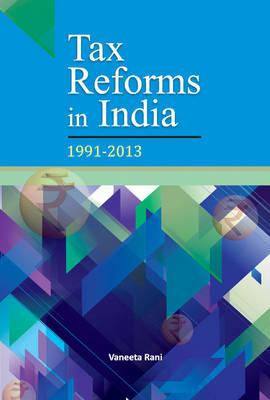
When India's economy faced an unprecedented macroeconomic crisis in 1991, fiscal consolidation constituted a major objective of the policy response. For this purpose, it became necessary to: (a) enhance tax and non-tax revenue, (b) curtail current expenditure growth, (c) restructure public sector undertakings, including disinvestment, (d) improve fiscal-monetary coordination, and (e) deregulate financial system. The need for improvements in budgetary practices led to the enactment of the Fiscal Responsibility and Budget Management (FRBM) Act, 2003, which ushered India's economy in an era of fiscal consolidation based on fiscal policy rules. Tax reforms introduced by the government since 1991 have helped to build a structure which is simple, relies on moderate tax rates, but with a wider base and better enforcement. Moreover, they have helped to correct structural imbalances in the tax system. They are soft on industry with a view to create a new investment climate and make India internationally competitive. By lowering the tax rates, the government expects speedy industrial development and, hence, buoyancy in tax revenues. This book gives a vivid account of recent reforms in the India's tax system as a part of the on-going policy of liberalization and globalization of the country's economy.
PRP: 271.93 Lei

Acesta este Prețul Recomandat de Producător. Prețul de vânzare al produsului este afișat mai jos.
244.74Lei
244.74Lei
271.93 LeiPrimești 244 puncte
Indisponibil
Descrierea produsului
When India's economy faced an unprecedented macroeconomic crisis in 1991, fiscal consolidation constituted a major objective of the policy response. For this purpose, it became necessary to: (a) enhance tax and non-tax revenue, (b) curtail current expenditure growth, (c) restructure public sector undertakings, including disinvestment, (d) improve fiscal-monetary coordination, and (e) deregulate financial system. The need for improvements in budgetary practices led to the enactment of the Fiscal Responsibility and Budget Management (FRBM) Act, 2003, which ushered India's economy in an era of fiscal consolidation based on fiscal policy rules. Tax reforms introduced by the government since 1991 have helped to build a structure which is simple, relies on moderate tax rates, but with a wider base and better enforcement. Moreover, they have helped to correct structural imbalances in the tax system. They are soft on industry with a view to create a new investment climate and make India internationally competitive. By lowering the tax rates, the government expects speedy industrial development and, hence, buoyancy in tax revenues. This book gives a vivid account of recent reforms in the India's tax system as a part of the on-going policy of liberalization and globalization of the country's economy.
Detaliile produsului



