







The Art of Worldly Wisdom
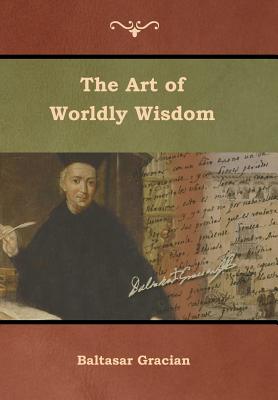
The Art of Worldly Wisdom
Baltasar Gracián, in full Baltasar Gracián y Morales, (born January 8, 1601, Belmonte de Calatayud, Spain--died December 6, 1658, Tarazona), philosopher and writer known as the leading Spanish exponent of conceptism (conceptismo), a style of dealing with ideas that involves the use of terse and subtle displays of exaggerated wit.
After studying at Calatayud and Zaragoza, Gracián entered the Jesuit order at the age of 18 and later became rector of the Jesuit college at Tarragona. His early works--El héroe (1637; The Hero), El discreto (1646; The Compleat Gentleman), and El oráculo manual y arte de prudencia (1647; The Art of Worldly Wisdom: A Pocket Oracle)--were largely efforts to educate people in the ethics of worldly life. His literary ideas on conceptism and the art of conceited writing (writing that continually shocks the reader by the use of startling metaphor) were clearly set forth in Agudeza y arte de ingenio (1642, 2nd ed. 1648; "Subtlety and the Art of Genius"). In defiance of his superiors, he published pseudonymously El criticón (1651, 1653, 1657; The Critick), a three-part philosophical novel considered by the 19th-century German pessimistic philosopher Arthur Schopenhauer one of the most important books ever written. In it he examined society from the standpoint of a savage and gave the clearest statement of his pessimistic philosophy with its emphasis on willpower and struggle. (britannica.com)
244.93Lei
244.93Lei
Primești 244 puncte

Livrare in 2-4 saptamani
Descrierea produsului
Baltasar Gracián, in full Baltasar Gracián y Morales, (born January 8, 1601, Belmonte de Calatayud, Spain--died December 6, 1658, Tarazona), philosopher and writer known as the leading Spanish exponent of conceptism (conceptismo), a style of dealing with ideas that involves the use of terse and subtle displays of exaggerated wit.
After studying at Calatayud and Zaragoza, Gracián entered the Jesuit order at the age of 18 and later became rector of the Jesuit college at Tarragona. His early works--El héroe (1637; The Hero), El discreto (1646; The Compleat Gentleman), and El oráculo manual y arte de prudencia (1647; The Art of Worldly Wisdom: A Pocket Oracle)--were largely efforts to educate people in the ethics of worldly life. His literary ideas on conceptism and the art of conceited writing (writing that continually shocks the reader by the use of startling metaphor) were clearly set forth in Agudeza y arte de ingenio (1642, 2nd ed. 1648; "Subtlety and the Art of Genius"). In defiance of his superiors, he published pseudonymously El criticón (1651, 1653, 1657; The Critick), a three-part philosophical novel considered by the 19th-century German pessimistic philosopher Arthur Schopenhauer one of the most important books ever written. In it he examined society from the standpoint of a savage and gave the clearest statement of his pessimistic philosophy with its emphasis on willpower and struggle. (britannica.com)
Detaliile produsului



