





The Black Death: The History and Legacy of the Middle Ages' Deadliest Plague
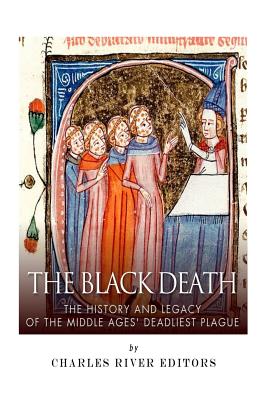
The Black Death: The History and Legacy of the Middle Ages' Deadliest Plague
*Includes pictures
*Includes accounts of the plague written by survivors across Europe
*Includes a bibliography for further reading
"The trend of recent research is pointing to a figure more like 45-50% of the European population dying during a four-year period. There is a fair amount of geographic variation. In Mediterranean Europe, areas such as Italy, the south of France and Spain, where plague ran for about four years consecutively, it was probably closer to 75-80% of the population. In Germany and England ... it was probably closer to 20%.." - Philip Daileader, medieval historian If it is true that nothing succeeds like success, then it is equally true that nothing challenges like change. People have historically been creatures of habit and curiosity at the same time, two parts of the human condition that constantly conflict with each other. This has always been true, but at certain moments in history it has been abundantly true, especially during the mid-14th century, when a boon in exploration and travel came up against a fear of the unknown. Together, they both introduced the Black Death to Europe and led to mostly incorrect attempts to explain it. The Late Middle Ages had seen a rise in Western Europe's population in previous centuries, but these gains were almost entirely erased as the plague spread rapidly across all of Europe from 1346-1353. With a medieval understanding of medicine, diagnosis, and illness, nobody understood what caused Black Death or how to truly treat it. As a result, many religious people assumed it was divine retribution, while superstitious and suspicious citizens saw a nefarious human plot involved and persecuted certain minority groups among them. Though it is now widely believed that rats and fleas spread the disease by carrying the bubonic plague westward along well-established trade routes, and there are now vaccines to prevent the spread of the plague, the Black Death gruesomely killed upwards of 100 million people, with helpless chroniclers graphically describing the various stages of the disease. It took Europe decades for its population to bounce back, and similar plagues would affect various parts of the world for the next several centuries, but advances in medical technology have since allowed researchers to read various medieval accounts of the Black Death in order to understand the various strains of the disease. Furthermore, the social upheaval caused by the plague radically changed Eur
PRP: 77.42 Lei

Acesta este Prețul Recomandat de Producător. Prețul de vânzare al produsului este afișat mai jos.
61.94Lei
61.94Lei
77.42 LeiPrimești 61 puncte
Indisponibil
Descrierea produsului
*Includes pictures
*Includes accounts of the plague written by survivors across Europe
*Includes a bibliography for further reading
"The trend of recent research is pointing to a figure more like 45-50% of the European population dying during a four-year period. There is a fair amount of geographic variation. In Mediterranean Europe, areas such as Italy, the south of France and Spain, where plague ran for about four years consecutively, it was probably closer to 75-80% of the population. In Germany and England ... it was probably closer to 20%.." - Philip Daileader, medieval historian If it is true that nothing succeeds like success, then it is equally true that nothing challenges like change. People have historically been creatures of habit and curiosity at the same time, two parts of the human condition that constantly conflict with each other. This has always been true, but at certain moments in history it has been abundantly true, especially during the mid-14th century, when a boon in exploration and travel came up against a fear of the unknown. Together, they both introduced the Black Death to Europe and led to mostly incorrect attempts to explain it. The Late Middle Ages had seen a rise in Western Europe's population in previous centuries, but these gains were almost entirely erased as the plague spread rapidly across all of Europe from 1346-1353. With a medieval understanding of medicine, diagnosis, and illness, nobody understood what caused Black Death or how to truly treat it. As a result, many religious people assumed it was divine retribution, while superstitious and suspicious citizens saw a nefarious human plot involved and persecuted certain minority groups among them. Though it is now widely believed that rats and fleas spread the disease by carrying the bubonic plague westward along well-established trade routes, and there are now vaccines to prevent the spread of the plague, the Black Death gruesomely killed upwards of 100 million people, with helpless chroniclers graphically describing the various stages of the disease. It took Europe decades for its population to bounce back, and similar plagues would affect various parts of the world for the next several centuries, but advances in medical technology have since allowed researchers to read various medieval accounts of the Black Death in order to understand the various strains of the disease. Furthermore, the social upheaval caused by the plague radically changed Eur
Detaliile produsului



