





The Death of the Gods
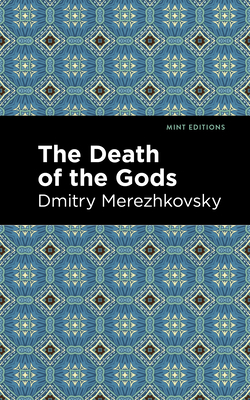
The Death of the Gods
Dmitry Merezhkovsky (1866-1941) was a Russian novelist and poet. Born in Saint Petersburg, Merezhkovsky was raised in a prominent political family. At thirteen, while a student at the St. Petersburg Third Classic Gymnasium, Dmitry began writing poetry. Soon, he earned a reputation as a promising young writer and enrolled at the University of Saint Petersburg, where he completed his PhD with a study on Montaigne. In 1892, he published Symbols. Poems and Songs, a work inspired by Poe and Baudelaire in which Merezhkovsky explores his increasingly personal religious ideas. In 1895, he published The Death of the Gods, the first novel in his groundbreaking Christ and Antichrist Trilogy. With these novels, Merezhkovsky was recognized as a cofounder of the Russian Symbolist movement. In 1905, his apocalyptic Christian worldview seemed to come to fruition in the First Russian Revolution, which he supported through poetry and organizing groups of students and artists. Formerly a supporter of the Tsar, Merezhkovsky was involved in leftist politics by 1910, but soon became disillusioned with the rise of the radical Bolsheviks. In the aftermath of the October Revolution, Merezhkovsky and his wife, the poet Zinaida Gippius, were forced to flee Russia. Over the years, they would find safe harbor in Warsaw and Paris, where Merezhkovsky continued to write works of nonfiction while advocating for the Russian people. Toward the end of his life, he came to see through such leaders as Benito Mussolini, Francisco Franco, and Adolf Hitler a means of defeating Communism in Russia. Though scholars debate his level of commitment to fascist and nationalist ideologies, this nevertheless marked a sinister turn in an otherwise brilliant literary career. Nominated for the Nobel Prize in literature nine times without winning, Merezhkovsky is recognized as an important figure of the Silver Age of Russian art.
PRP: 86.74 Lei

Acesta este Prețul Recomandat de Producător. Prețul de vânzare al produsului este afișat mai jos.
78.07Lei
78.07Lei
86.74 LeiPrimești 78 puncte
Livrare in 2-4 saptamani
Descrierea produsului
Dmitry Merezhkovsky (1866-1941) was a Russian novelist and poet. Born in Saint Petersburg, Merezhkovsky was raised in a prominent political family. At thirteen, while a student at the St. Petersburg Third Classic Gymnasium, Dmitry began writing poetry. Soon, he earned a reputation as a promising young writer and enrolled at the University of Saint Petersburg, where he completed his PhD with a study on Montaigne. In 1892, he published Symbols. Poems and Songs, a work inspired by Poe and Baudelaire in which Merezhkovsky explores his increasingly personal religious ideas. In 1895, he published The Death of the Gods, the first novel in his groundbreaking Christ and Antichrist Trilogy. With these novels, Merezhkovsky was recognized as a cofounder of the Russian Symbolist movement. In 1905, his apocalyptic Christian worldview seemed to come to fruition in the First Russian Revolution, which he supported through poetry and organizing groups of students and artists. Formerly a supporter of the Tsar, Merezhkovsky was involved in leftist politics by 1910, but soon became disillusioned with the rise of the radical Bolsheviks. In the aftermath of the October Revolution, Merezhkovsky and his wife, the poet Zinaida Gippius, were forced to flee Russia. Over the years, they would find safe harbor in Warsaw and Paris, where Merezhkovsky continued to write works of nonfiction while advocating for the Russian people. Toward the end of his life, he came to see through such leaders as Benito Mussolini, Francisco Franco, and Adolf Hitler a means of defeating Communism in Russia. Though scholars debate his level of commitment to fascist and nationalist ideologies, this nevertheless marked a sinister turn in an otherwise brilliant literary career. Nominated for the Nobel Prize in literature nine times without winning, Merezhkovsky is recognized as an important figure of the Silver Age of Russian art.
Detaliile produsului



