







The Great Pyramid Hoax: The Conspiracy to Conceal the True History of Ancient Egypt
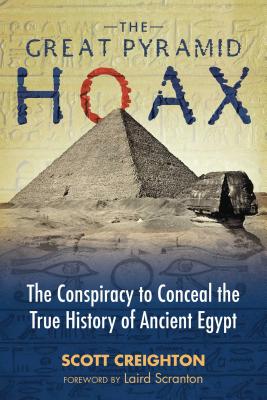
The Great Pyramid Hoax: The Conspiracy to Conceal the True History of Ancient Egypt
Reveals how the only hard evidence that dates the Great Pyramid--the quarry marks discovered by Colonel Vyse in 1837--was forged - Includes evidence from the time of the discovery of the marks: Vyse's private field notes, surveys, facsimile drawings, and eye-witness testimony - Explains why Vyse was driven to perpetrate a fraud inside the Great Pyramid - Examines recent chemical analysis of the marks and high-definition photos to reveal errors and other anomalies within the forged Khufu cartouche Despite millennia of fame, the origins of the Great Pyramid of Giza are shrouded in mystery. Believed to be the tomb of an Egyptian king, even though no remains have ever been found, its construction date of roughly 2550 BCE is tied to only one piece of evidence: the crudely painted marks within the pyramid's hidden chambers that refer to the 4th Dynasty king Khufu, discovered in 1837 by Colonel Howard Vyse and his team. Using evidence from the time of the discovery of these "quarry marks"--including surveys, facsimile drawings and Vyse's private field notes--along with high definition photos of the actual marks, Scott Creighton reveals how and why the marks were faked. He investigates the anomalous and contradictory orthography of the quarry marks through more than 75 photos and illustrations, showing how they radically depart from the established canon of quarry marks from this period. He explains how the orientation of the Khufu cartouche contradicts ancient Egyptian writing convention and how one of the signs is from a later period. Analyzing Vyse's private diary, he reveals Vyse's forgery instructions to his two assistants, Raven and Hill, and what the anachronistic sign should have been. He examines recent chemical analysis of the marks along with the eye-witness testimony of Humphries Brewer, who worked with Vyse at Giza in 1837 and saw forgery take place. Exploring Vyse's background, including his electoral fraud to become a member of the British Parliament, he explains why he was driven to perpetrate a fraud inside the Great Pyramid. Proving Zecharia Sitchin's claim that the quarry marks are forgeries and removing the only physical evidence that dates the Great Pyramid's construction to the reign of Khufu, Creighton's study strikes down one of the most fundamental assertions of orthodox Egyptologists and reopens long-standing questions about the Great Pyramid's true age, who really built it, and why.
101.32Lei
101.32Lei
Primești 101 puncte

Livrare in 2-4 saptamani
Descrierea produsului
Reveals how the only hard evidence that dates the Great Pyramid--the quarry marks discovered by Colonel Vyse in 1837--was forged - Includes evidence from the time of the discovery of the marks: Vyse's private field notes, surveys, facsimile drawings, and eye-witness testimony - Explains why Vyse was driven to perpetrate a fraud inside the Great Pyramid - Examines recent chemical analysis of the marks and high-definition photos to reveal errors and other anomalies within the forged Khufu cartouche Despite millennia of fame, the origins of the Great Pyramid of Giza are shrouded in mystery. Believed to be the tomb of an Egyptian king, even though no remains have ever been found, its construction date of roughly 2550 BCE is tied to only one piece of evidence: the crudely painted marks within the pyramid's hidden chambers that refer to the 4th Dynasty king Khufu, discovered in 1837 by Colonel Howard Vyse and his team. Using evidence from the time of the discovery of these "quarry marks"--including surveys, facsimile drawings and Vyse's private field notes--along with high definition photos of the actual marks, Scott Creighton reveals how and why the marks were faked. He investigates the anomalous and contradictory orthography of the quarry marks through more than 75 photos and illustrations, showing how they radically depart from the established canon of quarry marks from this period. He explains how the orientation of the Khufu cartouche contradicts ancient Egyptian writing convention and how one of the signs is from a later period. Analyzing Vyse's private diary, he reveals Vyse's forgery instructions to his two assistants, Raven and Hill, and what the anachronistic sign should have been. He examines recent chemical analysis of the marks along with the eye-witness testimony of Humphries Brewer, who worked with Vyse at Giza in 1837 and saw forgery take place. Exploring Vyse's background, including his electoral fraud to become a member of the British Parliament, he explains why he was driven to perpetrate a fraud inside the Great Pyramid. Proving Zecharia Sitchin's claim that the quarry marks are forgeries and removing the only physical evidence that dates the Great Pyramid's construction to the reign of Khufu, Creighton's study strikes down one of the most fundamental assertions of orthodox Egyptologists and reopens long-standing questions about the Great Pyramid's true age, who really built it, and why.
Detaliile produsului



