





The Great Steel Strike and Its Lessons: The American Strike of 1919, its Causes and the Labor Unions Involved
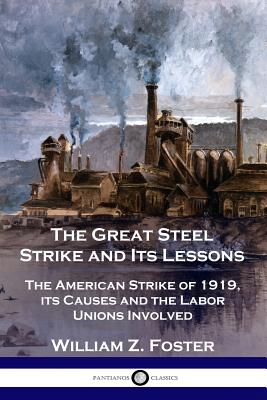
The Great Steel Strike and Its Lessons: The American Strike of 1919, its Causes and the Labor Unions Involved
Trade unionist and Marxist politician William Z. Foster explains the organization and failure of the steel strike in 1919, an action which saw much of America's metal industry grind to a halt.
The metal industries had, owing to great leaps in technological advancement, shed many jobs during the early 20th century. This precarious situation, plus the fact that unions had been curbed after a number of violent actions in the 1890s, led to the situation of laborers becoming unbearable. Shortly after Armistice Day marked the end of World War I, a surge of discontentment was accompanied by organization of labor and strike action.
Although successful for a number of weeks, to the point where President Woodrow Wilson had to intervene and placate the workers on strike, the owners of the mills mounted an effective campaign which eroded public support for the strikers. Police brutality against striking steelworkers was recorded, with several such incidents being unprovoked. The Amalgamated Association of Iron, Steel and Tin Workers was unable to counter this opposition, and in January of 1920 the strike collapsed.
Foster offers a clear and frank narration of the strike from the perspective of a man strongly in favor of the laborers. In the wake of the 1919 strike, continuing advances in steelmaking obsoleted the need for labor in the creation of raw steel; in the 1920s and 1930s quantities of steel produced rose, while the numbers of workers in the industry continued to plummet.
PRP: 90.77 Lei

Acesta este Prețul Recomandat de Producător. Prețul de vânzare al produsului este afișat mai jos.
72.62Lei
72.62Lei
90.77 LeiPrimești 72 puncte
Livrare in 2-4 saptamani
Descrierea produsului
Trade unionist and Marxist politician William Z. Foster explains the organization and failure of the steel strike in 1919, an action which saw much of America's metal industry grind to a halt.
The metal industries had, owing to great leaps in technological advancement, shed many jobs during the early 20th century. This precarious situation, plus the fact that unions had been curbed after a number of violent actions in the 1890s, led to the situation of laborers becoming unbearable. Shortly after Armistice Day marked the end of World War I, a surge of discontentment was accompanied by organization of labor and strike action.
Although successful for a number of weeks, to the point where President Woodrow Wilson had to intervene and placate the workers on strike, the owners of the mills mounted an effective campaign which eroded public support for the strikers. Police brutality against striking steelworkers was recorded, with several such incidents being unprovoked. The Amalgamated Association of Iron, Steel and Tin Workers was unable to counter this opposition, and in January of 1920 the strike collapsed.
Foster offers a clear and frank narration of the strike from the perspective of a man strongly in favor of the laborers. In the wake of the 1919 strike, continuing advances in steelmaking obsoleted the need for labor in the creation of raw steel; in the 1920s and 1930s quantities of steel produced rose, while the numbers of workers in the industry continued to plummet.
Detaliile produsului



