





The Mountain and the River: Genesis, Postmodernism, and the Machine
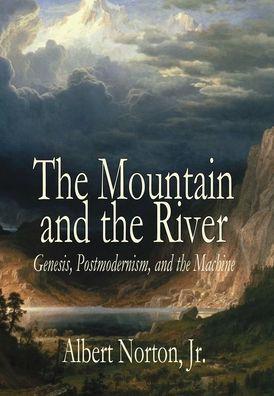
The Mountain and the River: Genesis, Postmodernism, and the Machine
Western civilization is at a precarious crossroad. It relies on objectivity of truth and of right and wrong, a first principle until about the turn of the twentieth century. But in more recent years postmodern ideas of truth-formation began to gain traction, and Christianity lost its grip on Western cultures in favor of secular ideologies. The result has been the bloodiest century in human history, and the accelerated proliferation of oppressive ideologies. Postmodern critiques during this time have become general in the culture, like a virus escaped from the lab.
We live this life in the body conscious of a vaguely felt lack of completeness. We may describe it as "alienation," leaving open-ended what about us is being alienated from what. The Genesis worldview tells us the alienation is a natural condition of our existence, unfortunately. It is the result of our moral agency and our two-nature, spiritual and material essence: we are dust-formed but also God-breathed. If we reject the Genesis worldview, the sense of alienation does not go away, and so we grope around trying to explain it. Hence postmodern theory.
This book is about the chasm between the Genesis worldview, and that of postmodernism. The differences are not merely competing truth claims, but competing claims about how truth is formed in the first place. And not only truth, but right and wrong, and even beauty. Where do these ideals originate, and why do we struggle so much now in our pursuit of them? There is an answer, and we can find our way to it by rejecting disastrous flirtations with postmodernist critique and negation, to recover individual human dignity, and freedom, and even a renewed sense of brotherhood by appeal to universal values even in our differences.
PRP: 247.94 Lei

Acesta este Prețul Recomandat de Producător. Prețul de vânzare al produsului este afișat mai jos.
198.35Lei
198.35Lei
247.94 LeiPrimești 198 puncte
Indisponibil
Descrierea produsului
Western civilization is at a precarious crossroad. It relies on objectivity of truth and of right and wrong, a first principle until about the turn of the twentieth century. But in more recent years postmodern ideas of truth-formation began to gain traction, and Christianity lost its grip on Western cultures in favor of secular ideologies. The result has been the bloodiest century in human history, and the accelerated proliferation of oppressive ideologies. Postmodern critiques during this time have become general in the culture, like a virus escaped from the lab.
We live this life in the body conscious of a vaguely felt lack of completeness. We may describe it as "alienation," leaving open-ended what about us is being alienated from what. The Genesis worldview tells us the alienation is a natural condition of our existence, unfortunately. It is the result of our moral agency and our two-nature, spiritual and material essence: we are dust-formed but also God-breathed. If we reject the Genesis worldview, the sense of alienation does not go away, and so we grope around trying to explain it. Hence postmodern theory.
This book is about the chasm between the Genesis worldview, and that of postmodernism. The differences are not merely competing truth claims, but competing claims about how truth is formed in the first place. And not only truth, but right and wrong, and even beauty. Where do these ideals originate, and why do we struggle so much now in our pursuit of them? There is an answer, and we can find our way to it by rejecting disastrous flirtations with postmodernist critique and negation, to recover individual human dignity, and freedom, and even a renewed sense of brotherhood by appeal to universal values even in our differences.
Detaliile produsului



