





The Nuclear Deception: Nikita Khrushchev and the Cuban Missile Crisis
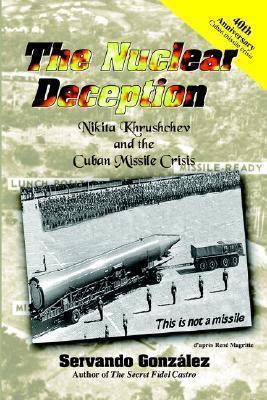
The Nuclear Deception: Nikita Khrushchev and the Cuban Missile Crisis
The event known as the Cuban missile crisis, the greatest of all Cold War crises, is a milestone in the history of the Cold War. According to the author, the main questions of the situation have eluded satisfactory answers because analysts have neglected the true Cuban role in the event, particularly the Russo-Cuban relations prior to the crisis.
The event known as the Cuban missile crisis, the greatest of all Cold War crises, is a milestone in the history of the Cold War. Some analysts even have concluded that what was called the Cold War ended in 1962 with the Cuban missile crisis. Yet there is perhaps no single event in recent history as puzzling as this one. There are many questions that still remain unanswered. Why did Khrushchev risk so much? What was his ultimate purpose? Why did he withdraw so fast? Why did he not retaliate at other sensitive points, like Berlin? Why did President Kennedy not seize the heaven-sent opportunity to get rid of Castro? Why did the Americans permit the shootdown of a U-2 plane over Cuba without taking retaliatory actions? Who shot down the U-2, and under what conditions did it happen? Why did Kennedy allow the Soviet ships to leave Cuba without boarding them, to physically verify that the canvas-covered objects on deck were actually missiles and their nuclear warheads on their way back to the U.S.S.R.? According to the author, the main questions of the crisis have eluded satisfactory answers, first, because most of the analysts who have studied it have neglected the true Cuban role in the event, particularly the Russo-Cuban relations prior to the crisis; secondly, because a set of preconceived notions --like the one that assumes that Khrushchev was full of love for Castro-- have acted as a smoke screen, blurring the whole picture; and, finally, because the fundamental question about the crisis, namely, why Khrushchev installed strategic nuclear missiles in Cuba, has been erroneously formulated. Consequently, it has been impossible to find the right answer to a question, when the question itself is wrong.
The event known as the Cuban missile crisis, the greatest of all Cold War crises, is a milestone in the history of the Cold War. Some analysts even have concluded that what was called the Cold War ended in 1962 with the Cuban missile crisis. Yet there is perhaps no single event in recent history as puzzling as this one. There are many questions that still remain unanswered. Why did Khrushchev risk so much? What was his ultimate purpose? Why did he withdraw so fast? Why did he not retaliate at other sensitive points, like Berlin? Why did President Kennedy not seize the heaven-sent opportunity to get rid of Castro? Why did the Americans permit the shootdown of a U-2 plane over Cuba without taking retaliatory actions? Who shot down the U-2, and under what conditions did it happen? Why did Kennedy allow the Soviet ships to leave Cuba without boarding them, to physically verify that the canvas-covered objects on deck were actually missiles and their nuclear warheads on their way back to the U.S.S.R.? According to the author, the main questions of the crisis have eluded satisfactory answers, first, because most of the analysts who have studied it have neglected the true Cuban role in the event, particularly the Russo-Cuban relations prior to the crisis; secondly, because a set of preconceived notions --like the one that assumes that Khrushchev was full of love for Castro-- have acted as a smoke screen, blurring the whole picture; and, finally, because the fundamental question about the crisis, namely, why Khrushchev installed strategic nuclear missiles in Cuba, has been erroneously formulated. Consequently, it has been impossible to find the right answer to a question, when the question itself is wrong.
PRP: 206.25 Lei

Acesta este Prețul Recomandat de Producător. Prețul de vânzare al produsului este afișat mai jos.
185.62Lei
185.62Lei
206.25 LeiPrimești 185 puncte
Livrare in 2-4 saptamani
Descrierea produsului
The event known as the Cuban missile crisis, the greatest of all Cold War crises, is a milestone in the history of the Cold War. According to the author, the main questions of the situation have eluded satisfactory answers because analysts have neglected the true Cuban role in the event, particularly the Russo-Cuban relations prior to the crisis.
The event known as the Cuban missile crisis, the greatest of all Cold War crises, is a milestone in the history of the Cold War. Some analysts even have concluded that what was called the Cold War ended in 1962 with the Cuban missile crisis. Yet there is perhaps no single event in recent history as puzzling as this one. There are many questions that still remain unanswered. Why did Khrushchev risk so much? What was his ultimate purpose? Why did he withdraw so fast? Why did he not retaliate at other sensitive points, like Berlin? Why did President Kennedy not seize the heaven-sent opportunity to get rid of Castro? Why did the Americans permit the shootdown of a U-2 plane over Cuba without taking retaliatory actions? Who shot down the U-2, and under what conditions did it happen? Why did Kennedy allow the Soviet ships to leave Cuba without boarding them, to physically verify that the canvas-covered objects on deck were actually missiles and their nuclear warheads on their way back to the U.S.S.R.? According to the author, the main questions of the crisis have eluded satisfactory answers, first, because most of the analysts who have studied it have neglected the true Cuban role in the event, particularly the Russo-Cuban relations prior to the crisis; secondly, because a set of preconceived notions --like the one that assumes that Khrushchev was full of love for Castro-- have acted as a smoke screen, blurring the whole picture; and, finally, because the fundamental question about the crisis, namely, why Khrushchev installed strategic nuclear missiles in Cuba, has been erroneously formulated. Consequently, it has been impossible to find the right answer to a question, when the question itself is wrong.
The event known as the Cuban missile crisis, the greatest of all Cold War crises, is a milestone in the history of the Cold War. Some analysts even have concluded that what was called the Cold War ended in 1962 with the Cuban missile crisis. Yet there is perhaps no single event in recent history as puzzling as this one. There are many questions that still remain unanswered. Why did Khrushchev risk so much? What was his ultimate purpose? Why did he withdraw so fast? Why did he not retaliate at other sensitive points, like Berlin? Why did President Kennedy not seize the heaven-sent opportunity to get rid of Castro? Why did the Americans permit the shootdown of a U-2 plane over Cuba without taking retaliatory actions? Who shot down the U-2, and under what conditions did it happen? Why did Kennedy allow the Soviet ships to leave Cuba without boarding them, to physically verify that the canvas-covered objects on deck were actually missiles and their nuclear warheads on their way back to the U.S.S.R.? According to the author, the main questions of the crisis have eluded satisfactory answers, first, because most of the analysts who have studied it have neglected the true Cuban role in the event, particularly the Russo-Cuban relations prior to the crisis; secondly, because a set of preconceived notions --like the one that assumes that Khrushchev was full of love for Castro-- have acted as a smoke screen, blurring the whole picture; and, finally, because the fundamental question about the crisis, namely, why Khrushchev installed strategic nuclear missiles in Cuba, has been erroneously formulated. Consequently, it has been impossible to find the right answer to a question, when the question itself is wrong.
Detaliile produsului



