





The Oxford Handbook of Indian Philosophy
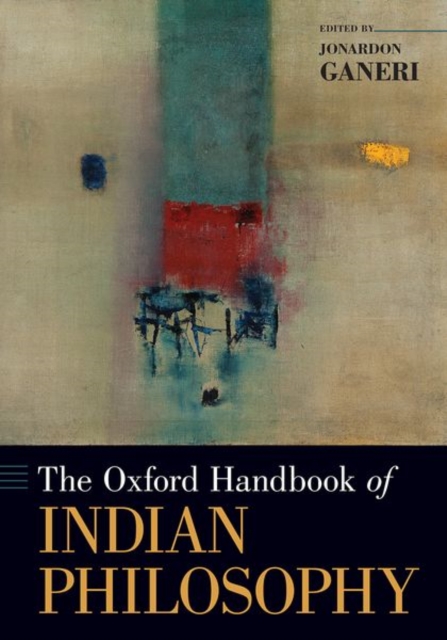
The Oxford Handbook of Indian Philosophy
The Oxford Handbook of Indian Philosophy tells the story of philosophy in India through a series of exceptional individual acts of philosophical virtuosity. It brings together forty leading international scholars to record the diverse figures, movements, and approaches that constitute philosophy in the geographical region of the Indian subcontinent, a region sometimes nowadays designated South Asia. The volume aims to be ecumenical, drawing from different locales, languages, and literary cultures, inclusive of dissenters, heretics and sceptics, of philosophical ideas in thinkers not themselves primarily philosophers, and reflecting India's north-western borders with the Persianate and Arabic worlds, its north-eastern boundaries with Tibet, Nepal, Ladakh and China, as well as the southern and eastern shores that afford maritime links with the lands of Theravda Buddhism. Indian Philosophy has been written in many languages, including Pali, Prakrit, Sanskrit, Malayalam, Urdu, Gujarati, Tamil, Telugu, Bengali, Marathi, Persian, Kannada, Punjabi, Hindi, Tibetan, Arabic and Assamese. From the time of the British colonial occupation, it has also been written in English. It spans philosophy of law, logic, politics, environment and society, but is most strongly associated with wide-ranging discussions in the philosophy of mind and language, epistemology and metaphysics (how we know and what is there to be known), ethics, metaethics and aesthetics, and metaphilosophy. The reach of Indian ideas has been vast, both historically and geographically, and it has been and continues to be a major influence in world philosophy. In the breadth as well as the depth of its philosophical investigation, in the sheer bulk of surviving texts and in the diffusion of its ideas, the philosophical heritage of India easily stands comparison with that of China, Greece, the Latin west, or the Islamic world.
PRP: 598.82 Lei

Acesta este Prețul Recomandat de Producător. Prețul de vânzare al produsului este afișat mai jos.
538.94Lei
538.94Lei
598.82 LeiPrimești 538 puncte
Livrare in 2-4 saptamani
Descrierea produsului
The Oxford Handbook of Indian Philosophy tells the story of philosophy in India through a series of exceptional individual acts of philosophical virtuosity. It brings together forty leading international scholars to record the diverse figures, movements, and approaches that constitute philosophy in the geographical region of the Indian subcontinent, a region sometimes nowadays designated South Asia. The volume aims to be ecumenical, drawing from different locales, languages, and literary cultures, inclusive of dissenters, heretics and sceptics, of philosophical ideas in thinkers not themselves primarily philosophers, and reflecting India's north-western borders with the Persianate and Arabic worlds, its north-eastern boundaries with Tibet, Nepal, Ladakh and China, as well as the southern and eastern shores that afford maritime links with the lands of Theravda Buddhism. Indian Philosophy has been written in many languages, including Pali, Prakrit, Sanskrit, Malayalam, Urdu, Gujarati, Tamil, Telugu, Bengali, Marathi, Persian, Kannada, Punjabi, Hindi, Tibetan, Arabic and Assamese. From the time of the British colonial occupation, it has also been written in English. It spans philosophy of law, logic, politics, environment and society, but is most strongly associated with wide-ranging discussions in the philosophy of mind and language, epistemology and metaphysics (how we know and what is there to be known), ethics, metaethics and aesthetics, and metaphilosophy. The reach of Indian ideas has been vast, both historically and geographically, and it has been and continues to be a major influence in world philosophy. In the breadth as well as the depth of its philosophical investigation, in the sheer bulk of surviving texts and in the diffusion of its ideas, the philosophical heritage of India easily stands comparison with that of China, Greece, the Latin west, or the Islamic world.
Detaliile produsului



