





The Paradox of Svalbard: Climate Change and Globalisation in the Arctic
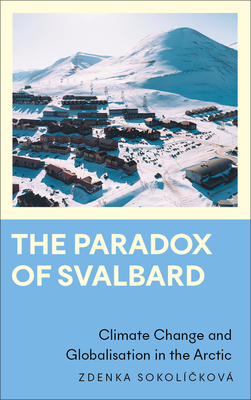
The Paradox of Svalbard: Climate Change and Globalisation in the Arctic
'Engaging, rich and nuanced, this book exposes the deep dilemmas facing this Arctic archipelago. A must for anyone with an interest in the challenges of a melting world. Ethnography at its best' Marianne E. Lien, Professor, University of Oslo 'Rich and deeply textured ... Zdenka Sokolíčková demonstrates how the logic of extraction intersects awkwardly with community, environment, geopolitics and sustainability' Klaus Dodds, Professor, Royal Holloway University of London 'Lucidly captures the dilemmas of maintaining community in the world's northernmost settlement, where climate change is particularly evident. Highly recommended!' Cecilie Vindal degaard, Professor, University of Bergen Longyearbyen in the Arctic is the world's northernmost settlement. Here, climate change is happening fast. It is clearly sensed by the locals; with higher temperatures, more rain and permafrost thaw. At the same time, the town is shifting from state-controlled coal production to tourism, research and development. It is rapidly globalising, with numerous languages spoken, and with cruise ships sounding their horns in the harbour while planes land and take off. A small town of 2,400 inhabitants on the Norwegian archipelago of Svalbard, Longyearbyen provides a unique view into the unmistakable relationship between global capitalism and climate change. The Paradox of Svalbard looks at local and global trends to access a deep understanding of the effects of tourism, immigration and labour on the trajectory of the climate crisis, and what can be done to reverse it. Zdenka Sokolíčková is a researcher at the University of Hradec Králové, Czechia, and the University of Groningen in the Netherlands. Her research in Longyearbyen was hosted by the Department of Social Anthropology at the University of Oslo, Norway.
PRP: 224.91 Lei

Acesta este Prețul Recomandat de Producător. Prețul de vânzare al produsului este afișat mai jos.
202.42Lei
202.42Lei
224.91 LeiPrimești 202 puncte
Livrare in 2-4 saptamani
Descrierea produsului
'Engaging, rich and nuanced, this book exposes the deep dilemmas facing this Arctic archipelago. A must for anyone with an interest in the challenges of a melting world. Ethnography at its best' Marianne E. Lien, Professor, University of Oslo 'Rich and deeply textured ... Zdenka Sokolíčková demonstrates how the logic of extraction intersects awkwardly with community, environment, geopolitics and sustainability' Klaus Dodds, Professor, Royal Holloway University of London 'Lucidly captures the dilemmas of maintaining community in the world's northernmost settlement, where climate change is particularly evident. Highly recommended!' Cecilie Vindal degaard, Professor, University of Bergen Longyearbyen in the Arctic is the world's northernmost settlement. Here, climate change is happening fast. It is clearly sensed by the locals; with higher temperatures, more rain and permafrost thaw. At the same time, the town is shifting from state-controlled coal production to tourism, research and development. It is rapidly globalising, with numerous languages spoken, and with cruise ships sounding their horns in the harbour while planes land and take off. A small town of 2,400 inhabitants on the Norwegian archipelago of Svalbard, Longyearbyen provides a unique view into the unmistakable relationship between global capitalism and climate change. The Paradox of Svalbard looks at local and global trends to access a deep understanding of the effects of tourism, immigration and labour on the trajectory of the climate crisis, and what can be done to reverse it. Zdenka Sokolíčková is a researcher at the University of Hradec Králové, Czechia, and the University of Groningen in the Netherlands. Her research in Longyearbyen was hosted by the Department of Social Anthropology at the University of Oslo, Norway.
Detaliile produsului



