





The Political Economy of Ancient India
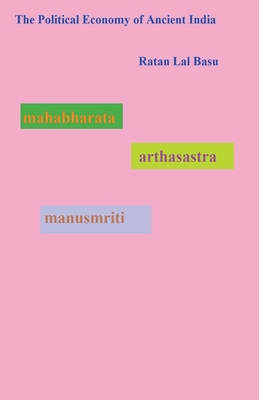
The Political Economy of Ancient India
The Political Economy of Ancient India is an analytical study of the economic and political concepts embedded in three major ancient Indian texts, viz., the great epic Mahābhārata, Arthaśāstra of Kauṭilya and the most important Dharmaśāstra viz., Manusmṛti. This volume is distributed over three parts with 10 chapters along with an Introduction to start with. Part-I, consisting of two chapters, deals with economic and political concepts respectively as scattered in the gigantic epic Mahābhārata, chapters 3 to 8 of part-II deal with economic, political and espionage concepts delineated in Arthaśāstra of Kauṭilya, and chapters 9 and 10 of part-III deal with economic and political concepts respectively of Manusmṛti. In fact, there are many common aspects pertaining to economic and political concepts embedded in the three great ancient Indian texts. The likely reason, as highlighted in introduction of this volume, is that all these three texts derived their basic concepts pertaining to political economy from a common source that had originated through comprehensive research and studies of great post Vedic scholars. In this volume we have gone into the detail of the concepts pertaining to ancient Indian political economy as embedded in the three texts highlighting the common aspects and differences on account of the varying objective conditions at the time of composition of each text. This essence of ancient Indian political economy lies in the concept of trivarga (three basic objectives of mundane life), viz., dharma, artha and kāma. In fact, harmonious and sustainable development of human society with equity and social-economic-political justice can be ensured only if there is a perfect balance between the three basic objectives of mundane life, viz., dharma (ethics and noble human values), artha (means to fulfill earthly desires) and kāma (earthly desires). The imbalance in human civilization and all the consequent maladies like inequality, exploitation, poverty etc. arise because of imbalance between the three basic objectives, to be specific emphasis on artha and kāma keeping aside dharma. So, the essence of teachings of ancient Indian śāstras is that while pursuing the objectives pertaining to artha and kāma, we ought to restore dharma to its rightful place to bring about a world free from all its maladies. The present volume endeavours, in essence,
PRP: 132.18 Lei

Acesta este Prețul Recomandat de Producător. Prețul de vânzare al produsului este afișat mai jos.
118.96Lei
118.96Lei
132.18 LeiPrimești 118 puncte
Livrare in 2-4 saptamani
Descrierea produsului
The Political Economy of Ancient India is an analytical study of the economic and political concepts embedded in three major ancient Indian texts, viz., the great epic Mahābhārata, Arthaśāstra of Kauṭilya and the most important Dharmaśāstra viz., Manusmṛti. This volume is distributed over three parts with 10 chapters along with an Introduction to start with. Part-I, consisting of two chapters, deals with economic and political concepts respectively as scattered in the gigantic epic Mahābhārata, chapters 3 to 8 of part-II deal with economic, political and espionage concepts delineated in Arthaśāstra of Kauṭilya, and chapters 9 and 10 of part-III deal with economic and political concepts respectively of Manusmṛti. In fact, there are many common aspects pertaining to economic and political concepts embedded in the three great ancient Indian texts. The likely reason, as highlighted in introduction of this volume, is that all these three texts derived their basic concepts pertaining to political economy from a common source that had originated through comprehensive research and studies of great post Vedic scholars. In this volume we have gone into the detail of the concepts pertaining to ancient Indian political economy as embedded in the three texts highlighting the common aspects and differences on account of the varying objective conditions at the time of composition of each text. This essence of ancient Indian political economy lies in the concept of trivarga (three basic objectives of mundane life), viz., dharma, artha and kāma. In fact, harmonious and sustainable development of human society with equity and social-economic-political justice can be ensured only if there is a perfect balance between the three basic objectives of mundane life, viz., dharma (ethics and noble human values), artha (means to fulfill earthly desires) and kāma (earthly desires). The imbalance in human civilization and all the consequent maladies like inequality, exploitation, poverty etc. arise because of imbalance between the three basic objectives, to be specific emphasis on artha and kāma keeping aside dharma. So, the essence of teachings of ancient Indian śāstras is that while pursuing the objectives pertaining to artha and kāma, we ought to restore dharma to its rightful place to bring about a world free from all its maladies. The present volume endeavours, in essence,
Detaliile produsului



