
headerdesktop cartecadoutimer07dec25

MAI SUNT 00:00:00:00

MAI SUNT

X

headermobile cartecadoutimer07dec25

MAI SUNT 00:00:00:00

MAI SUNT

X

Promotii popup img

🎀 Carte CADOU 🎀

la orice comandă »

The Political Reconstruction of American Tobacco, 1862-1933
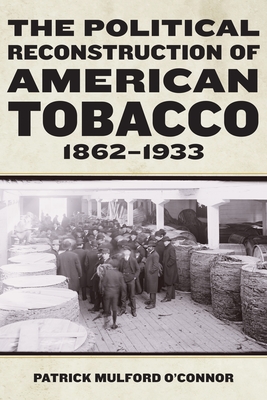
De (autor): Patrick Mulford Oconnor

The Political Reconstruction of American Tobacco, 1862-1933 - Patrick Mulford O'connor

The Political Reconstruction of American Tobacco, 1862-1933

De (autor): Patrick Mulford Oconnor

A deeply researched and clearly argued account of the mutual growth of the federal government and the modern tobacco

Nearly everything about the United States tobacco economy changed in the generation following the American Civil War. From labor to consumption, manufacturing to regulation, tobacco was utterly reconstructed, "comparatively a new industry," as one contemporary wrote.

The Political Reconstruction of American Tobacco, 1862-1933 exposes the causes of these changes, and in the process, it reconsiders cornerstones of the American national narrative. Through a detailed rendering of tobacco's late-nineteenth-century political economy, this book argues that the federal state's and American capitalism's development were mutually constitutive-and fundamentally political-processes. From the Civil War to the Progressive Era, diverse political movements across tobacco's commodity chain drove state and market development, creating the immense power and stifling poverty that defined tobacco's reconstruction. The Political Reconstruc-tion of American Tobacco, 1862-1933 emphasizes the significance of the thousands of manufactur-ers whose interest groups shaped federal tax policy and, in turn, forged a powerful and effective internal revenue system; the increasingly influential fertilizer producers and warehouse operators who determined tobacco's value; and the crop scientists who sought to promote and rationalize US tobacco production. As these actors reshaped tobacco's commodity chain, they missed, and even dismissed, the interests of tobacco growers, especially newly emancipated African Americans and smallholding whites throughout the South.

The ruling logic of tobacco's reconstructed political economy rationalized agrarian indebtedness, justified low prices, and intensified labor discipline on thousands of small farms. In emphasizing these exclusions, The Political Reconstruction of American Tobacco, 1862-1933 reveals how nineteenth-century state and economic development coincided with and even created rural poverty.

Citește mai mult

-10%

transport gratuit

PRP: 343.58 Lei

!

Acesta este Prețul Recomandat de Producător. Prețul de vânzare al produsului este afișat mai jos.

309.22Lei

309.22Lei

343.58 Lei

Primești 309 puncte

Important icon msg

Primești puncte de fidelitate după fiecare comandă! 100 puncte de fidelitate reprezintă 1 leu. Folosește-le la viitoarele achiziții!

Livrare in 2-4 saptamani

Descrierea produsului

A deeply researched and clearly argued account of the mutual growth of the federal government and the modern tobacco

Nearly everything about the United States tobacco economy changed in the generation following the American Civil War. From labor to consumption, manufacturing to regulation, tobacco was utterly reconstructed, "comparatively a new industry," as one contemporary wrote.

The Political Reconstruction of American Tobacco, 1862-1933 exposes the causes of these changes, and in the process, it reconsiders cornerstones of the American national narrative. Through a detailed rendering of tobacco's late-nineteenth-century political economy, this book argues that the federal state's and American capitalism's development were mutually constitutive-and fundamentally political-processes. From the Civil War to the Progressive Era, diverse political movements across tobacco's commodity chain drove state and market development, creating the immense power and stifling poverty that defined tobacco's reconstruction. The Political Reconstruc-tion of American Tobacco, 1862-1933 emphasizes the significance of the thousands of manufactur-ers whose interest groups shaped federal tax policy and, in turn, forged a powerful and effective internal revenue system; the increasingly influential fertilizer producers and warehouse operators who determined tobacco's value; and the crop scientists who sought to promote and rationalize US tobacco production. As these actors reshaped tobacco's commodity chain, they missed, and even dismissed, the interests of tobacco growers, especially newly emancipated African Americans and smallholding whites throughout the South.

The ruling logic of tobacco's reconstructed political economy rationalized agrarian indebtedness, justified low prices, and intensified labor discipline on thousands of small farms. In emphasizing these exclusions, The Political Reconstruction of American Tobacco, 1862-1933 reveals how nineteenth-century state and economic development coincided with and even created rural poverty.

Citește mai mult

S-ar putea să-ți placă și

De același autor

Părerea ta e inspirație pentru comunitatea Libris!

Istoricul tău de navigare

Acum se comandă

Noi suntem despre cărți, și la fel este și

Newsletter-ul nostru.

Abonează-te la veștile literare și primești un cupon de -10% pentru viitoarea ta comandă!

*Reducerea aplicată prin cupon nu se cumulează, ci se aplică reducerea cea mai mare.

Mă abonez image one
Mă abonez image one
Accessibility Logo