





The Rhine: An Eco-Biography, 1815-2000
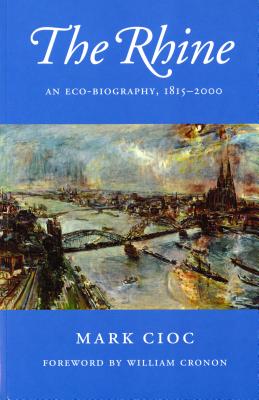
The Rhine: An Eco-Biography, 1815-2000
The Rhine River is Europe's most important commercial waterway, channeling the flow of trade among Switzerland, France, Germany, and the Netherlands. In this innovative study, Mark Cioc focuses on the river from the moment when the Congress of Vienna established a multinational commission charged with making the river more efficient for purposes of trade and commerce in 1815. He examines the engineering and administrative decisions of the next century and a half that resulted in rapid industrial growth as well as profound environmental degradation, and highlights the partially successful restoration efforts undertaken from the 1970s to the present.
The Rhine is a classic example of a "multipurpose" river -- used simultaneously for transportation, for industry and agriculture, for urban drinking and sanitation needs, for hydroelectric production, and for recreation. It thus invites comparison with similarly over-burdened rivers such as the Mississippi, Hudson, Colorado, and Columbia. The Rhine's environmental problems are, however, even greater than those of other rivers because it is so densely populated (50 million people live along its borders), so highly industrialized (10% of global chemical production), and so short (775 miles in length).
Two centuries of nonstop hydraulic tinkering have resulted in a Rhine with a sleek and slender profile. In their quest for a perfect canal-like river, engineers have modified it more than any other large river in the world. As a consequence, between 1815 and 1975, the river lost most of its natural floodplain, riverside vegetation, migratory fish, and biodiversity. Recent efforts to restore that biodiversity, though heartening, can have only limited success because so many of the structural changes to the river are irreversible.
The Rhine: An Eco-Biography, 1815-2000 makes clear just how central the river has been to all aspects of European political, economic, and environmental life for the past two hundred years.
PRP: 294.50 Lei

Acesta este Prețul Recomandat de Producător. Prețul de vânzare al produsului este afișat mai jos.
265.05Lei
265.05Lei
294.50 LeiPrimești 265 puncte
Livrare in 2-4 saptamani
Descrierea produsului
The Rhine River is Europe's most important commercial waterway, channeling the flow of trade among Switzerland, France, Germany, and the Netherlands. In this innovative study, Mark Cioc focuses on the river from the moment when the Congress of Vienna established a multinational commission charged with making the river more efficient for purposes of trade and commerce in 1815. He examines the engineering and administrative decisions of the next century and a half that resulted in rapid industrial growth as well as profound environmental degradation, and highlights the partially successful restoration efforts undertaken from the 1970s to the present.
The Rhine is a classic example of a "multipurpose" river -- used simultaneously for transportation, for industry and agriculture, for urban drinking and sanitation needs, for hydroelectric production, and for recreation. It thus invites comparison with similarly over-burdened rivers such as the Mississippi, Hudson, Colorado, and Columbia. The Rhine's environmental problems are, however, even greater than those of other rivers because it is so densely populated (50 million people live along its borders), so highly industrialized (10% of global chemical production), and so short (775 miles in length).
Two centuries of nonstop hydraulic tinkering have resulted in a Rhine with a sleek and slender profile. In their quest for a perfect canal-like river, engineers have modified it more than any other large river in the world. As a consequence, between 1815 and 1975, the river lost most of its natural floodplain, riverside vegetation, migratory fish, and biodiversity. Recent efforts to restore that biodiversity, though heartening, can have only limited success because so many of the structural changes to the river are irreversible.
The Rhine: An Eco-Biography, 1815-2000 makes clear just how central the river has been to all aspects of European political, economic, and environmental life for the past two hundred years.
Detaliile produsului



