





The Rise and Fall of Swedish Social Democracy
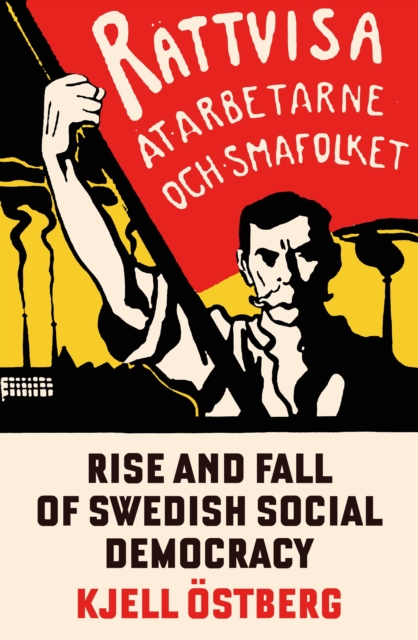
The Rise and Fall of Swedish Social Democracy
Whatever happened to the poster child of European social democracy?
For a young generation of socialists, the Swedish experience has been an obvious reference and inspiration. But what remains of the Swedish model today is, in fact, a failed project in decline. This book is the first comprehensive study of the rise and fall of one of the most influential political movements of our time. Ostberg depicts the rise of one of the 20th century's best organized labor movements and Sweden's development from one of Europe's poorest countries to one of the richest and with the most extensive welfare. During the last 90 years, Sweden had a social democratic prime minister for 72 years, including a 44 year uninterrupted span. The Swedish model culminated in the 1970s. Under the pressure of wildcat strikes and new social movements, a highly competent Social Democratic government implemented unique social reforms mainly through a decommodified public sector. Many reforms had a distinct gender equality character. The Social Democratic-led trade union movement sought to take over control of Swedish companies through wage earners' funds. Was Sweden on its way to becoming a socialist country? Instead, Swedish Social Democracy quickly adapted to the economic and political conditions of the neoliberal counter-revolution. Today, large parts of the public sector have been privatized and social inequality has increased faster than in most other countries, despite social democratic governments in power. The Social Democratic party is being challenged by the right-wing populist Sweden Democrats as the largest labour party. Kjell Ostbjerg discusses the strength and weakness of the reformist strategy, the importance of class organizations and social mobilization and the struggle for power in the workplace, the influence of the labor bureaucracy, the role of women in the creation of the Swedish welfare society and the dependence of Social Democracy on the development of international capitalism.
For a young generation of socialists, the Swedish experience has been an obvious reference and inspiration. But what remains of the Swedish model today is, in fact, a failed project in decline. This book is the first comprehensive study of the rise and fall of one of the most influential political movements of our time. Ostberg depicts the rise of one of the 20th century's best organized labor movements and Sweden's development from one of Europe's poorest countries to one of the richest and with the most extensive welfare. During the last 90 years, Sweden had a social democratic prime minister for 72 years, including a 44 year uninterrupted span. The Swedish model culminated in the 1970s. Under the pressure of wildcat strikes and new social movements, a highly competent Social Democratic government implemented unique social reforms mainly through a decommodified public sector. Many reforms had a distinct gender equality character. The Social Democratic-led trade union movement sought to take over control of Swedish companies through wage earners' funds. Was Sweden on its way to becoming a socialist country? Instead, Swedish Social Democracy quickly adapted to the economic and political conditions of the neoliberal counter-revolution. Today, large parts of the public sector have been privatized and social inequality has increased faster than in most other countries, despite social democratic governments in power. The Social Democratic party is being challenged by the right-wing populist Sweden Democrats as the largest labour party. Kjell Ostbjerg discusses the strength and weakness of the reformist strategy, the importance of class organizations and social mobilization and the struggle for power in the workplace, the influence of the labor bureaucracy, the role of women in the creation of the Swedish welfare society and the dependence of Social Democracy on the development of international capitalism.
PRP: 240.00 Lei

Acesta este Prețul Recomandat de Producător. Prețul de vânzare al produsului este afișat mai jos.
216.00Lei
216.00Lei
240.00 LeiPrimești 216 puncte
Livrare in 2-4 saptamani
Descrierea produsului
Whatever happened to the poster child of European social democracy?
For a young generation of socialists, the Swedish experience has been an obvious reference and inspiration. But what remains of the Swedish model today is, in fact, a failed project in decline. This book is the first comprehensive study of the rise and fall of one of the most influential political movements of our time. Ostberg depicts the rise of one of the 20th century's best organized labor movements and Sweden's development from one of Europe's poorest countries to one of the richest and with the most extensive welfare. During the last 90 years, Sweden had a social democratic prime minister for 72 years, including a 44 year uninterrupted span. The Swedish model culminated in the 1970s. Under the pressure of wildcat strikes and new social movements, a highly competent Social Democratic government implemented unique social reforms mainly through a decommodified public sector. Many reforms had a distinct gender equality character. The Social Democratic-led trade union movement sought to take over control of Swedish companies through wage earners' funds. Was Sweden on its way to becoming a socialist country? Instead, Swedish Social Democracy quickly adapted to the economic and political conditions of the neoliberal counter-revolution. Today, large parts of the public sector have been privatized and social inequality has increased faster than in most other countries, despite social democratic governments in power. The Social Democratic party is being challenged by the right-wing populist Sweden Democrats as the largest labour party. Kjell Ostbjerg discusses the strength and weakness of the reformist strategy, the importance of class organizations and social mobilization and the struggle for power in the workplace, the influence of the labor bureaucracy, the role of women in the creation of the Swedish welfare society and the dependence of Social Democracy on the development of international capitalism.
For a young generation of socialists, the Swedish experience has been an obvious reference and inspiration. But what remains of the Swedish model today is, in fact, a failed project in decline. This book is the first comprehensive study of the rise and fall of one of the most influential political movements of our time. Ostberg depicts the rise of one of the 20th century's best organized labor movements and Sweden's development from one of Europe's poorest countries to one of the richest and with the most extensive welfare. During the last 90 years, Sweden had a social democratic prime minister for 72 years, including a 44 year uninterrupted span. The Swedish model culminated in the 1970s. Under the pressure of wildcat strikes and new social movements, a highly competent Social Democratic government implemented unique social reforms mainly through a decommodified public sector. Many reforms had a distinct gender equality character. The Social Democratic-led trade union movement sought to take over control of Swedish companies through wage earners' funds. Was Sweden on its way to becoming a socialist country? Instead, Swedish Social Democracy quickly adapted to the economic and political conditions of the neoliberal counter-revolution. Today, large parts of the public sector have been privatized and social inequality has increased faster than in most other countries, despite social democratic governments in power. The Social Democratic party is being challenged by the right-wing populist Sweden Democrats as the largest labour party. Kjell Ostbjerg discusses the strength and weakness of the reformist strategy, the importance of class organizations and social mobilization and the struggle for power in the workplace, the influence of the labor bureaucracy, the role of women in the creation of the Swedish welfare society and the dependence of Social Democracy on the development of international capitalism.
Detaliile produsului



