





The Stefan Zweig Collection - Volume 2: A New Translation
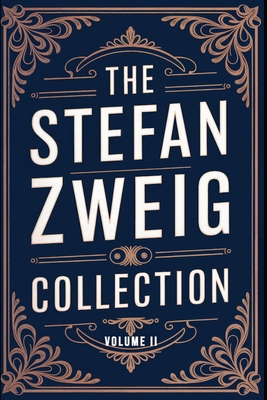
The Stefan Zweig Collection - Volume 2: A New Translation
Stefan Zweig was the most translated and widely read German-language author of the 1920s-30s-more popular in some countries than Mann or Hesse. His success came from compressed psychological narratives: characters caught in obsessions they cannot control, prose combining accessibility with genuine sophistication. Yet his reputation collapsed after 1945; literary modernism valued formal experimentation he deliberately avoided. Only recently has his fiction been reconsidered, readers recognizing that apparent simplicity conceals considerable craft. This volume collects five novellas from 1911-1927 showcasing Zweig's range: "Amok" - A German doctor in colonial Malaya describes how a woman's request for illegal abortion triggered his transformation into someone possessed by obsessive desire. The confessional structure reveals how professional authority can become intimidation, how "love" and violence exist in disturbing proximity. "Letter from an Unknown Woman" - Zweig's most famous work: a Viennese writer receives a letter from a woman who has just died, revealing she loved him throughout her life. He doesn't remember her. The woman's passionate, psychologically complex letter contrasts with his shallow forgetfulness. Is her devotion noble or pathological? Zweig presents her psychology with precision but doesn't answer. "The Moonlit Alley" - Guilt and memory torment a man haunted by a death he may have caused or prevented. Zweig frequently examined how single moments shape entire lives, how consciousness processes trauma. "Twilight Tale" - Explores nostalgia and disillusionment: how people romanticize the past, how confronting discrepancies between remembered and actual events proves devastating. "The Fantastic Night" - A man experiences a single night that transforms his understanding of existence-an epiphany narrative rendered in accessible prose rather than modernist experimentation. Zweig's patterns: educated bourgeois protagonists psychologically vulnerable despite professional success; women possessing depths male characters fail to recognize; obsession as both defining human experience and destructive force. His prose achieves sophistication through rhythm and pacing despite apparent simplicity. His biography illuminates the work: born Vienna 1881 to wealthy Jewish family, he belonged to cosmopolitan European culture World War I shattered. He fled Austria in 1934, died by suicide in Brazil 1942, despairing at Europe's destruction. His stories' characte
PRP: 92.15 Lei

Acesta este Prețul Recomandat de Producător. Prețul de vânzare al produsului este afișat mai jos.
82.94Lei
82.94Lei
92.15 LeiPrimești 82 puncte
Livrare in 2-4 saptamani
Descrierea produsului
Stefan Zweig was the most translated and widely read German-language author of the 1920s-30s-more popular in some countries than Mann or Hesse. His success came from compressed psychological narratives: characters caught in obsessions they cannot control, prose combining accessibility with genuine sophistication. Yet his reputation collapsed after 1945; literary modernism valued formal experimentation he deliberately avoided. Only recently has his fiction been reconsidered, readers recognizing that apparent simplicity conceals considerable craft. This volume collects five novellas from 1911-1927 showcasing Zweig's range: "Amok" - A German doctor in colonial Malaya describes how a woman's request for illegal abortion triggered his transformation into someone possessed by obsessive desire. The confessional structure reveals how professional authority can become intimidation, how "love" and violence exist in disturbing proximity. "Letter from an Unknown Woman" - Zweig's most famous work: a Viennese writer receives a letter from a woman who has just died, revealing she loved him throughout her life. He doesn't remember her. The woman's passionate, psychologically complex letter contrasts with his shallow forgetfulness. Is her devotion noble or pathological? Zweig presents her psychology with precision but doesn't answer. "The Moonlit Alley" - Guilt and memory torment a man haunted by a death he may have caused or prevented. Zweig frequently examined how single moments shape entire lives, how consciousness processes trauma. "Twilight Tale" - Explores nostalgia and disillusionment: how people romanticize the past, how confronting discrepancies between remembered and actual events proves devastating. "The Fantastic Night" - A man experiences a single night that transforms his understanding of existence-an epiphany narrative rendered in accessible prose rather than modernist experimentation. Zweig's patterns: educated bourgeois protagonists psychologically vulnerable despite professional success; women possessing depths male characters fail to recognize; obsession as both defining human experience and destructive force. His prose achieves sophistication through rhythm and pacing despite apparent simplicity. His biography illuminates the work: born Vienna 1881 to wealthy Jewish family, he belonged to cosmopolitan European culture World War I shattered. He fled Austria in 1934, died by suicide in Brazil 1942, despairing at Europe's destruction. His stories' characte
Detaliile produsului



