







The Triumph of Romanticism
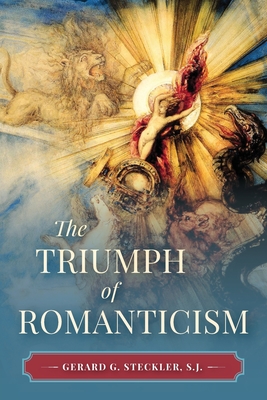
The Triumph of Romanticism
The seventeenth-century Baroque synthesis of the divine-human relationship emphasized the primacy of the Christian God in the lives of all men as the basis for legitimate humanism. The Enlightenment of the eighteenth century tore apart the components, emphasizing matter over spirit and pushing God far away as a remote cosmic architect. In the first half of the nineteenth century, spirit prevailed once again over matter in Romanticism. This effervescent movement, opposed by a renewed scientific materialism, ended up fragmenting into utopianism, sentimentalism, psychologism, existentialism, and pessimism. The history of Romanticism is the story of an explosive creative force that always consumes itself.
Such is the thesis of this ambitious historical and philosophical study, in which the author shows how thought and art forms from the end of the Napoleonic wars have left their mark on every aspect of the Western civilization we inhabit today. Its pages are a tour de force of cultural history as seen in a procession of influential figures-among them Voltaire, Rousseau, Kant, Marx, Schopenhauer, Nietzsche, Comte, Delacroix, Darwin, Hugo, Zola, Monet, Van Gogh, Kandinsky, Dali, Baudelaire, Verlaine, Malraux, Gide, Bergson, Maritain, Marcel, Bernanos, Sartre, Ortega y Gasset, Dostoevsky, Ruskin, Wilde, Weber, Freud, Barth, Tillich, Bonhoeffer, and Niebuhr.
Modernity's accelerating dissolution becomes, in Fr. Steckler's telling, a negative apologetic for the truth of the Catholic Faith, which takes the whole of reality into its gaze and harmonizes the contradictories of matter and spirit, nature and divinity, feeling and reason, faith and science. Man is doomed to a cycle of experimentation, frustration, and skepticism so long as he runs away from the revelation and grace of God, which bring newness rather than novelty, freedom rather than frenzy.
PRP: 195.84 Lei

Acesta este Prețul Recomandat de Producător. Prețul de vânzare al produsului este afișat mai jos.
156.67Lei
156.67Lei
195.84 LeiPrimești 156 puncte
Livrare in 2-4 saptamani
Descrierea produsului
The seventeenth-century Baroque synthesis of the divine-human relationship emphasized the primacy of the Christian God in the lives of all men as the basis for legitimate humanism. The Enlightenment of the eighteenth century tore apart the components, emphasizing matter over spirit and pushing God far away as a remote cosmic architect. In the first half of the nineteenth century, spirit prevailed once again over matter in Romanticism. This effervescent movement, opposed by a renewed scientific materialism, ended up fragmenting into utopianism, sentimentalism, psychologism, existentialism, and pessimism. The history of Romanticism is the story of an explosive creative force that always consumes itself.
Such is the thesis of this ambitious historical and philosophical study, in which the author shows how thought and art forms from the end of the Napoleonic wars have left their mark on every aspect of the Western civilization we inhabit today. Its pages are a tour de force of cultural history as seen in a procession of influential figures-among them Voltaire, Rousseau, Kant, Marx, Schopenhauer, Nietzsche, Comte, Delacroix, Darwin, Hugo, Zola, Monet, Van Gogh, Kandinsky, Dali, Baudelaire, Verlaine, Malraux, Gide, Bergson, Maritain, Marcel, Bernanos, Sartre, Ortega y Gasset, Dostoevsky, Ruskin, Wilde, Weber, Freud, Barth, Tillich, Bonhoeffer, and Niebuhr.
Modernity's accelerating dissolution becomes, in Fr. Steckler's telling, a negative apologetic for the truth of the Catholic Faith, which takes the whole of reality into its gaze and harmonizes the contradictories of matter and spirit, nature and divinity, feeling and reason, faith and science. Man is doomed to a cycle of experimentation, frustration, and skepticism so long as he runs away from the revelation and grace of God, which bring newness rather than novelty, freedom rather than frenzy.
Detaliile produsului



