





The Village Notary
The Village Notary
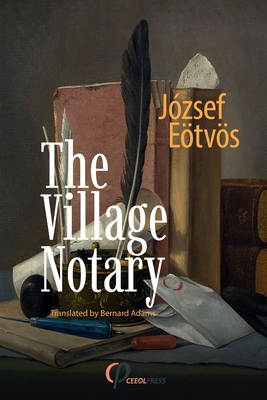
The Village Notary, originally published in 1845, presents a cross-section of Hungarian society in which the ruling elite were all too often lazy and self-seeking while the lesser lights, whatever their sterling qualities, were at their mercy and open to abuse. Eötvös's primary purpose was to expose the
unsatisfactory nature of the traditional county administration. Hungary could hardly be considered a nation when so few of the people derived benefit or protection from the way that affairs were handled.
The book holds a balance between racy tale and the author's frequently trenchant commentary on the Hungary of his time. In the English translation of 1850 it is significantly abridged in favor of the racy tale, thus diluting Eötvös's purpose not a little. The present translation is made from the unabridged Hungarian, and one must hope that while being better informed of Eötvös's aims the reader of this version will suffer no loss of entertainment.
PRP: 217.00 Lei

Acesta este Prețul Recomandat de Producător. Prețul de vânzare al produsului este afișat mai jos.
195.30Lei
195.30Lei
217.00 LeiPrimești 195 puncte
Livrare in 2-4 saptamani
Descrierea produsului
The Village Notary, originally published in 1845, presents a cross-section of Hungarian society in which the ruling elite were all too often lazy and self-seeking while the lesser lights, whatever their sterling qualities, were at their mercy and open to abuse. Eötvös's primary purpose was to expose the
unsatisfactory nature of the traditional county administration. Hungary could hardly be considered a nation when so few of the people derived benefit or protection from the way that affairs were handled.
The book holds a balance between racy tale and the author's frequently trenchant commentary on the Hungary of his time. In the English translation of 1850 it is significantly abridged in favor of the racy tale, thus diluting Eötvös's purpose not a little. The present translation is made from the unabridged Hungarian, and one must hope that while being better informed of Eötvös's aims the reader of this version will suffer no loss of entertainment.
Detaliile produsului



