







The Witch Cult (Jabberwoke Pocket Occult)
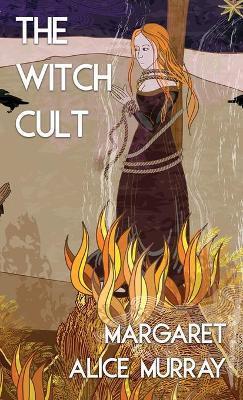
The Witch Cult (Jabberwoke Pocket Occult)
The Witch-Cult in Western Europe is a 1921 anthropological book by Margaret Alice Murray, published at the height of the success of Frazer's Golden Bough. Certain university circles subsequently celebrated Margaret Murray as the expert on western witchcraft, though her theory, also known as "the witch-cult hypothesis" remains controversial: it suggests that the accusations made towards "witches" in Europe were in fact based on a real, though clandestine, pagan religion worshiped a horned god.In this book and the subsequent The God of the Witches (1931), Murray explained her theory as follows.Until the 17th century there was a religion, much older than Christianity, which all over Western Europe had supporters both among ordinary people and the ruling classes.Central to the worship stood a horned god with two faces, known to the Romans as Janus or Dianus. (This cult of Dianus was of the type James Frazer described in detail in The Golden Bough).The horned god represented the cycle of seasons and harvests. It was believed that he died and periodically returned to life.On earth, the horned god was represented by chosen human beings. There were some celebrities among them, such as William Rufus, Thomas Becket, Joan of Arc and Gilles de Rais. They each died a tragic death as a ritual sacrifice to insure the resurrection of the god and the renewal of the earth.In the villages, the witches' meetings were presided over by the horned god. Christian observers of these events might have thought the witches were worshiping the devil, when in reality they were celebrating the pre-Christian god Dianus.The preservation of this ancient religion was entrusted to a variety of indigenous peoples, small in stature, who were driven out from their land with each new invasion. This would also explain the stories about fairies, gnomes and other 'small people'. These creatures were very shy but were able to pass the knowledge of their religion to ordinary people. The witches were their pupils and thus the heirs of the ancient religion.According to Murray, local covens consisted of thirteen members: twelve ordinary men and women, and an officer. All members were required to hold a weekly meeting (named 'esbat' by Murray) and to attend the larger Sabbats.There was a strict discipline in the covens, and whoever missed a meeting could be severely punished and was sometimes put to death.The organization and structure were so good that Christianity had to wait until the Reformation
PRP: 117.80 Lei

Acesta este Prețul Recomandat de Producător. Prețul de vânzare al produsului este afișat mai jos.
106.02Lei
106.02Lei
117.80 LeiPrimești 106 puncte
Indisponibil
Descrierea produsului
The Witch-Cult in Western Europe is a 1921 anthropological book by Margaret Alice Murray, published at the height of the success of Frazer's Golden Bough. Certain university circles subsequently celebrated Margaret Murray as the expert on western witchcraft, though her theory, also known as "the witch-cult hypothesis" remains controversial: it suggests that the accusations made towards "witches" in Europe were in fact based on a real, though clandestine, pagan religion worshiped a horned god.In this book and the subsequent The God of the Witches (1931), Murray explained her theory as follows.Until the 17th century there was a religion, much older than Christianity, which all over Western Europe had supporters both among ordinary people and the ruling classes.Central to the worship stood a horned god with two faces, known to the Romans as Janus or Dianus. (This cult of Dianus was of the type James Frazer described in detail in The Golden Bough).The horned god represented the cycle of seasons and harvests. It was believed that he died and periodically returned to life.On earth, the horned god was represented by chosen human beings. There were some celebrities among them, such as William Rufus, Thomas Becket, Joan of Arc and Gilles de Rais. They each died a tragic death as a ritual sacrifice to insure the resurrection of the god and the renewal of the earth.In the villages, the witches' meetings were presided over by the horned god. Christian observers of these events might have thought the witches were worshiping the devil, when in reality they were celebrating the pre-Christian god Dianus.The preservation of this ancient religion was entrusted to a variety of indigenous peoples, small in stature, who were driven out from their land with each new invasion. This would also explain the stories about fairies, gnomes and other 'small people'. These creatures were very shy but were able to pass the knowledge of their religion to ordinary people. The witches were their pupils and thus the heirs of the ancient religion.According to Murray, local covens consisted of thirteen members: twelve ordinary men and women, and an officer. All members were required to hold a weekly meeting (named 'esbat' by Murray) and to attend the larger Sabbats.There was a strict discipline in the covens, and whoever missed a meeting could be severely punished and was sometimes put to death.The organization and structure were so good that Christianity had to wait until the Reformation
Detaliile produsului



