
headerdesktop transpgratuit03dec25

MAI SUNT 00:00:00:00

MAI SUNT

X

headermobile transpgratuit03dec25

MAI SUNT 00:00:00:00

MAI SUNT

X

Promotii popup img

Livrare: 0 lei

3-4 decembrie

❤️ transport gratuit ❤️

la orice comanda in Romania 🚚

The Women's Orchestra of Auschwitz: A Story of Survival
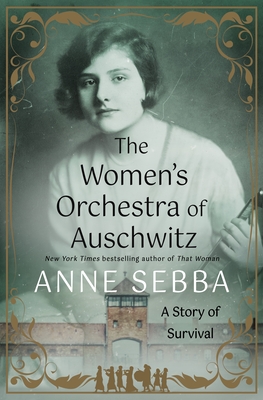
De (autor): Anne Sebba

The Women's Orchestra of Auschwitz: A Story of Survival - Anne Sebba

The Women's Orchestra of Auschwitz: A Story of Survival

De (autor): Anne Sebba

Moving and powerful, this is a vivid portrait of the women who came together to form an orchestra in order to survive the horrors of Auschwitz.

New York Times
bestselling author of Les Parisiennes and That Woman: A Life of Wallis Simpson now examines how a disparate band of young girls struggled to overcome differences and little musical knowledge to please the often-sadistic Nazi overseers.

In 1943, German SS officers in charge of Auschwitz-Birkenau ordered that an orchestra be formed among the female prisoners. Almost fifty women and girls from eleven nations were drafted into a band that would play in all weathers marching music to other inmates, forced laborers who left each morning and returned, exhausted and often broken, at the end of the day. While still living amid the harshest of circumstances, with little more than a bowl of soup to eat, they were also made to give weekly concerts for Nazi officers, and individual members were sometimes summoned to give solo performances. For almost all of the musicians chosen to take part, being in the orchestra saved their lives. But at what cost?

What role could music play in a death camp? What was the effect on those women who owed their survival to their participation in a Nazi propaganda project? And how did it feel to be forced to provide solace to the perpetrators of a genocide that claimed the lives of their family and friends? In The Women's Orchestra of Auschwitz, award-winning historian Anne Sebba traces these tangled questions of deep moral complexity with sensitivity and care.

From Alma Rosé, the orchestra's main conductor, niece of Gustav Mahler and a formidable pre-war celebrity violinist, to Anita Lasker-Wallfisch, its teenage cellist and last surviving member, Sebba draws on meticulous archival research and exclusive first-hand accounts to tell the full and astonishing story of the orchestra, its members, and the response of other prisoners for the first time.

Citește mai mult

-20%

transport gratuit

PRP: 198.40 Lei

!

Acesta este Prețul Recomandat de Producător. Prețul de vânzare al produsului este afișat mai jos.

158.72Lei

158.72Lei

198.40 Lei

Primești 158 puncte

Important icon msg

Primești puncte de fidelitate după fiecare comandă! 100 puncte de fidelitate reprezintă 1 leu. Folosește-le la viitoarele achiziții!

Livrare in 2-4 saptamani

Descrierea produsului

Moving and powerful, this is a vivid portrait of the women who came together to form an orchestra in order to survive the horrors of Auschwitz.

New York Times
bestselling author of Les Parisiennes and That Woman: A Life of Wallis Simpson now examines how a disparate band of young girls struggled to overcome differences and little musical knowledge to please the often-sadistic Nazi overseers.

In 1943, German SS officers in charge of Auschwitz-Birkenau ordered that an orchestra be formed among the female prisoners. Almost fifty women and girls from eleven nations were drafted into a band that would play in all weathers marching music to other inmates, forced laborers who left each morning and returned, exhausted and often broken, at the end of the day. While still living amid the harshest of circumstances, with little more than a bowl of soup to eat, they were also made to give weekly concerts for Nazi officers, and individual members were sometimes summoned to give solo performances. For almost all of the musicians chosen to take part, being in the orchestra saved their lives. But at what cost?

What role could music play in a death camp? What was the effect on those women who owed their survival to their participation in a Nazi propaganda project? And how did it feel to be forced to provide solace to the perpetrators of a genocide that claimed the lives of their family and friends? In The Women's Orchestra of Auschwitz, award-winning historian Anne Sebba traces these tangled questions of deep moral complexity with sensitivity and care.

From Alma Rosé, the orchestra's main conductor, niece of Gustav Mahler and a formidable pre-war celebrity violinist, to Anita Lasker-Wallfisch, its teenage cellist and last surviving member, Sebba draws on meticulous archival research and exclusive first-hand accounts to tell the full and astonishing story of the orchestra, its members, and the response of other prisoners for the first time.

Citește mai mult

S-ar putea să-ți placă și

De același autor

Părerea ta e inspirație pentru comunitatea Libris!

Istoricul tău de navigare

Acum se comandă

Noi suntem despre cărți, și la fel este și

Newsletter-ul nostru.

Abonează-te la veștile literare și primești un cupon de -10% pentru viitoarea ta comandă!

*Reducerea aplicată prin cupon nu se cumulează, ci se aplică reducerea cea mai mare.

Mă abonez image one
Mă abonez image one
Accessibility Logo