





Think Like a Lawyer: Legal Reasoning for Law Students and Business Professionals
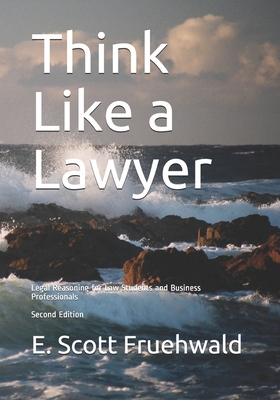
Think Like a Lawyer: Legal Reasoning for Law Students and Business Professionals
This book's purpose is to better prepare law students and lawyers for the practice of law by providing them with a firm foundation in legal reasoning, showing them how to apply legal reasoning skills to facts, and teaching them legal problem solving. I will do this by focusing explicitly on the different types of legal reasoning and the types of miniskills needed to develop the different types of legal reasoning.The chapters in this book will present the different types of legal reasoning, the miniskills that are related to the different types of legal reasoning, and how to use these miniskills in combination. Chapter One discusses the five types of legal reasoning. Chapter Two will teach you how to be a critical and engaged reader and analyze cases, skills that are needed before you can learn the other miniskills in detail. Chapter Three concerns reasoning by analogy, which involves showing how your case is like a precedent case. Chapter Four examines rule-based reasoning, and how to apply rules to facts. Chapter Five involves synthesizing cases into rules, which is an important skill in establishing the law. Chapter Six investigates statutory interpretation. Chapter Seven brings the prior chapters together, by demonstrating how the different types of legal reasoning relate to the small-scale paradigm (how to organize a simple analysis). Chapter Eight fills in this paradigm by examining how to respond to opposing arguments and distinguish cases. Finally, Chapter Nine serves as a capstone to this book with its presentation of advanced problem solving and creative thinking. The appendices cover how the American legal system developed and canons of statutory construction.One of the purposes of this book is to allow law students to learn legal skills independently. I want students to be able to get immediate feedback on their learning. Consequently, I have put answers to the exercises at the end of each chapter.
PRP: 310.00 Lei

Acesta este Prețul Recomandat de Producător. Prețul de vânzare al produsului este afișat mai jos.
279.00Lei
279.00Lei
310.00 LeiPrimești 279 puncte
Livrare in 2-4 saptamani
Descrierea produsului
This book's purpose is to better prepare law students and lawyers for the practice of law by providing them with a firm foundation in legal reasoning, showing them how to apply legal reasoning skills to facts, and teaching them legal problem solving. I will do this by focusing explicitly on the different types of legal reasoning and the types of miniskills needed to develop the different types of legal reasoning.The chapters in this book will present the different types of legal reasoning, the miniskills that are related to the different types of legal reasoning, and how to use these miniskills in combination. Chapter One discusses the five types of legal reasoning. Chapter Two will teach you how to be a critical and engaged reader and analyze cases, skills that are needed before you can learn the other miniskills in detail. Chapter Three concerns reasoning by analogy, which involves showing how your case is like a precedent case. Chapter Four examines rule-based reasoning, and how to apply rules to facts. Chapter Five involves synthesizing cases into rules, which is an important skill in establishing the law. Chapter Six investigates statutory interpretation. Chapter Seven brings the prior chapters together, by demonstrating how the different types of legal reasoning relate to the small-scale paradigm (how to organize a simple analysis). Chapter Eight fills in this paradigm by examining how to respond to opposing arguments and distinguish cases. Finally, Chapter Nine serves as a capstone to this book with its presentation of advanced problem solving and creative thinking. The appendices cover how the American legal system developed and canons of statutory construction.One of the purposes of this book is to allow law students to learn legal skills independently. I want students to be able to get immediate feedback on their learning. Consequently, I have put answers to the exercises at the end of each chapter.
Detaliile produsului



