







Thrashes Fallen Leaves: Korean Classical Sijo Poetry Translated into English
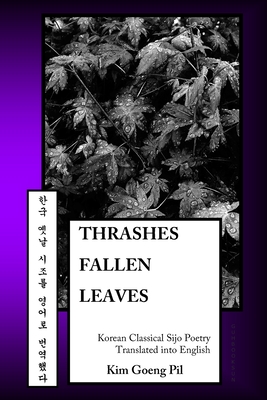
Thrashes Fallen Leaves: Korean Classical Sijo Poetry Translated into English
Sijo is Korea's distinct form of poetry that has poetically followed the rhythm of the country's tranquil nature and turbulent history, giving expression to the enduring spirit of her people. Since its origins in the ancient Goryeo Kingdom as a short lyrical form of three dramatic lines sung to music, sijo flourished during the Joseon Kingdom that followed. Joseon's greatest king, King Sejong, fulfilled a need for the fledgling nation by scientifically creating the Hangeul writing system for the benefit of all people. With Hangeul being the ideal means to properly express in writing the precise sounds and rhythm of the Korean language, the poets of Joseon, from commoners, entertainers, scholars and royalty, composed a wide range of sijo poetry over the centuries. Finding expression as a literary form, these poetic contributions have been collected and passed down to become the classics of Korean sijo poetry enjoyed today.The rhythm of sijo poetry has journeyed in the hearts of the Korean people through the centuries. Keeping this enduring essence at heart within this volume of translations is the rhythm unique to sijo. Just as the rhythm was essential in guiding the poets of old to find poetic expression, the essential guiding principle of translating the classics of Korean sijo into English has been keeping to the ideal rhythmic pattern of sijo's traditional poetic form. Beyond strictly translating, each sijo was carefully recomposed to be reborn into English. Following the rhythm so essential to this poetic form, the poetic imagery and meanings of words were sequenced as closely as possible in English to keep the dramatic progression and pacing as the respective poet originally intended to inspire.
119.74Lei
119.74Lei
Primești 119 puncte

Livrare in 2-4 saptamani
Descrierea produsului
Sijo is Korea's distinct form of poetry that has poetically followed the rhythm of the country's tranquil nature and turbulent history, giving expression to the enduring spirit of her people. Since its origins in the ancient Goryeo Kingdom as a short lyrical form of three dramatic lines sung to music, sijo flourished during the Joseon Kingdom that followed. Joseon's greatest king, King Sejong, fulfilled a need for the fledgling nation by scientifically creating the Hangeul writing system for the benefit of all people. With Hangeul being the ideal means to properly express in writing the precise sounds and rhythm of the Korean language, the poets of Joseon, from commoners, entertainers, scholars and royalty, composed a wide range of sijo poetry over the centuries. Finding expression as a literary form, these poetic contributions have been collected and passed down to become the classics of Korean sijo poetry enjoyed today.The rhythm of sijo poetry has journeyed in the hearts of the Korean people through the centuries. Keeping this enduring essence at heart within this volume of translations is the rhythm unique to sijo. Just as the rhythm was essential in guiding the poets of old to find poetic expression, the essential guiding principle of translating the classics of Korean sijo into English has been keeping to the ideal rhythmic pattern of sijo's traditional poetic form. Beyond strictly translating, each sijo was carefully recomposed to be reborn into English. Following the rhythm so essential to this poetic form, the poetic imagery and meanings of words were sequenced as closely as possible in English to keep the dramatic progression and pacing as the respective poet originally intended to inspire.
Detaliile produsului



