





Veiled Leadership: Katharine Drexel, the Sisters of the Blessed Sacrament, and Race Relations
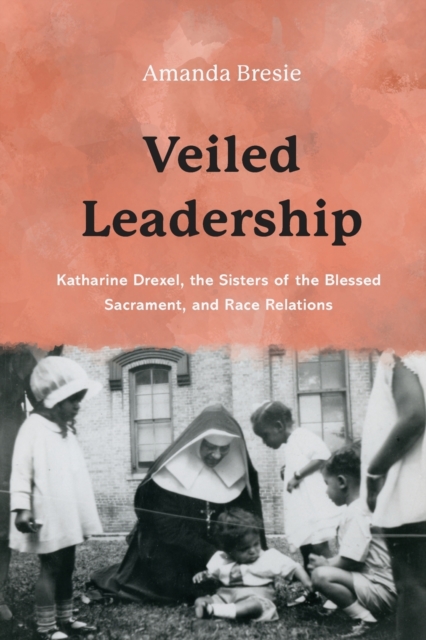
Veiled Leadership: Katharine Drexel, the Sisters of the Blessed Sacrament, and Race Relations
On the rainy morning of October 1, 2000, Pope John Paul II canonized Mother Katharine Drexel. Born into a wealthy Philadelphia family, Drexel bucked society and formed the Sisters of the Blessed Sacrament for Indians and Colored People. Her compelling personal story has excited many biographers who have highlighted her holiness and catalogued her good deeds. During her life, newspapers called her the "Millionaire Nun," and much of the literature on Drexel and the Sisters of the Blessed Sacrament exalts Katharine Drexel's disbursement of her vast fortune to benefit Black and Indigenous people. The often repeated stories of a riches to rags holy woman miss the true significance of what Mother Katharine and the Sisters of the Blessed Sacrament attempted. Drexel was not merely the ATM of Catholic Home Missions; rather, she challenged the hierarchy to reimagine its mission in the United States. In an era when the Church controlled the actions and censored the opinions of women religious, they had to listen to Mother Katharine. Most writing on Drexel and the SBS focus on Drexel's spiritual journey, but Veiled Leadership traces the daily operations of her charitable empire and looks at how the Sisters implemented Drexel's vision in the field. The SBS were not always welcomed in the communities they served, and they experienced conflict from both white supremacists and the people they wanted to aid.
Veiled Leadership examines the lives of Mother Katharine and her congregation within the context of larger constructs of gender, race, religion, reform, and national identity. It explores what happens when a non-dominant culture tries to impose its views and morals on other non-dominant cultures. In other words, as outliers themselves-they were semi-cloistered Catholic women from primarily immigrant backgrounds in a culture that regarded their lifestyles as alien and unnatural-their attempts to Americanize and assimilate Black and Indigenous people, whose families had been in the country for generations longer than the nuns' own, adds complexity to our understanding of cultural hegemony.
 GRATUIT CARGUS
PRP: 343.09 Lei

Acesta este Prețul Recomandat de Producător. Prețul de vânzare al produsului este afișat mai jos.
308.78Lei
308.78Lei
343.09 LeiPrimești 308 puncte
Livrare in 2-4 saptamani
Descrierea produsului
On the rainy morning of October 1, 2000, Pope John Paul II canonized Mother Katharine Drexel. Born into a wealthy Philadelphia family, Drexel bucked society and formed the Sisters of the Blessed Sacrament for Indians and Colored People. Her compelling personal story has excited many biographers who have highlighted her holiness and catalogued her good deeds. During her life, newspapers called her the "Millionaire Nun," and much of the literature on Drexel and the Sisters of the Blessed Sacrament exalts Katharine Drexel's disbursement of her vast fortune to benefit Black and Indigenous people. The often repeated stories of a riches to rags holy woman miss the true significance of what Mother Katharine and the Sisters of the Blessed Sacrament attempted. Drexel was not merely the ATM of Catholic Home Missions; rather, she challenged the hierarchy to reimagine its mission in the United States. In an era when the Church controlled the actions and censored the opinions of women religious, they had to listen to Mother Katharine. Most writing on Drexel and the SBS focus on Drexel's spiritual journey, but Veiled Leadership traces the daily operations of her charitable empire and looks at how the Sisters implemented Drexel's vision in the field. The SBS were not always welcomed in the communities they served, and they experienced conflict from both white supremacists and the people they wanted to aid.
Veiled Leadership examines the lives of Mother Katharine and her congregation within the context of larger constructs of gender, race, religion, reform, and national identity. It explores what happens when a non-dominant culture tries to impose its views and morals on other non-dominant cultures. In other words, as outliers themselves-they were semi-cloistered Catholic women from primarily immigrant backgrounds in a culture that regarded their lifestyles as alien and unnatural-their attempts to Americanize and assimilate Black and Indigenous people, whose families had been in the country for generations longer than the nuns' own, adds complexity to our understanding of cultural hegemony.
Detaliile produsului



