





Women designers at the Bauhaus: The history of a silent revolution
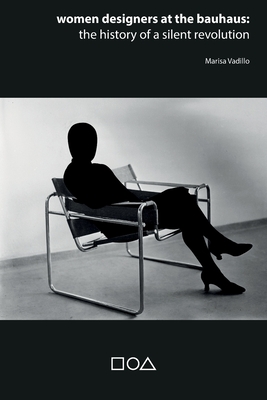
Women designers at the Bauhaus: The history of a silent revolution
In 1919, in Weimar (Germany), Walter Gropius founded the Staatliche Bauhaus: a place for building. The project was conceived as a utopian school for training the new artisans who would be needed for the start of a tumultuous century, integrating a range of artistic disciplines by means of objects and architecture. It was an idea that would evolve towards design based on its Dessau site with the celebrated slogan 'art and technology: a new unity'. They were committed to a social and functional understanding of art by means of the profound ethical and aesthetic stance it would take against the dehumanisation inherent in interwar industrial society. The cultural, social, pedagogical and artistic impact that this singular institution achieved had an influence of immense magnitude, which culminated in its final headquarters in Berlin being shut down by the Prussian arm of the Nazi Party in 1933. The intellectual appreciation of Bauhaus is something that has historically focused on its male protagonists, overlooking a series of women artists, designers, stage designers, painters and architects who trained there and made a decisive contribution to this 'revolution', and whose work has had a lower profile in the public perception of the Bauhaus, even though they pursued professional careers that went on to have an undoubted international impact. In this book, Marisa Vadillo helps to fill this void, completing the picture of the school by revisiting the outstanding role played by these women, who were so fundamental to an unrepeatable chapter of 20 th -century art: Gunta Stölzl, Anni Albers, Margarete Leischner, Otti Berger, Grete Reichardt, Else Mögelin, Marianne Brandt, Alma Buscher, Marguerite Wildenhain-Friedlander, Grete Heymann-Marks, Ilse Fehling, Wera Meyer-Waldeck and Annemarie Mauck. The book was originally released in Spanish in 2016, published by Cántico, and in 2018 was the recipient of an award from the Rafael Botí Provincial Fine Art Foundation, enabling it to be translated.
PRP: 123.22 Lei

Acesta este Prețul Recomandat de Producător. Prețul de vânzare al produsului este afișat mai jos.
98.58Lei
98.58Lei
123.22 LeiPrimești 98 puncte
Livrare in 2-4 saptamani
Descrierea produsului
In 1919, in Weimar (Germany), Walter Gropius founded the Staatliche Bauhaus: a place for building. The project was conceived as a utopian school for training the new artisans who would be needed for the start of a tumultuous century, integrating a range of artistic disciplines by means of objects and architecture. It was an idea that would evolve towards design based on its Dessau site with the celebrated slogan 'art and technology: a new unity'. They were committed to a social and functional understanding of art by means of the profound ethical and aesthetic stance it would take against the dehumanisation inherent in interwar industrial society. The cultural, social, pedagogical and artistic impact that this singular institution achieved had an influence of immense magnitude, which culminated in its final headquarters in Berlin being shut down by the Prussian arm of the Nazi Party in 1933. The intellectual appreciation of Bauhaus is something that has historically focused on its male protagonists, overlooking a series of women artists, designers, stage designers, painters and architects who trained there and made a decisive contribution to this 'revolution', and whose work has had a lower profile in the public perception of the Bauhaus, even though they pursued professional careers that went on to have an undoubted international impact. In this book, Marisa Vadillo helps to fill this void, completing the picture of the school by revisiting the outstanding role played by these women, who were so fundamental to an unrepeatable chapter of 20 th -century art: Gunta Stölzl, Anni Albers, Margarete Leischner, Otti Berger, Grete Reichardt, Else Mögelin, Marianne Brandt, Alma Buscher, Marguerite Wildenhain-Friedlander, Grete Heymann-Marks, Ilse Fehling, Wera Meyer-Waldeck and Annemarie Mauck. The book was originally released in Spanish in 2016, published by Cántico, and in 2018 was the recipient of an award from the Rafael Botí Provincial Fine Art Foundation, enabling it to be translated.
Detaliile produsului



