







Women's Representations from Radical Naturalism to the New Woman Response
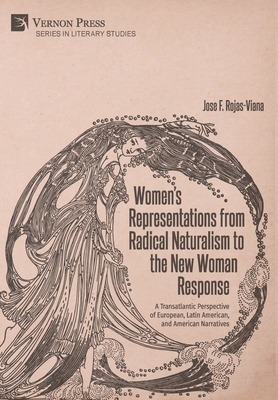
Women's Representations from Radical Naturalism to the New Woman Response
In this book, Rojas explores comparatively the representations of deviant and criminal women in the late nineteenth and early twentieth centuries from Transatlantic perspectives in literary productions of the first-wave feminist writers of the New Woman movement and writers of Radical Naturalism. This work addresses how the writers' sex is relevant in depictions of social constructions of female characters and how they established a dialogue based on gender through the themes of 'femme fatale', marginal spaces, eugenics, and social Darwinism in the novels of Emilia Pardo Bazán's 'La piedra angular' (1891), 'La gota de sangre' (1911), and "Tio Terrones" (1920); Refugio Barragán de Toscano's 'La hija del bandido o los subterráneos del nevado' (1887); Federico Gamboa's 'Santa' (1903); Kate Chopin's (Katherine O'Flaherty) 'The Awakening' (1899); Thomas Hardy's 'Tess of the D'Urbervilles' (1891); and 'Grand's Ideala' (1888).
There is a good volume of research on different aspects of these novels, but this book addresses issues of the social constructions of deviant and criminal women from an interdisciplinary and metatheoretical perspective often missed from established criticism. This work is not only reachable for the non-expertise reader, graduate, or undergraduate students but also it is sufficiently elaborated for the expert reader in different fields. It provides a detailed analysis of the social, historical, philosophical, and scientific background that shows how the treatment of the female characters converges and diverges from male and female writers of the New Woman and Radical Naturalism points of view. It can be a good contribution for references or classes in Hispanic studies, gender studies, women's studies, sexuality studies, nineteenth-century studies, and in other fields.
PRP: 462.93 Lei

Acesta este Prețul Recomandat de Producător. Prețul de vânzare al produsului este afișat mai jos.
416.64Lei
416.64Lei
462.93 LeiPrimești 416 puncte
Indisponibil
Descrierea produsului
In this book, Rojas explores comparatively the representations of deviant and criminal women in the late nineteenth and early twentieth centuries from Transatlantic perspectives in literary productions of the first-wave feminist writers of the New Woman movement and writers of Radical Naturalism. This work addresses how the writers' sex is relevant in depictions of social constructions of female characters and how they established a dialogue based on gender through the themes of 'femme fatale', marginal spaces, eugenics, and social Darwinism in the novels of Emilia Pardo Bazán's 'La piedra angular' (1891), 'La gota de sangre' (1911), and "Tio Terrones" (1920); Refugio Barragán de Toscano's 'La hija del bandido o los subterráneos del nevado' (1887); Federico Gamboa's 'Santa' (1903); Kate Chopin's (Katherine O'Flaherty) 'The Awakening' (1899); Thomas Hardy's 'Tess of the D'Urbervilles' (1891); and 'Grand's Ideala' (1888).
There is a good volume of research on different aspects of these novels, but this book addresses issues of the social constructions of deviant and criminal women from an interdisciplinary and metatheoretical perspective often missed from established criticism. This work is not only reachable for the non-expertise reader, graduate, or undergraduate students but also it is sufficiently elaborated for the expert reader in different fields. It provides a detailed analysis of the social, historical, philosophical, and scientific background that shows how the treatment of the female characters converges and diverges from male and female writers of the New Woman and Radical Naturalism points of view. It can be a good contribution for references or classes in Hispanic studies, gender studies, women's studies, sexuality studies, nineteenth-century studies, and in other fields.
Detaliile produsului



